William Shakespeare
The Playwright Who Became the Greatest Writer in English Literature
Baptised on 26 April 1564 in Stratford-upon-Avon, the son of a glove-maker, William Shakespeare became an actor and shareholder in London's leading theatre company and wrote some thirty-seven plays and 154 sonnets — from Romeo and Juliet and Hamlet to King Lear and The Tempest.
- 16 min listen
- Playwright
- 154 sonnets
- The King's Men
William Shakespeare’s full 16 min audio biography, The Playwright Who Became the Greatest Writer in English Literature, is available on Lyfestori for iOS. Listen to a free preview below.
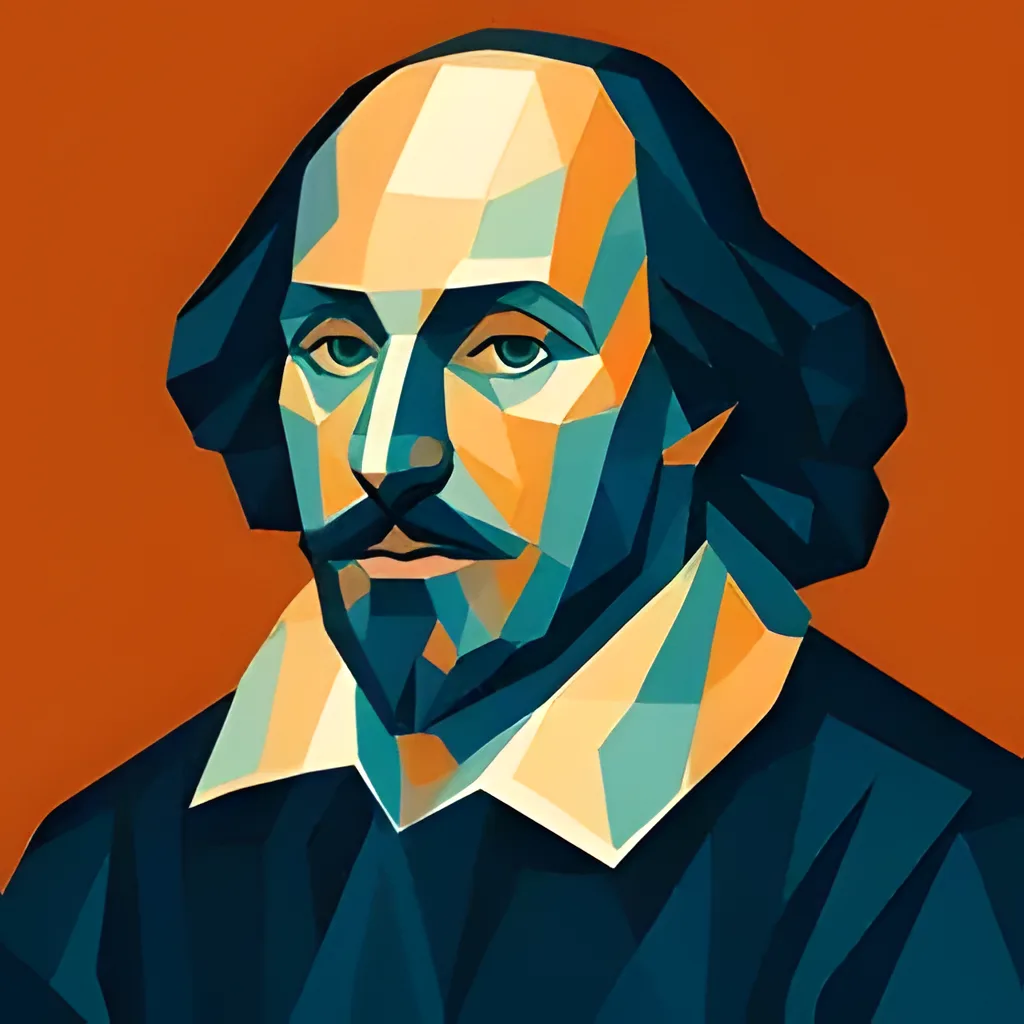
A life in brief
William Shakespeare: life and timeline.
He was a Stratford glove maker's son who never went to university, and for seven years between 1585 and 1592 he leaves no trace in the record at all. When William Shakespeare surfaces in London, it is as the target of a rival's insult — an upstart crow presuming to compete with university men. He answered with roughly thirty-nine plays and 154 sonnets, and by buying a share of the company that staged them, while other playwrights sold their scripts outright and walked away.
- 1564
Baptised in Stratford
Church records show a baptism on 26 April in Stratford-upon-Avon. The exact birth date is unknown; tradition puts it on 23 April, which is also the date he died. His father John deals in leather and gloves and serves as alderman and bailiff — the town's mayor.
- 1582
Anne Hathaway
In November, at eighteen, he marries a woman eight years his senior who is already pregnant. Susanna is born the following May; the twins Hamnet and Judith arrive in February 1585.
- 1585
The lost years begin
After the twins are born he seems to leave for London, but no record documents anything he did until 1592. Later traditions put him in a schoolroom or a travelling company; none of it is supported by contemporary evidence.
- 1592
Upstart crow
The first written trace of him in London is an attack by the playwright Robert Greene, sneering at an upstart crow competing with university-educated writers. The insult proves he was already prominent enough to resent.
- 1594
The Lord Chamberlain's Men
He joins one of London's premier companies, under the patronage of Henry Carey. He is playwright, actor and shareholder at once — where most dramatists sold a script and lost all say in it.
- 1596
Hamnet
His only son dies at eleven. The same year he successfully applies for a coat of arms in his father's name, formalising the family's rise into the gentry.
- 1597
New Place
He buys one of the largest houses in Stratford, and keeps acquiring land and buildings — one of the few playwrights of the era to manage money as well as he wrote.
- 1600
Hamlet
Written around this year, at the start of his most productive period. Othello, King Lear and Macbeth follow — tragedies of a psychological depth the stage had not seen.
- 1603
The King's Men
James I takes the throne and the company passes under royal patronage, changing its name.
- 1609
The sonnets
His sequence of 154 sonnets is published, dedicated to a mysterious "Mr. W.H." whose identity has been argued over ever since.
- 1613
Winding down
After two decades he steps back. The late plays — The Winter's Tale, The Tempest — turn from conflict toward forgiveness and reconciliation. He still collaborates with younger dramatists on Henry VIII and The Two Noble Kinsmen.
- 1616
Death in Stratford
He dies on 23 April at fifty-two, cause unknown, and is buried in the chancel of Holy Trinity Church. His will, drafted weeks earlier, leaves the bulk of the estate to Susanna — and the second-best bed to Anne.
Major achievements
William Shakespeare: major achievements.
- 01
Thirty-nine plays and 154 sonnets
Roughly thirty-nine plays, some written in collaboration, plus the sonnet sequence — translated into every major language and performed more often than the work of any other playwright.
- 02
The great tragedies
Hamlet, Othello, King Lear and Macbeth, written across roughly six years. They took ambition, guilt, jealousy and madness seriously as interior states, which nothing on the English stage had done before.
- 03
Shareholder as well as author
In the Lord Chamberlain's Men he was playwright, actor and part-owner. That gave him control over how his plays were staged and a claim on what they earned — unheard of for a dramatist of his era.
- 04
The English language
Many words and phrases first appear, or were popularised, in his works — assassination in Macbeth, wild-goose chase in Romeo and Juliet, and bedroom, fashionable and lonely among the first recorded uses.
- 05
The characters
Hamlet, Lady Macbeth, Romeo and Juliet, Lear — figures who outlived their plays and became the common property of world culture.
Turning points
William Shakespeare: defining moments.
- 1582
Married at eighteen
Anne Hathaway was eight years older and already pregnant, which inverted the usual order of things. Three children by twenty-one, in a market town, with no obvious way to keep them. Whatever took him to London, this was the situation he left.
- 1585–1592
The lost years
Seven years in which the most documented writer in English leaves no documentation at all. He disappears from Stratford as a young father and reappears in London established enough that a rival playwright attacks him in print.
- 1594
Buying in
Joining the Lord Chamberlain's Men as a shareholder, not just a supplier of scripts, was the decision that made him wealthy and gave him command of his own work. His contemporaries sold their plays and kept nothing — no royalties, no say, no stake.
- 1596
Losing Hamnet
His son died at eleven, while he was in London building a career. He applied for the family coat of arms the same year. People have long tried to read the grief into Hamlet; the connection remains unproven.
What you’ll take away
Lessons from William Shakespeare’s life.
- 01
Own a piece of what you make
Every other playwright sold a script for a fee and walked away with no stake in what it earned. He took a share of the company instead — which is why he could buy the second-largest house in his home town at thirty-three.
- 02
Credentials are not the qualification
Greene's jibe about an upstart crow was precisely a complaint that he had no degree. A free grammar-school education in Latin, Ovid and Cicero, plus close attention to people, turned out to be enough.
- 03
The material is other people
He wrote no philosophy and invented no doctrine. He watched how ambition, jealousy, love and grief actually move through a person, and set that down — which is why the plays still land four centuries on.
Did you know
Facts about William Shakespeare.
- 01
Did you know that there are no known direct descendants of William Shakespeare alive today, as his last surviving grandchild died childless in 1670?
- 02
Did you know that Shakespeare introduced over 1,700 new words to the English language, including 'swagger', 'lonely', 'eyeball', and 'bedazzled'?
- 03
Did you know that Shakespeare cursed his own grave, leaving an epitaph that threatens a curse on anyone who dares to move his bones?
If you liked William Shakespeare…
Browse all → Artist & Inventor18 min
Leonardo da Vinci
The Ultimate Renaissance Man
 Sculptor & Painter18 min
Michelangelo
The Divine Artist Who Sculpted the Renaissance
 Composer18 min
Wolfgang Amadeus Mozart
The Child Prodigy Who Became Music's Greatest Genius
 Fashion Designer16 min
Coco Chanel
The Revolutionary Designer Who Liberated Women's Fashion
FAQ
Frequently asked questions about William Shakespeare.
Did William Shakespeare have a middle name?
No. Middle names were rare in England in his time, and he was baptised simply as “Gulielmus filius Johannes Shakspere” — William, son of John Shakespeare — in Stratford-upon-Avon on 26 April 1564.
How did Shakespeare die?
No one knows. He died in Stratford on 23 April 1616, probably aged fifty-two, a few weeks after signing his will “in perfect health.” A story recorded fifty years later claims he caught a fever after a drinking session with the poets Ben Jonson and Michael Drayton, but it cannot be confirmed.
When was Shakespeare born?
The exact date is unknown. Church records show he was baptised on 26 April 1564 in Stratford-upon-Avon, and by the custom of the time he was likely born a few days earlier. Tradition holds it was 23 April — also the date of his death in 1616.
Did Shakespeare go to university?
No. He likely attended the King's New School in Stratford, a free grammar school for the sons of civic leaders, where the day ran from dawn to dusk on Latin grammar, rhetoric, and the memorising of Ovid, Virgil and Cicero. No school records from his time survive. Robert Greene's "upstart crow" attack in 1592 was a complaint about exactly this lack of a degree.
What are Shakespeare's "lost years"?
The period from 1585 to 1592, after the birth of his twins, for which no records document his activities at all. Later traditions suggest he taught school or joined a travelling company, and one story has him fleeing a deer-poaching charge, but none of it is supported by contemporary evidence.
Why did he leave Anne Hathaway the "second-best bed"?
Nobody knows. The phrase is genuinely in his will, which otherwise left the bulk of the estate to his daughter Susanna. Some argue it reflected affection or ordinary custom rather than a slight — the best bed was usually kept for guests, and Anne would have retained her customary rights to a share of the property anyway.
Did Shakespeare invent all the words attributed to him?
Scholars debate it. Many words and phrases are first recorded in his works — including bedroom, fashionable and lonely — and others, like break the ice and heart of gold, he certainly helped popularise. Whether he coined each one or was simply the first to write them down is unresolved.
Published by Lyfestori, from Duck Pond Ventures Oy. About us and how to report a correction.
16 min · one sitting