Leonardo da Vinci
The Ultimate Renaissance Man
Born on 15 April 1452 near Vinci in Tuscany, the illegitimate son of a notary, Leonardo da Vinci trained in Verrocchio's Florence workshop and became the archetypal Renaissance man — painting The Last Supper and the Mona Lisa, and filling thousands of notebook pages with anatomy, engineering and inventions.
- 18 min listen
- Mona Lisa
- Renaissance polymath
- Anatomist & engineer
Leonardo da Vinci’s full 18 min audio biography, The Ultimate Renaissance Man, is available on Lyfestori for iOS. Listen to a free preview below.
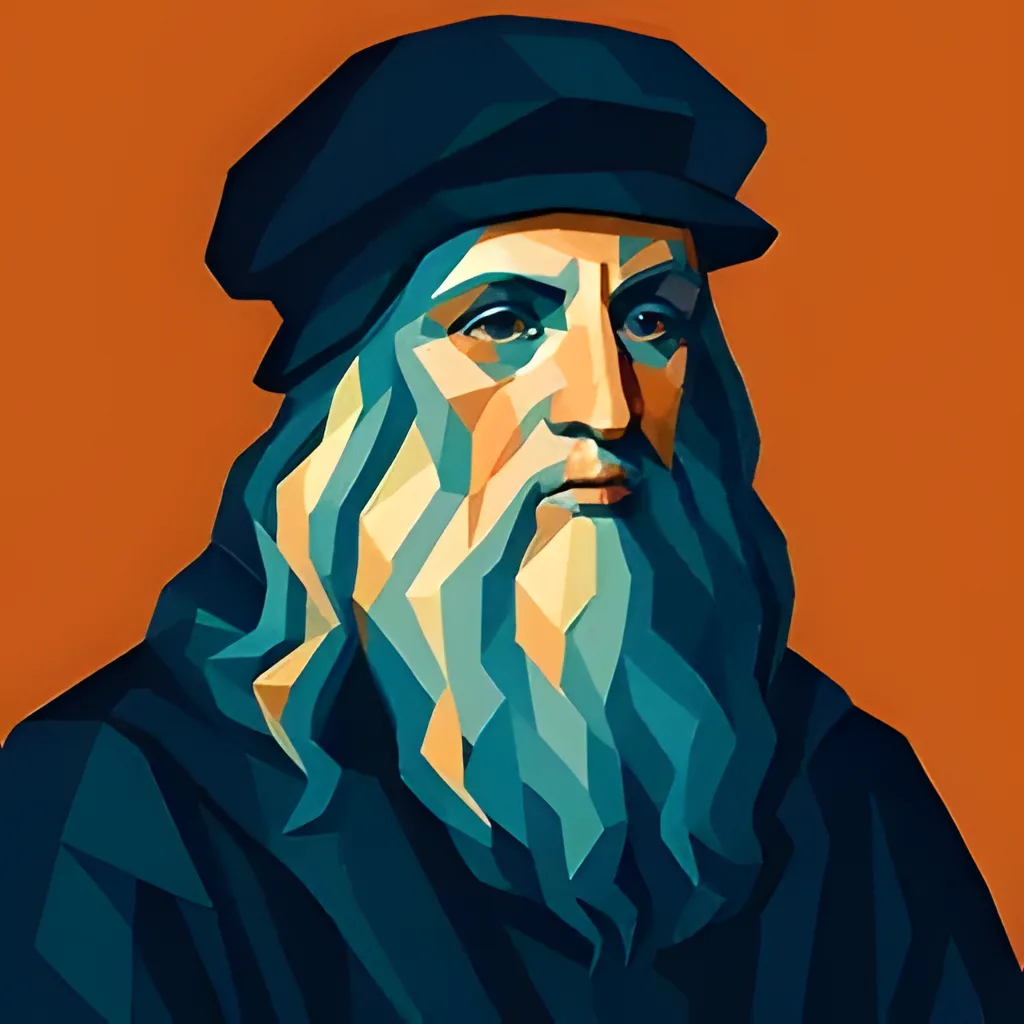
A life in brief
Leonardo da Vinci: life and timeline.
He was the illegitimate son of a notary and a peasant woman, which closed most doors in Renaissance Florence and left one open: apprenticeship. Leonardo da Vinci wrote backwards, dissected around thirty corpses to learn what was under the skin, and filled more than seven thousand surviving pages with water, gears, birds and hearts. He finished very little. The Last Supper began peeling almost immediately because he insisted on experimenting with the paint. The notebooks were the real work.
- 1452
Born in Vinci
Born 15 April in a small Tuscan town, the illegitimate son of Ser Piero, a notary, and Caterina, a peasant woman. Illegitimacy meant fewer rights and opportunities for life.
- 1466
Apprenticed to Verrocchio
At about fourteen his father places him with Andrea del Verrocchio in Florence. Renaissance workshops taught painting, bronze casting, architecture and stage design all at once.
- 1482
The court of Milan
Enters the service of Ludovico Sforza, Duke of Milan, for seventeen years: portraits, court entertainments, military fortifications and mechanical devices for festivals.
- 1495
The Last Supper
Begins the monastery wall painting in Milan, arranging twelve disciples in four groups of three, each group reacting differently to the news that one will betray Jesus.
- 1498
The paint begins to fail
He had used oil-based paint on a dry wall instead of true fresco, buying time for detail. The painting starts deteriorating almost immediately. Only a shadow of it survives.
- 1499
The Milan years end
His employment with Sforza ends. The bronze set aside for a huge equestrian sculpture — the largest casting ever attempted — had been melted for cannons when war threatened Milan, and the clay model was eventually destroyed.
- 1503
The Mona Lisa
Begins the portrait he works on until 1519. No harsh lines anywhere: the face emerges from shadow through layers of sfumato, the landscape receding into misty mountains.
- 1519
Death at Amboise
Dies 2 May at the Château du Clos Lucé, aged 67, reportedly in the arms of King Francis I — though that romantic detail is probably legend. He was designing an ideal city near the end.
Major achievements
Leonardo da Vinci: major achievements.
- 01
The Mona Lisa
Painted between 1503 and 1519. Its fame rests on the enigmatic smile and on technique: no harsh lines anywhere, everything flowing and blending, a background extending into misty mountains and winding rivers.
- 02
Sfumato
Built up layers of very thin, almost transparent paint to create soft, smoky transitions at the edges of objects. It changed what painting could do with light and shadow, and influenced artists for centuries.
- 03
The Last Supper
Painted on a Milan monastery wall between 1495 and 1498, arranging the disciples in four groups of three, each showing a different reaction to the same shocking news — a complex story told through faces and bodies alone.
- 04
Anatomy from the body itself
Dissected around thirty corpses when doing so was difficult and dangerous, producing detailed drawings of muscles, bones, organs and blood vessels — and painted figures of unmatched accuracy.
- 05
The notebooks
Over 7,000 surviving pages of flying machines, tanks, submarines, parachutes, canals and gear systems, plus observations on friction, blood flow and fossils that anticipated discoveries centuries away.
- 06
A method, not just results
Studied water by dropping ink into streams, vision by dissecting the eye, plants by measuring their growth. Observation and experiment over the authority of ancient books — revolutionary in his age.
Turning points
Leonardo da Vinci: defining moments.
- c. 1466
The workshop
Illegitimacy closed the professional doors his father had used. What remained was apprenticeship, and his father placed him with one of Florence's most respected artists — in a city buzzing with wealthy patrons and brilliant minds. Workshops there taught art, engineering and manufacturing together, which is exactly how his mind already worked.
- 1482–1499
Seventeen years at a duke's court
Ludovico Sforza gave him what artists in warring Italian cities needed: a protector and a wage. In return he painted, designed fortifications, staged entertainments and built mechanical devices. It was the longest stable stretch of his working life, and it ended when war took the bronze for his greatest sculpture.
- 1495–1498
The experiment that cost him The Last Supper
Rather than use traditional fresco, which dries fast and forces speed, he tried oil-based paint on a dry wall so he could keep refining details. It worked, briefly. The painting began deteriorating almost immediately, and despite numerous restorations only a shadow remains.
- 1519
France, and the unfinished list
His final patron, King Francis I, valued him as an adviser rather than an artist — on urban planning, military strategy, anything. His right hand was paralysed, probably by a stroke, though he could still draw with his left. He kept filling notebooks to the end.
What you’ll take away
Lessons from Leonardo da Vinci’s life.
- 01
Cross the borders
He saw connections between anatomy and engineering, between the flow of water and the growth of hair. The boundaries between fields are largely artificial, and the discoveries sit on the other side of them.
- 02
Go and look
He did not read about the human heart; he dissected one and drew what was there. In an age that treated ancient books as complete knowledge, checking for yourself was the radical act.
- 03
Experiment has a bill
The Last Supper is a ruin because he refused the safe technique. The same refusal produced sfumato. You do not get one habit without the other.
If you liked Leonardo da Vinci…
Browse all → Sculptor & Painter18 min
Michelangelo
The Divine Artist Who Sculpted the Renaissance
 Astronomer22 min
Galileo Galilei
The Father of Modern Science
 Inventor18 min
Nikola Tesla
The Visionary Inventor Who Electrified the World
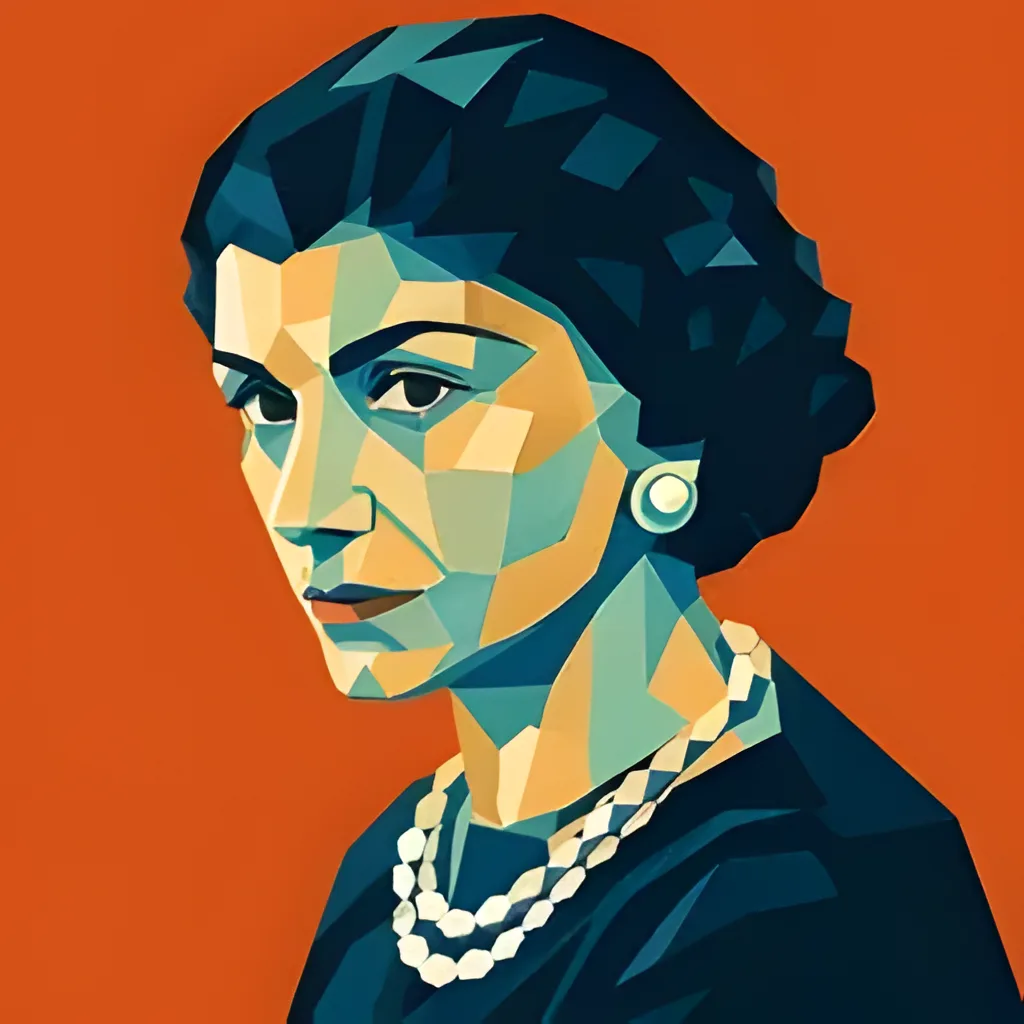 Fashion Designer16 min
Coco Chanel
The Revolutionary Designer Who Liberated Women's Fashion
FAQ
Frequently asked questions about Leonardo da Vinci.
What was Leonardo da Vinci's full name?
Leonardo di ser Piero da Vinci — “Leonardo, son of Ser Piero, from Vinci.” As an illegitimate child he had no family surname; “da Vinci” simply names the Tuscan town near which he was born.
What did Leonardo da Vinci invent?
Mostly designs rather than finished machines. His notebooks contain flying machines, a parachute, an armoured vehicle, diving equipment, water pumps and a self-propelled cart. Few were built in his lifetime, but his studies of anatomy, optics and mechanics were centuries ahead of his time.
How did Leonardo da Vinci die?
Probably after a stroke. He died on 2 May 1519 at the manor of Clos Lucé near Amboise, in France, where King Francis I had invited him to live. He was sixty-seven.
Why did Leonardo write backwards?
He was left-handed and wrote in mirror script, from right to left, which can only be read easily by holding the page up to a mirror. His notebooks — over 7,000 surviving pages — are almost all written this way.
Why is The Last Supper in such poor condition?
He experimented. Instead of the traditional fresco technique, he used oil-based paints on a dry wall, which gave him more time to work on details. It also meant the painting began deteriorating almost immediately. Despite numerous restorations, only a shadow of the original remains.
Did Leonardo's flying machines work?
No. He designed ornithopters with flapping wings, helicopters with spinning rotors and fixed-wing gliders, after spending countless hours watching birds. None could fly with the technology available in his time, though his understanding of aerodynamics was remarkably advanced.
How did Leonardo learn anatomy?
By dissecting bodies himself — around thirty corpses, at a time when this was both difficult and dangerous. He made detailed drawings of muscles, bones, organs and blood vessels, which is why the human figures in his paintings are so accurate and lifelike.
Did Leonardo die in the arms of the King of France?
That is the story. He died on 2 May 1519 at the Château du Clos Lucé, aged 67, reportedly in the arms of King Francis I — but the romantic detail is probably legend rather than fact.
Published by Lyfestori, from Duck Pond Ventures Oy. About us and how to report a correction.
18 min · one sitting