Wangari Maathai
The Tree Planting Activist Who Won The Nobel Peace Prize
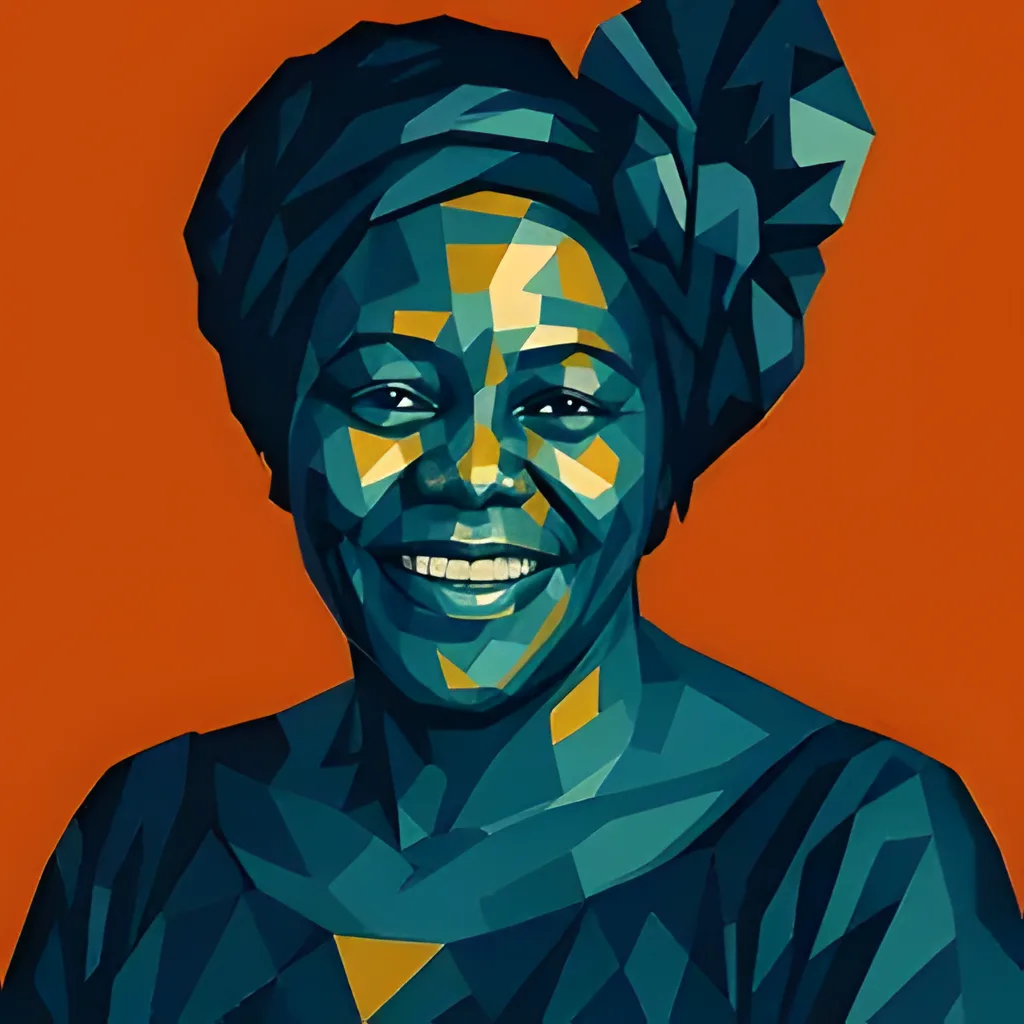
Born Wangari Muta on 1 April 1940 in Ihithe, Kenya, Wangari Maathai became the first woman in East and Central Africa to earn a doctorate, founded the Green Belt Movement that planted tens of millions of trees, and in 2004 became the first African woman to win the Nobel Peace Prize.
- 17 min listen
- Nobel Peace Prize 2004
- Green Belt Movement
- Environmental activist
Wangari Maathai’s full 17 min audio biography, The Tree Planting Activist Who Won The Nobel Peace Prize, is available on Lyfestori for iOS. Listen to a free preview below.
A life in brief
Wangari Maathai: life and timeline.
Rural women kept telling her the same things: the firewood was further away every year, the streams had stopped running, the soil would not grow food. Wangari Maathai was a biologist — the first woman in East and Central Africa to earn a doctorate — and her answer was not a study. It was to pay village women a small sum for every seedling that survived. Experts called tree planting too simple for the problem. The Green Belt Movement planted over 51 million trees, and it made her enough of a threat that police put her in hospital.
- 1940
Born in Ihithe
Born Wangari Muta on 1 April in a village in colonial Kenya's Nyeri district, to farmers Wanjiru Kibicho and Muta Njugi. She grows up collecting firewood in the Kikuyu highlands, where the streams run clear and the forests are indigenous.
- 1948
School at eight
Her parents send her to Ihithe Primary School despite the narrow opportunities for African girls. She ranks top of her class, then wins a place at Loreto High School Limuru, a boarding school run by Irish nuns.
- 1960
The airlift to Kansas
At twenty she leaves Kenya for the first time on a scholarship through Airlift Africa, organised by Tom Mboya, to study biology at Mount St. Scholastica College. She lands in an America in the middle of the Civil Rights Movement.
- 1966
Home to an independent Kenya
After a master's at the University of Pittsburgh she returns to a country three years into independence. An appointment is rescinded before she secures a post at the University of Nairobi's School of Veterinary Medicine.
- 1971
The first doctorate
She becomes the first woman in East and Central Africa to earn a Ph.D., with a dissertation on the development of gonads in bovines. She chairs her department by 1976 and is an associate professor by 1977.
- 1977
Seven trees
She founds the Green Belt Movement and, on World Environment Day, plants seven trees with a small group of women in Nairobi's Kamukunji Park. The idea: train rural women to grow indigenous seedlings and pay them for each tree that lives.
- 1979
The divorce
Her husband Mwangi, who filed in 1977, is granted a divorce. He criticises her publicly as too educated and too strong-minded for a woman. In 1980 she is briefly jailed for contempt in a related defamation matter.
- 1989
Uhuru Park
She leads a campaign against a 60-storey office complex planned for Nairobi's public park. The government and its international investors abandon the project — proof that grassroots opposition can stop the state.
- 1992
Freedom Corner
She and other activists occupy Uhuru Park with mothers of political prisoners, holding vigils and hunger strikes. Police attack with clubs and tear gas; she is hospitalised with head injuries. The international outcry helps free the prisoners.
- 2002
Parliament
After the opposition's breakthrough election, she wins the Tetu seat and becomes Assistant Minister for Environment and Natural Resources under Mwai Kibaki — clashing with officials who prefer short-term economic gains.
- 2004
The Nobel Peace Prize
She becomes the first African woman and the first environmentalist to win it, cited for her contribution to sustainable development, democracy and peace.
- 2011
Death
She dies of ovarian cancer on 25 September at seventy-one. Thousands attend the funeral, from government officials to the people whose villages she reforested.
Major achievements
Wangari Maathai: major achievements.
- 01
The Nobel Peace Prize
Awarded in 2004 — the first African woman and the first environmentalist to receive it. The committee's citation tied sustainable development, democracy and peace together, which was her argument all along.
- 02
Over 51 million trees
The Green Belt Movement's tally across Kenya, grown by rural women from indigenous seed in community nurseries and planted on farms, schools and public land.
- 03
The first woman in East and Central Africa to earn a Ph.D.
Completed at the University of Nairobi in 1971. She went on to chair her department in 1976 and become an associate professor in 1977.
- 04
Saving Uhuru Park
Her 1989 campaign stopped a 60-storey complex from being built on Nairobi's public park, forcing both the government and international investors to walk away.
- 05
Freedom Corner
The 1992 occupation with mothers of political prisoners cost her a hospital stay with head injuries, and the attention it drew helped secure the prisoners' release.
- 06
A model that travelled
The movement's approach inspired tree-planting and community empowerment work across Africa, and helped galvanise the UNEP-led Billion Tree Campaign.
Turning points
Wangari Maathai: defining moments.
- 1960
Airlift Africa
A scholarship took a twenty-year-old out of colonial Kenya and into the United States at the height of the Civil Rights Movement. She went to study biology and came back with a working knowledge of how ordinary people organise against power.
- 1970s
Listening to the women
Travelling for work, she saw the forests of her childhood gone — cut for farms, charcoal, cities. Women told her about longer walks for firewood and water, and dead soil. The realisation that environmental collapse was a daily survival problem, not an abstraction, produced the whole method.
- 1977
Seven trees, and everything else
The year she founded the Green Belt Movement was also the year her husband filed for divorce. Experts dismissed tree planting as too simple, and criticised her for putting women at the centre of it. She planted seven trees in a Nairobi park and kept going.
- 1989–1992
From trees to the government
Working out that deforestation was driven by corruption and land grabbing turned an environmentalist into a dissident. She beat the Uhuru Park development, then took a beating at Freedom Corner that put her in hospital — and got the political prisoners out.
What you’ll take away
Lessons from Wangari Maathai’s life.
- 01
Ask the people carrying the water
Her programme came from women describing longer walks for firewood, not from a research paper. The problem was defined by the people living it, which is why the solution fit.
- 02
Simple is not the same as inadequate
Officials and development experts said planting trees was too basic for a problem that complex. The simple thing was doable by thousands of people at once, which is exactly what the complex thing was not.
- 03
Follow the problem to its cause
She started with seedlings and ended up confronting a president, because the forests were being cut by corruption and land grabbing. Treating the environment and justice as one issue was a conclusion, not a slogan.
Did you know
Facts about Wangari Maathai.
- 01
Did you know that Wangari Maathai was the first African woman to win the Nobel Peace Prize, which she received in 2004 for her work linking environmental conservation to human rights?
- 02
Did you know that Wangari Maathai was the first woman in East and Central Africa to earn a doctorate degree, receiving her Ph.D. in veterinary anatomy in 1971?
- 03
Did you know that Wangari Maathai's organization, the Green Belt Movement, has successfully planted over 51 million trees across Kenya to combat deforestation?
If you liked Wangari Maathai…
Browse all → Indigenous Rights Activist17 min
Rigoberta Menchú Tum
The Indigenous Voice Who Spoke for the Voiceless
 Climate Activist16 min
Greta Thunberg
The Young Activist Who Sparked a Global Climate Movement
 Labor Leader15 min
César Chávez
A Farm-worker Who Became One of America’s Most Influential Labor Leaders
 Independence Leader19 min
Mahatma Gandhi
The Father of a Nation
FAQ
Frequently asked questions about Wangari Maathai.
What is Wangari Maathai known for?
Founding the Green Belt Movement in 1977, which paid rural Kenyan women to plant trees and grew to plant tens of millions of them, and for linking the environment to democracy and human rights. In 2004 she became the first African woman to receive the Nobel Peace Prize.
What was Wangari Maathai's education?
She won a scholarship in the 1960 “Kennedy airlift” to study in the United States, earning a biology degree from Mount St. Scholastica College in Kansas and a master's from the University of Pittsburgh. In 1971 she completed a doctorate in veterinary anatomy at the University of Nairobi — the first woman in East and Central Africa to earn one.
How did Wangari Maathai die?
Of cancer, at Nairobi Hospital on 25 September 2011, aged seventy-one.
Why is her name spelled Maathai?
She was born Wangari Muta and took her husband Mwangi Mathai's surname when they married in 1969. After their divorce in 1977 she was ordered to stop using his name, so she added an extra “a” and kept it as Maathai.
What is the Green Belt Movement?
The grassroots organisation she founded in 1977. Rural women collect seeds from indigenous trees, raise seedlings in community nurseries, and plant them on farms, schools and public land — receiving a small payment for each tree that survives. It has planted over 51 million trees.
Why did an environmentalist win the Nobel Peace Prize?
Because her work connected the two. The Norwegian Nobel Committee cited her contribution to sustainable development, democracy and peace. Her argument was that environmental destruction is driven by poverty, inequality and bad governance, and that conflict follows from all three.
Was Wangari Maathai really the first woman in her region with a doctorate?
Yes — in 1971 she became the first woman in East and Central Africa to earn a Ph.D., completing a dissertation on the development and differentiation of gonads in bovines at the University of Nairobi.
What was Freedom Corner?
A 1992 occupation of Nairobi's Uhuru Park where she and other activists supported mothers of political prisoners through vigils and hunger strikes. Police attacked the protesters with clubs and tear gas and she was hospitalised with head injuries, but the international attention helped secure the prisoners' release.
How did she stop the Uhuru Park development?
In 1989 she led sustained public opposition to a planned 60-storey office complex in the Nairobi park. The government and its international investors eventually abandoned the project.
Published by Lyfestori, from Duck Pond Ventures Oy. About us and how to report a correction.
17 min · one sitting