César Chávez
A Farm-worker Who Became One of America’s Most Influential Labor Leaders
Born César Estrada Chávez on 31 March 1927 near Yuma, Arizona, César Chávez grew up following the crops as a migrant worker and co-founded the union that became the United Farm Workers — using strikes, boycotts, marches and fasts to win farmworkers their first union contracts.
- 15 min listen
- United Farm Workers
- Nonviolence
- Delano Grape Strike
César Chávez’s full 15 min audio biography, A Farm-worker Who Became One of America’s Most Influential Labor Leaders, is available on Lyfestori for iOS. Listen to a free preview below.
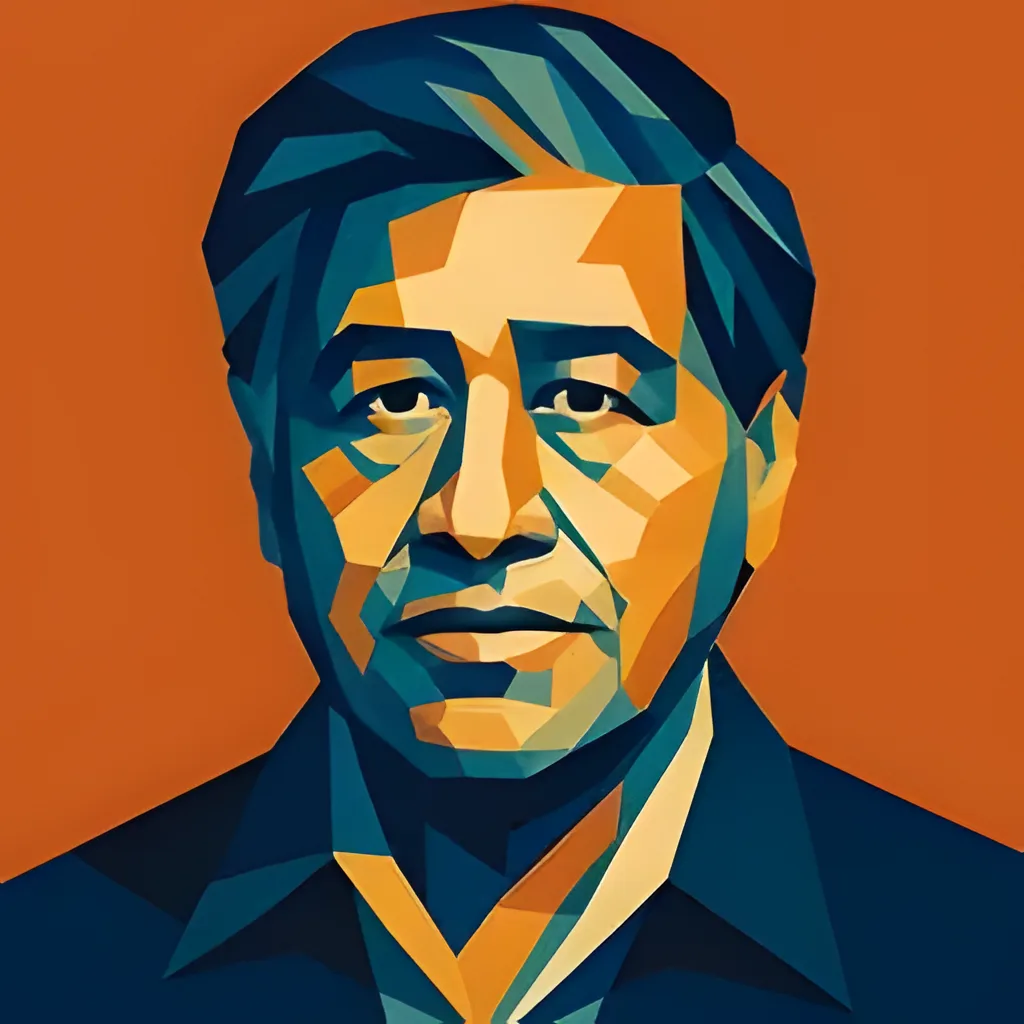
A life in brief
César Chávez: life and timeline.
He changed schools dozens of times as his family followed the crops. The Chávez farm and store near Yuma were lost in 1937, and the family joined the migrant stream — labour camps without running water, long days under the sun for very little. In 1962 he quit a secure organising job, moved to Delano with $1,200 in savings, and started a union for workers federal labour law did not protect. Strikes, a 300-mile march, a national grape boycott and a 25-day fast eventually forced the growers to sign.
- 1927
Born near Yuma
Born 31 March on a small family farm in Arizona to Librado and Juana Chávez, who grew vegetables and ran a small neighbourhood store. The family speaks Spanish at home. His Catholic faith and his parents' lessons about fairness and dignity shape him early.
- 1937
The farm is lost
After a damaging land dispute and the hardship of the Great Depression, the family loses the farm and the store. They become migrant farmworkers following crops through California and Arizona, living in labour camps that are little more than shacks without running water or electricity.
- 1944
The Navy
Serves two years in the United States Navy during the Second World War, returning to California in 1946.
- 1948
Marries Helen Fabela
She becomes his lifelong partner and strongest supporter. They raise eight children, and her work behind the scenes becomes part of the movement itself.
- 1952
Meeting Fred Ross
An organiser from the Community Service Organization teaches him to register voters, hold meetings and organise communities. He discovers a talent for bringing people together, and spends ten years learning the craft.
- 1962
The National Farm Workers Association
Against the advice of friends and family, he quits his secure job, moves his family to Delano and founds the union with $1,200 in savings. It will become the United Farm Workers of America.
- 1965
The Delano Grape Strike
Filipino grape workers walk out for better wages. He brings his members out with them, forging an alliance across ethnic lines. The strike lasts five years and becomes one of the most important labour actions in American history.
- 1966
The march to Sacramento
Roughly 300 miles from Delano to the state capital, walked over 25 days. Thousands join along the way and newspapers across the country pick it up, turning a local strike into a national movement.
- 1968
The fast
His first major fast lasts 25 days, following the example of Gandhi, and draws international attention. Senator Robert Kennedy is at his side when he breaks it — proof the movement now has powerful political allies.
- 1970
The growers sign
Most major table grape growers in California sign contracts with the United Farm Workers: higher wages, health benefits, and stronger safety and pesticide protections.
- 1993
Death in Arizona
Dies peacefully in his sleep on 23 April, aged sixty-six, still working on union business. More than 40,000 people come to his funeral — farmworkers standing alongside politicians and activists.
Major achievements
César Chávez: major achievements.
- 01
Founding the United Farm Workers
He built a union for workers federal labour protections excluded — people who could be fired or deported for joining, many of whom could not read and did not share a language. He started with $1,200 and thousands of miles of driving to sit in labour camps and listen.
- 02
The 1970 contracts
After a five-year strike, most major table grape growers in California signed with the union, delivering higher wages, health benefits, and stronger safety and pesticide protections. Farmworkers had proved they could organise and win.
- 03
The consumer boycott
His most powerful weapon was the shopper, not the picket line. He asked Americans to stop buying grapes; millions across the United States and Canada did, and the economic pressure reached growers no strike alone could.
- 04
An alliance that held
When Filipino workers struck in Delano in 1965, he brought his own membership out alongside them rather than let growers set one group against another. It set the pattern for everything that followed.
- 05
A voice beyond the fields
He became a symbol of hope for Latino Americans and other communities fighting for civil rights, corresponding with leaders including Martin Luther King Jr., and insisting that social justice had to include the people who feed the country.
Turning points
César Chávez: defining moments.
- 1937
Losing the farm
A land dispute and the Depression took the farm and the store when he was ten. The family joined the migrant stream, and he watched owners treat workers as disposable — firing anyone who complained about unsafe conditions or low wages, expecting children in the fields instead of school. He changed schools dozens of times as the crops moved.
- 1952
Meeting Fred Ross
The Community Service Organization gave him the mechanics: registering voters, running meetings, moving a community to act. It turned what he had seen into a method, and he spent ten years practising it before he used it on anything of his own.
- 1962
Quitting the secure job
Friends and family told him not to. He left the CSO, moved to Delano and started a union for the workers Congress had left out of labour law, on $1,200 in savings. Most farmworkers were too afraid to join. He drove thousands of miles across the Central Valley, visited them at home, and slowly convinced them otherwise.
- 1965–1970
Five years in Delano
A strike alone could be outlasted, so he added what could not: a 300-mile march that put farmworkers on the national news, a boycott that carried the fight into every grocery store in North America, and a 25-day fast that made the movement's discipline the story. In 1970 the growers signed.
- Throughout
Holding to nonviolence
Growers hired security guards to intimidate workers. There were personal attacks and threats against his family. He never moved, believing violence would destroy the movement's moral authority. His father had taught him it was never the answer to injustice; Gandhi had shown him what the alternative could do.
What you’ll take away
Lessons from César Chávez’s life.
- 01
Find the pressure that actually reaches
A picket line at a farm gate could be waited out. A shopper refusing grapes two thousand miles away could not be fired or deported. He moved the fight onto ground where his side had the numbers.
- 02
Learn the craft before you need it
Ten years with the Community Service Organization taught him voter registration, meetings, organising — unglamorous skills. When he finally built his own union, he was not improvising.
- 03
Live like the people you represent
Famous, he stayed in humble housing and drove an old station wagon. It was not modesty for its own sake: leaders who live differently from their members eventually decide differently from them.
If you liked César Chávez…
Browse all → Independence Leader19 min
Mahatma Gandhi
The Father of a Nation
 Civil Rights Leader16 min
Martin Luther King Jr.
The Preacher Who Led America's Fight for Civil Rights
 Indigenous Rights Activist17 min
Rigoberta Menchú Tum
The Indigenous Voice Who Spoke for the Voiceless
 Climate Activist16 min
Greta Thunberg
The Young Activist Who Sparked a Global Climate Movement
FAQ
Frequently asked questions about César Chávez.
What methods did César Chávez use?
Strict nonviolence, modelled on Gandhi and Martin Luther King Jr. He organised strikes, a national consumer boycott of table grapes that millions of Americans joined, long protest marches such as the 1966 pilgrimage to Sacramento, and public fasts — including a 25-day fast in 1968 to recommit the movement to nonviolence.
What is César Chávez's full name?
César Estrada Chávez. He was born on 31 March 1927 on his family's farm near Yuma, Arizona, which they lost during the Great Depression.
What did César Chávez actually win?
In 1970, after a five-year strike, most major table grape growers in California signed contracts with the United Farm Workers giving higher wages, health benefits, and stronger safety and pesticide protections. He kept fighting through the 1970s and 1980s for laws against harmful pesticides and for clean drinking water, decent housing and the right to form unions.
Why did farmworkers need their own union?
They had been excluded from most federal labour protections. Workers who complained about pay or unsafe conditions were simply fired, and many could be deported for organising. That exclusion is why Chávez left a secure job in 1962 to build a union for them himself.
Why did he fast?
As nonviolent protest, following the example of Mahatma Gandhi, whom he greatly admired. His first major fast lasted 25 days in 1968 and drew international attention to the farmworkers' struggle. Senator Robert Kennedy was there when he broke it, showing the movement had gained powerful political allies.
How is he remembered today?
Schools, streets and parks across the United States carry his name. His birthday, 31 March, is an official state holiday in California and is observed in several other states. The Postal Service has issued stamps honouring him, and President Barack Obama designated his home and the union headquarters at La Paz in Keene, California, a national monument.
Published by Lyfestori, from Duck Pond Ventures Oy. About us and how to report a correction.
15 min · one sitting