Raoul Wallenberg
The Businessman Who Saved Thousands
Born on 4 August 1912 on Lidingö, near Stockholm, into Sweden's most powerful banking family, Raoul Wallenberg went to Budapest as a diplomat in 1944 and saved thousands of Hungarian Jews with protective passports and safe houses — then disappeared into Soviet custody in January 1945.
- 18 min listen
- Righteous Among the Nations
- Holocaust rescue
- Swedish diplomat
Raoul Wallenberg’s full 18 min audio biography, The Businessman Who Saved Thousands, is available on Lyfestori for iOS. Listen to a free preview below.
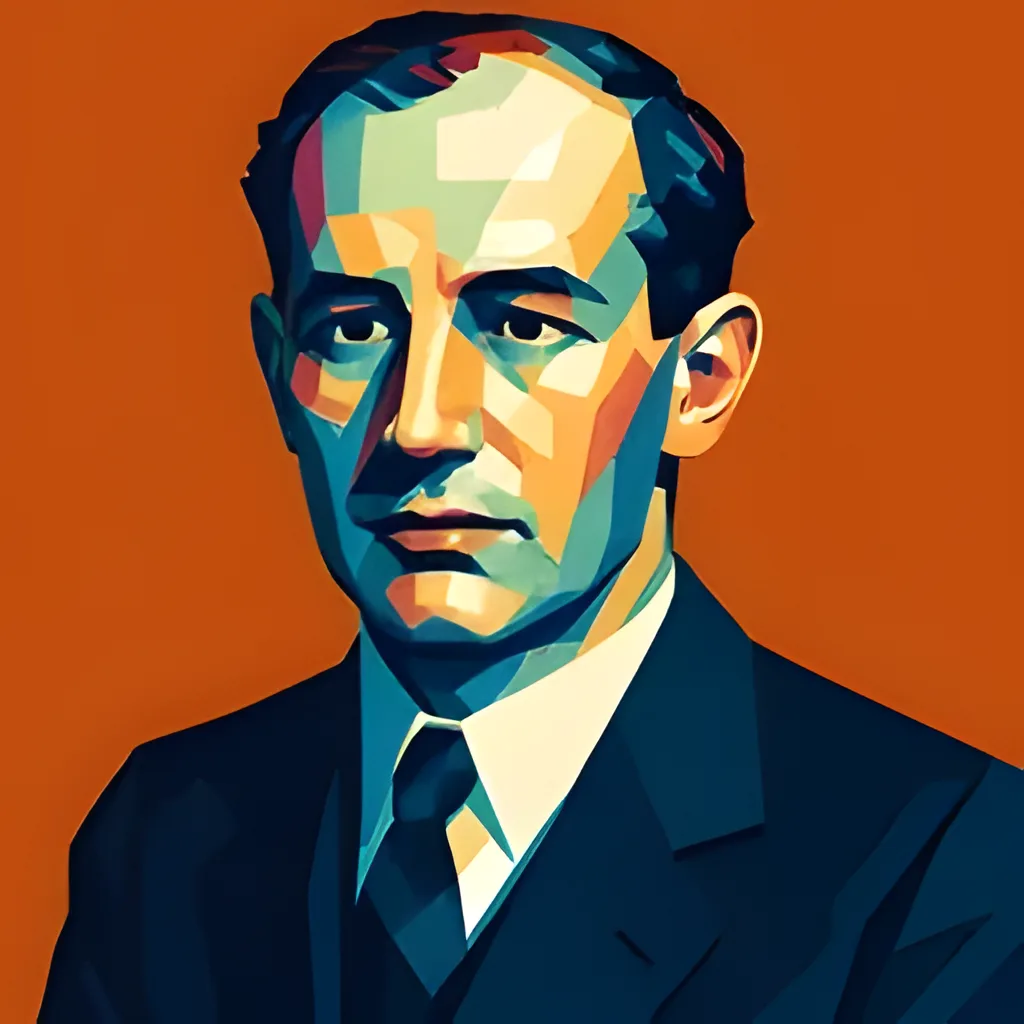
A life in brief
Raoul Wallenberg: life and timeline.
The documents were fake. Raoul Wallenberg designed the Swedish protective passes himself — heavy paper, official seals, impressive signatures, no legal force whatsoever — and Nazi officials accepted them anyway. A trained architect from Sweden's banking dynasty, he arrived in Budapest in July 1944 as Adolf Eichmann was deporting Hungary's Jews, and ran rescue like a business: safe houses flying Swedish flags, a managed network, trains stopped by sheer nerve. He saved tens of thousands. In January 1945 he walked into Soviet custody and vanished.
- 1912
Born in Stockholm
Born 4 August into one of Europe's most influential banking families. His father had died of cancer three months earlier. He was raised by his mother, Maj Wising, and his grandfather Gustav Wallenberg — a diplomat who taught him that those given much were expected to give much back.
- 1935
Architecture at Michigan
He graduates from the University of Michigan, an unusual path for a Wallenberg, having watched the Great Depression at close range. He speaks Swedish, English and German fluently, with Russian and French besides.
- 1936
Into trade
Unable to find architectural work in a depressed Europe, he joins a Swedish firm trading with Central Europe. The job takes him repeatedly to Germany and Hungary, where he sees the persecution of Jews at first hand.
- 1941
Kalman Lauer
He joins a Hungarian Jewish businessman at an import-export company — a commercial arrangement that also shelters Lauer behind a Swedish citizen's name, and gives Wallenberg standing reasons to travel to Hungary.
- 1944
Hungary occupied
Germany occupies Hungary in March and Adolf Eichmann arrives to run the deportations. By summer hundreds of thousands of Hungarian Jews have been murdered, and those left in Budapest expect to follow.
- 1944
Arrival in Budapest
Sweden, Jewish organisations and the American War Refugee Board send an envoy. He arrives on 9 July as Secretary of the Swedish Legation — a modest budget, a diplomatic title, and broad authority to do whatever he judges necessary.
- 1944
The passes and the safe houses
He designs protective passes with no legal standing but overwhelming presentation, and opens safe houses flying Swedish flags and declared Swedish territory. He runs the network like a company: chains of command, defined roles, working communications.
- 1945
Budapest liberated
When Soviet forces arrive, he has directly saved an estimated 15,000 to 30,000 Hungarian Jews, and may have helped as many as 100,000 indirectly. Other diplomats have begun copying his methods.
- 1945
Debrecen
On 17 January he leaves his headquarters to meet Soviet commanders, telling colleagues he expects to be back within days. He is never seen again.
- 1957
The Soviet explanation
After a decade of contradictory accounts, Moscow says he died of a heart attack in prison in 1947, offering no convincing evidence. His family rejects it and keeps searching.
- 1981
Honorary American citizen
The United States Congress makes him an honorary citizen — only the second person in history to be so recognised. Israel names him Righteous Among the Nations.
Major achievements
Raoul Wallenberg: major achievements.
- 01
The protective passes
Swedish documents declaring the bearer under Swedish protection and awaiting repatriation. They carried no real legal authority. Printed on heavy paper with seals and signatures, they looked so official that even senior Nazis usually honoured them, and they alone saved tens of thousands.
- 02
The safe houses
Buildings across Budapest flying Swedish flags and posted as Swedish territory, sheltering thousands of people behind a citizenship they did not have.
- 03
Tens of thousands of lives
An estimated 15,000 to 30,000 Hungarian Jews saved directly from deportation and death, and perhaps as many as 100,000 helped indirectly, in roughly six months of work.
- 04
A method others could copy
His innovations were adopted by other diplomats and relief workers, multiplying the effect well beyond what one legation could do — and they are still studied by humanitarian organisations protecting vulnerable people today.
- 05
Recognition
Named Righteous Among the Nations by Israel, the highest honour given to non-Jews who risked their lives to save Jews during the Holocaust, and made an honorary citizen of the United States by Congress in 1981.
Turning points
Raoul Wallenberg: defining moments.
- 1936–1941
Seeing it himself
Business travel through Germany and Hungary showed him confiscated Jewish businesses, separated families, destroyed communities. Most people who saw it looked away. He went looking for an understanding of what was happening, and then for something to do about it.
- 1941
The partnership with Kalman Lauer
Going into business with a Hungarian Jewish businessman was commerce and shelter at once — Lauer gained the protection of a Swedish name, and Wallenberg gained legitimate reasons to be in Hungary and contacts once he got there. The rescue mission was built on that groundwork.
- July 1944
Taking the mission
He did not hesitate. He knew the danger, and he also knew the combination nobody else had: business negotiation, four or five languages, Central European contacts, and a family name that opened doors. He left neutral Sweden for a city where Eichmann was running the deportations.
- 17 January 1945
The road to Debrecen
He had survived Nazi officers and Hungarian fascists. He was lost to the army that liberated the city. He said he would be back in a few days. The Soviets said he was under their protection, then that Germans had killed him, then that he had died in prison in 1947 — never with evidence.
What you’ll take away
Lessons from Raoul Wallenberg’s life.
- 01
Authority is mostly performance
The passes had no legal force. He understood the psychology of bureaucracy: impeccable dress, absolute confidence, and the manner of a man used to being obeyed. He bluffed past Nazi officers by behaving as though he already had the power he was claiming.
- 02
Ordinary skills, extraordinary use
He had no training for this. He had training in logistics, negotiation, presentation and running an operation — and applied all of it to a rescue with clear goals, defined roles and careful use of a small budget. Business skills and moral purpose are not opposites.
- 03
Showing up is the whole thing
Survivors remembered him appearing at railway platforms at the worst moment, demanding people off deportation trains. His willingness to stand there in person is what pulled others into the network and multiplied what one man could do.
Did you know
Facts about Raoul Wallenberg.
- 01
Did you know that Swedish businessman Raoul Wallenberg saved up to an estimated 100,000 Hungarian Jews during the Holocaust using fake but official-looking Swedish protective passes?
- 02
Did you know that Raoul Wallenberg established safe houses throughout Budapest, declaring them to be Swedish territory by flying Swedish flags, to protect thousands of Jewish people from deportation?
- 03
Did you know that in 1981, the United States Congress made Raoul Wallenberg an honorary American citizen, making him only the second person in history to receive this honor?
If you liked Raoul Wallenberg…
Browse all → Soviet Leader16 min
Joseph Stalin
The Dictator Who Ruled with an Iron Fist
 Missionary20 min
Mother Teresa
Saint of the Slums
 Labor Leader15 min
César Chávez
A Farm-worker Who Became One of America’s Most Influential Labor Leaders
 Climate Activist16 min
Greta Thunberg
The Young Activist Who Sparked a Global Climate Movement
FAQ
Frequently asked questions about Raoul Wallenberg.
Where was Raoul Wallenberg born?
On Lidingö, an island suburb of Stockholm, Sweden, on 4 August 1912. His father, a naval officer from the Wallenberg banking family, had died of cancer three months before he was born.
What religion was Raoul Wallenberg?
He was raised a Lutheran in the Church of Sweden. He did have Jewish ancestry: his great-great-grandfather Michael Benedicks was a Jewish immigrant to Sweden who converted to Christianity.
How did Raoul Wallenberg die?
No one knows for certain. He was detained by the Soviet army in Budapest in January 1945 and taken to Moscow. In 1957 the Soviet Union claimed he had died of a heart attack in Lubyanka prison in July 1947, but no convincing evidence was ever produced. Sweden formally declared him dead in 2016.
What were the Swedish protective passes?
Documents Wallenberg designed himself, declaring the bearer to be under Swedish protection and awaiting repatriation to Sweden. They had no genuine legal authority — but printed on high-quality paper with official seals and signatures, they looked convincing enough that even high-ranking Nazi officials usually accepted them. He and his team issued them to anyone who could plausibly claim a Swedish connection, stretching the truth as far as it would go.
How many people did Raoul Wallenberg save?
He directly saved an estimated 15,000 to 30,000 Hungarian Jews from deportation and death, and may have helped as many as 100,000 indirectly. That includes those who received protective passes, those sheltered in his safe houses flying Swedish flags, and those reached by the wider rescue network he built.
What happened to Raoul Wallenberg?
Nobody knows. On 17 January 1945 he left his Budapest headquarters to meet Soviet commanders in Debrecen, expecting to return in a few days, and was never seen again. The Soviets first said he was under their protection, later suggested German or Hungarian forces had killed him, and in 1957 claimed he had died of a heart attack in prison in 1947 — never producing convincing evidence. Some believed he was held in the gulag as a suspected Western spy.
Why was Wallenberg sent to Budapest?
Germany occupied Hungary in March 1944 and Adolf Eichmann arrived to organise the deportation of Hungarian Jews. The Swedish government, working with Jewish organisations and the American War Refugee Board, decided to send a special envoy. Wallenberg was chosen for his business experience, his languages and his knowledge of Central Europe.
Published by Lyfestori, from Duck Pond Ventures Oy. About us and how to report a correction.
18 min · one sitting