Nelson Mandela
The Freedom Fighter Who United a Nation
Born Rolihlahla Mandela on 18 July 1918 in Mvezo, South Africa, Nelson Mandela led the fight against apartheid, spent twenty-seven years in prison, and in 1994 became South Africa's first Black president — and a worldwide symbol of reconciliation.
- 17 min listen
- Nobel Peace Prize
- Anti-apartheid
- President of South Africa
Nelson Mandela’s full 17 min audio biography, The Freedom Fighter Who United a Nation, is available on Lyfestori for iOS. Listen to a free preview below.
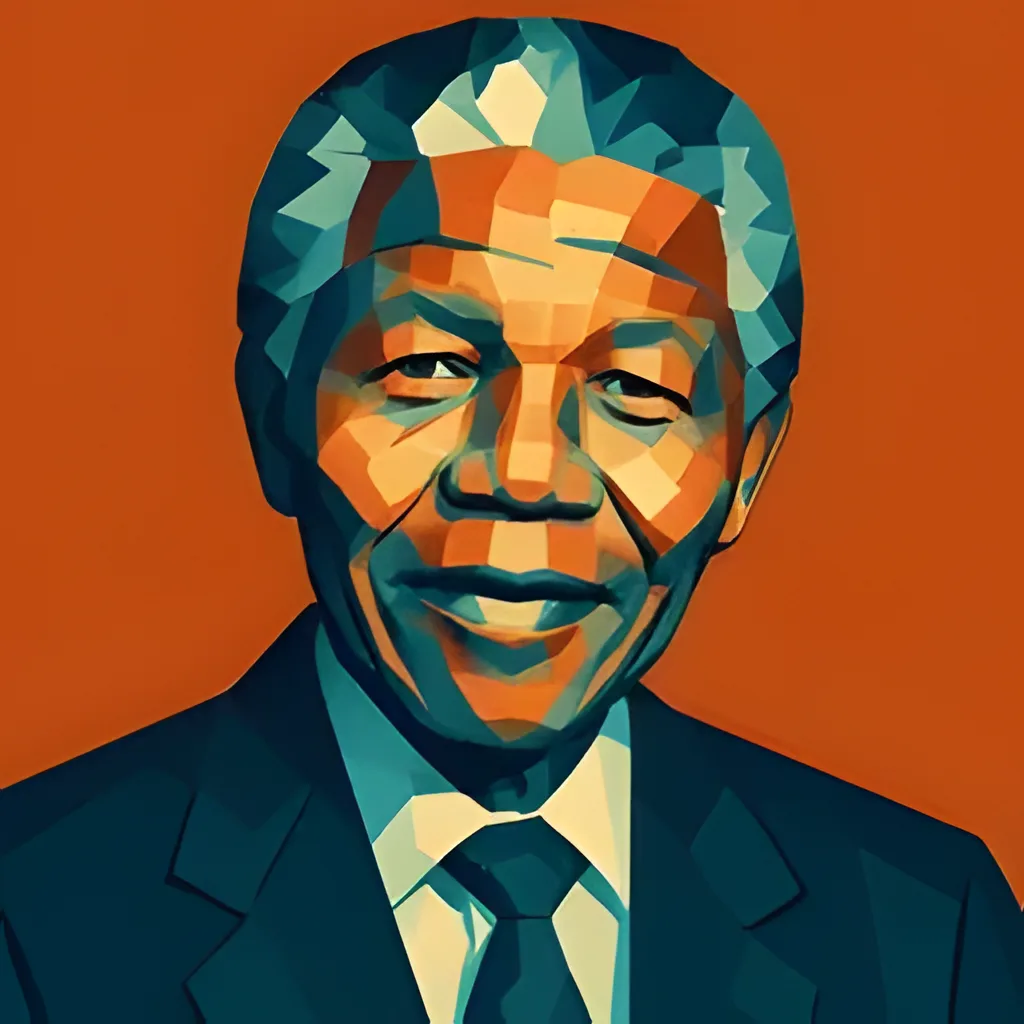
A life in brief
Nelson Mandela: life and timeline.
His Xhosa birth name, Rolihlahla, colloquially means troublemaker. Nelson Mandela fled an arranged marriage for Johannesburg in 1941, opened South Africa's first Black-owned law firm with Oliver Tambo, and then spent twenty-seven years in prison — eighteen of them breaking limestone on Robben Island, allowed one visitor every six months. He walked out at seventy-one, chose reconciliation over retribution, and became president. Then he served a single term and left.
- 1918
Born in Mvezo
Born 18 July in a village in the Eastern Cape. His father, Gadla Henry Mphakanyiswa, was a local chief and counsellor to the Thembu royal family. A mission-school teacher later gave him the English name Nelson.
- 1941
Flight to Johannesburg
Suspended from Fort Hare for a student protest, he runs from an arranged marriage arranged by his guardian, the Thembu regent. In Johannesburg he works as a mine security officer and an articled clerk, finishing his degree by correspondence.
- 1944
Joins the ANC
With Oliver Tambo and Walter Sisulu he forms the ANC Youth League, arguing that petitions and moderate protest have failed and that mass action is needed.
- 1952
The Defiance Campaign
As volunteer-in-chief he leads thousands who deliberately break apartheid statutes and court arrest. He is arrested on 30 July under the Suppression of Communism Act. The same year he and Tambo open South Africa's first Black-owned law firm.
- 1961
Spear of the Nation
After police kill 69 peaceful protesters at Sharpeville, he helps found Umkhonto we Sizwe, the ANC's armed wing, targeting sabotage rather than civilians.
- 1962
The Black Pimpernel caught
After months underground in disguise, appearing at rallies and vanishing, police take him near Howick on 5 August. He represents himself and is sentenced to five years.
- 1964
The Rivonia Trial
Documents seized at Liliesleaf Farm bring sabotage charges carrying the death penalty. He speaks from the dock on 20 April. On 12 June he is sentenced to life. He is forty-five.
- 1985
Refusing Botha's offer
President P.W. Botha offers release if he renounces violence. He refuses, replying through his daughter that only free men can negotiate.
- 1990
Walking free
On 11 February he walks out of Victor Verster Prison at seventy-one, hand in hand with Winnie Mandela, broadcast live worldwide.
- 1994
President
South Africa's first fully democratic election on 27 April gives the ANC 62 percent. He is inaugurated on 10 May, with former oppressors and oppressed standing side by side.
- 1999
One term, then out
He steps down at eighty after a single term — unusual on a continent where leaders often stayed, and deliberately so.
- 2013
Death in Johannesburg
He dies at home on 5 December, aged ninety-five, three years after his last major public appearance at the 2010 World Cup closing ceremony.
Major achievements
Nelson Mandela: major achievements.
- 01
The end of apartheid
He negotiated the transition from a state that jailed him for life to one that elected him president, and held the country together through a period when many expected civil war.
- 02
The Truth and Reconciliation Commission
Chaired by Archbishop Desmond Tutu, it let victims and perpetrators of apartheid-era crimes tell their stories, offering amnesty to those who fully disclosed. It chose truth over punishment.
- 03
South Africa's first Black-owned law firm
Opened with Oliver Tambo in 1952, giving affordable legal help to Black clients being prosecuted under apartheid law.
- 04
Nobel Peace Prize
Awarded in 1993, shared with F.W. de Klerk, the president who unbanned the ANC and freed him. He collected over 250 awards and honorary degrees in his lifetime.
- 05
Leaving power
He served one term and stepped down in 1999, setting an example he thought African leaders needed more than any speech.
Turning points
Nelson Mandela: defining moments.
- 1941
Running away
Suspended from Fort Hare and facing a marriage his guardian had arranged, he left for Johannesburg. It was there, not at university, that his politics formed — watching pass laws and residential restrictions govern where people could live, work and marry.
- 1961
Picking up arms
After Sharpeville, he and the ANC leadership concluded non-violence alone would not work, and founded Umkhonto we Sizwe. It was a deliberate limit as much as an escalation: sabotage, not civilians. It also made him a fugitive and, eventually, a life prisoner.
- 1964
The speech from the dock
Facing possible execution at the Rivonia Trial, he used the courtroom as a platform rather than a defence, and said he was prepared to die for a democratic society. He got life instead. The speech outlived the sentence.
- 1985
Refusing the deal
Botha offered him freedom in exchange for renouncing violence. Twenty-three years in, he said no. Refusing release on someone else's terms did more for his authority than release would have.
- 1990–1994
Reconciliation over revenge
Out of prison, he reached out to white South Africans, learned Afrikaans, met apartheid-era leaders, kept white civil servants and officers in post, and wore the Springbok captain's jersey at the 1995 final. It was not always popular inside the ANC. His moral authority made it stick.
During my lifetime I have fought against white domination, and I have fought against black domination. I have cherished the ideal of a democratic and free society in which all persons live together in harmony and with equal opportunities. It is an ideal which I hope to live for and to achieve. But if needs be, it is an ideal for which I am prepared to die.
Nelson Mandela, speech from the dock, Rivonia Trial, 20 April 1964
What you’ll take away
Lessons from Nelson Mandela’s life.
- 01
Reconciliation is a strategy, not a sentiment
He did not forgive because he was gentle. He forgave because a country that prosecuted its way through the transition would have burned, and he had done the arithmetic.
- 02
Use the confinement
Twenty-seven years did not idle him. He studied by correspondence and earned his law degree in 1989, still imprisoned, and spent years mediating between rival factions on Robben Island — the exact skill the presidency would demand.
- 03
Know when to stop
The hardest thing he did was leave. One term at eighty, then out, on a continent where his peers stayed until they died or were removed.
Did you know
Facts about Nelson Mandela.
- 01
Did you know that Nelson Mandela was secretly a master of disguise during his early activist years, often posing as a chauffeur, a chef, or a 'garden boy' to evade the South African police?
- 02
Did you know that Mandela shared the 1993 Nobel Peace Prize with F.W. de Klerk, the very man who had released him from 27 years of imprisonment, and whom he then defeated in South Africa's first fully democratic election to become its first Black president?
- 03
Did you know that Nelson Mandela spent 27 years in prison, with 18 of those years served in a tiny cell on Robben Island where he was allowed only one visitor and one letter every six months?
If you liked Nelson Mandela…
Browse all → Independence Leader19 min
Mahatma Gandhi
The Father of a Nation
 Civil Rights Leader16 min
Martin Luther King Jr.
The Preacher Who Led America's Fight for Civil Rights
 Civil Rights Leader17 min
Malcolm X
The Revolutionary Who Transformed Black Consciousness in America
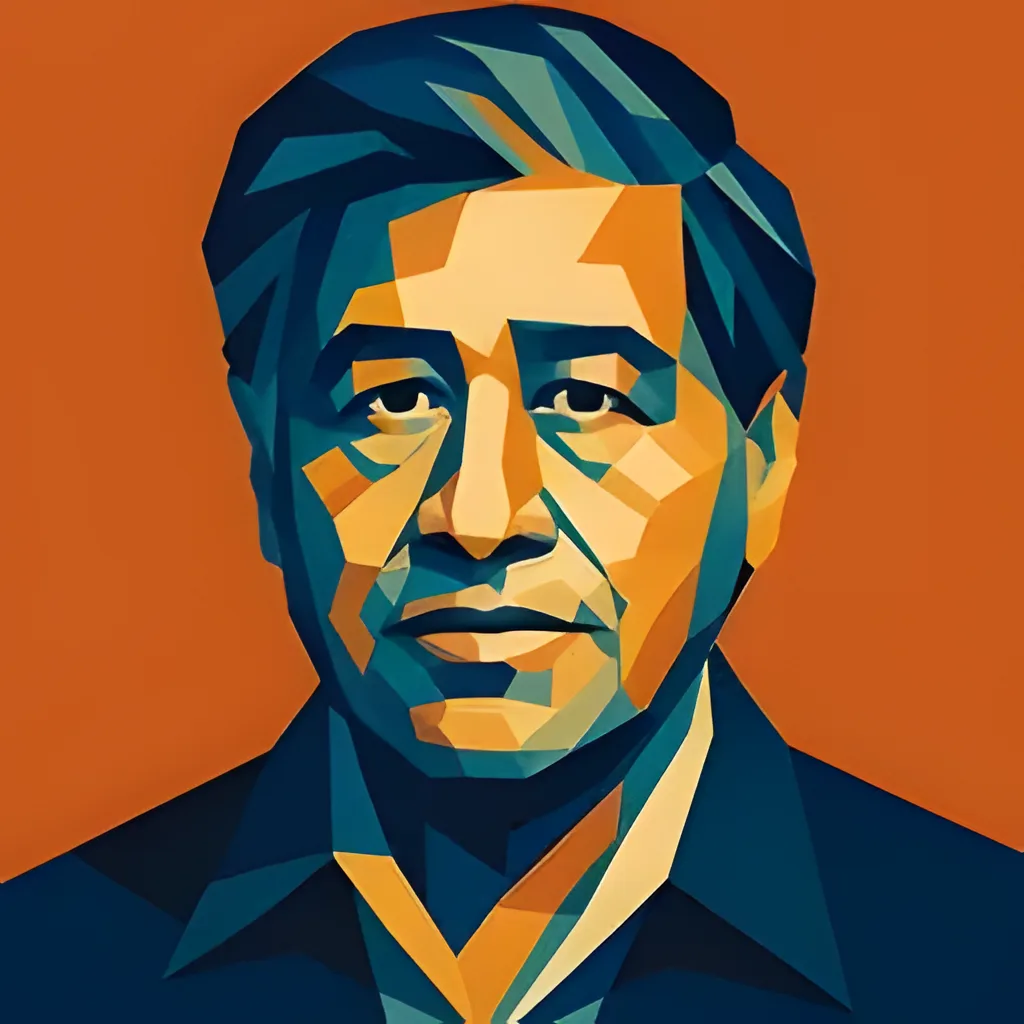 Labor Leader15 min
César Chávez
A Farm-worker Who Became One of America’s Most Influential Labor Leaders
FAQ
Frequently asked questions about Nelson Mandela.
What was Nelson Mandela's real name?
Rolihlahla Mandela — a Xhosa name often translated as “pulling the branch of a tree,” or informally “troublemaker.” A teacher at his mission school gave him the English name Nelson on his first day. South Africans also call him Madiba, his clan name.
How did Nelson Mandela die?
Of a prolonged respiratory infection, at his home in Johannesburg on 5 December 2013, aged ninety-five. His lungs had been weakened by tuberculosis contracted during his years on Robben Island.
Why was Nelson Mandela imprisoned for 27 years?
He was convicted at the 1964 Rivonia Trial, primarily of sabotage and related offences such as recruiting for guerrilla warfare, after documents seized at Liliesleaf Farm implicated him in planning armed resistance. The charges carried a possible death penalty; he and seven co-defendants received life imprisonment instead.
Did Mandela support violence?
In 1961, after the Sharpeville massacre in which police killed 69 peaceful protesters, he helped found Umkhonto we Sizwe, the ANC's armed wing, having concluded that non-violent resistance alone would not be enough. It focused on sabotage rather than targeting civilians. In 1985 he refused P.W. Botha's offer of release in exchange for renouncing violence as a political tool.
What was the Truth and Reconciliation Commission?
A forum Mandela established as president, chaired by Archbishop Desmond Tutu, where both victims and perpetrators of apartheid-era crimes could tell their stories. It offered amnesty to those who fully disclosed what they had done, prioritising truth over punishment.
Why did Mandela serve only one term as president?
He chose to. He stepped down in 1999 at eighty, believing in democratic principles and wanting to set an example for future African leaders on a continent where many leaders clung to office indefinitely.
Further reading
Published by Lyfestori, from Duck Pond Ventures Oy. About us and how to report a correction.
17 min · one sitting