Martin Luther King Jr.
The Preacher Who Led America's Fight for Civil Rights
Born Michael King Jr. on 15 January 1929 in Atlanta, Martin Luther King Jr. led the Montgomery bus boycott, delivered “I Have a Dream” at the 1963 March on Washington and won the Nobel Peace Prize at thirty-five, before he was assassinated in Memphis in 1968 at the age of thirty-nine.
- 16 min listen
- Nobel Peace Prize
- Civil rights
- Nonviolence
Martin Luther King Jr.’s full 16 min audio biography, The Preacher Who Led America's Fight for Civil Rights, is available on Lyfestori for iOS. Listen to a free preview below.
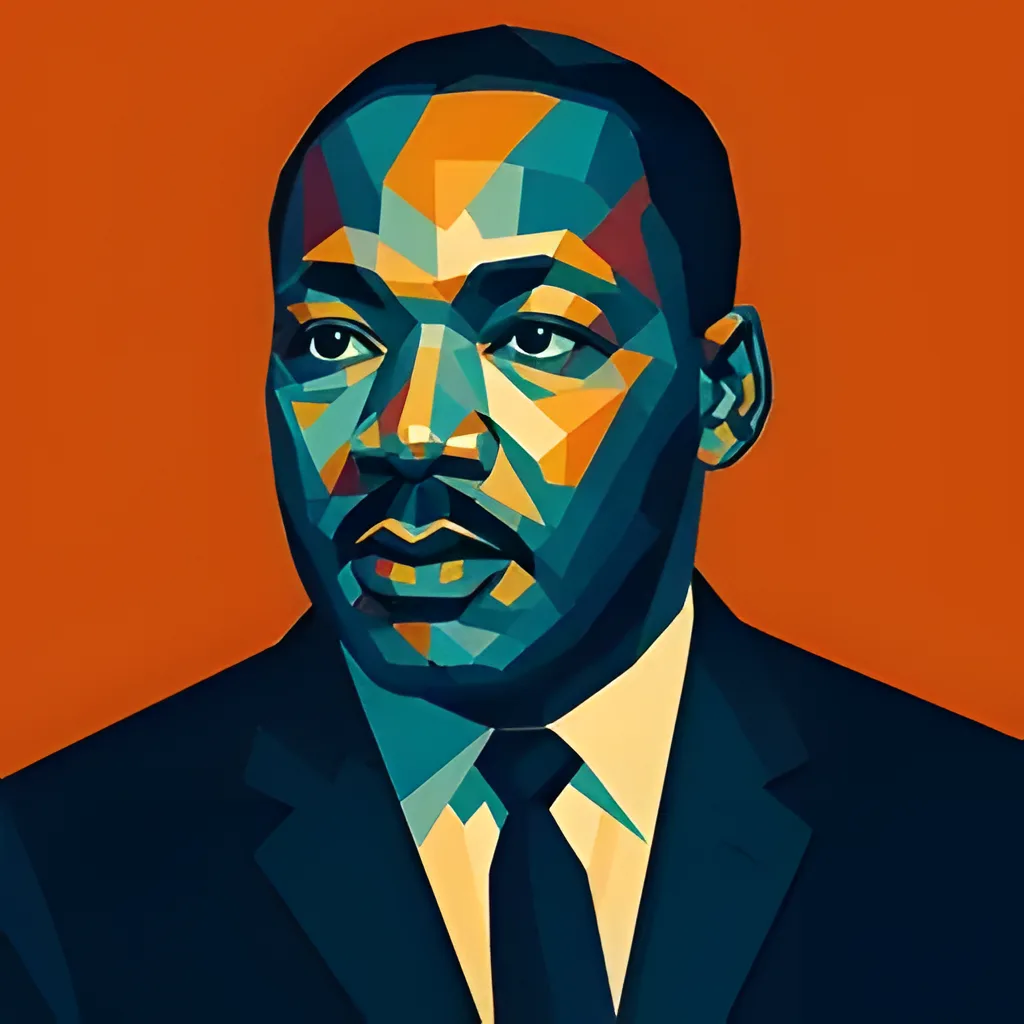
A life in brief
Martin Luther King Jr.: life and timeline.
He was born Michael King Jr. and renamed at five, after his father came back from Germany carrying the legacy of a Protestant reformer. Martin Luther King Jr. skipped two grades, entered Morehouse at fifteen, and was a year into his first pulpit in Montgomery when Rosa Parks was arrested. The boycott that followed lasted 381 days and made him a national figure. He was thirty-five when he took the Nobel Peace Prize, and thirty-nine when he was shot on a motel balcony in Memphis.
- 1929
Born in Atlanta
Born Michael King Jr. on a January day in the Sweet Auburn neighbourhood, to Baptist minister Michael King and former schoolteacher Alberta Williams King.
- 1934
Renamed for a reformer
After a trip to Germany for the Baptist World Alliance, his father takes the name Martin Luther for himself and his young son, believing it symbolised courage and faith. The change reaches the birth certificate in 1957.
- 1948
Morehouse, then seminary
Graduates from Morehouse with a degree in sociology, having skipped both ninth and twelfth grades and entered at fifteen. He had considered medicine and law before the ministry.
- 1951
Valedictorian at Crozer
Graduates from Crozer Theological Seminary in Pennsylvania as valedictorian and student body president — one of six black students in a class of a hundred.
- 1954
Pastor in Montgomery
Takes the pulpit at Dexter Avenue Baptist Church at twenty-five, already known as a powerful preacher. He had married Coretta Scott the year before; his PhD follows in 1955.
- 1955
The Montgomery bus boycott
Four days after Rosa Parks is arrested, the boycott begins on 5 December. The Montgomery Improvement Association elects him president. It lasts 381 days, his home is bombed, and it ends with the Supreme Court ruling bus segregation unconstitutional.
- 1957
Founding the SCLC
Helps found the Southern Christian Leadership Conference to coordinate civil rights work across the South. Two years later he travels to India to understand Gandhi's nonviolence firsthand.
- 1963
Birmingham
Bull Connor answers sit-ins and marches with fire hoses and police dogs, used on children. The images, broadcast nationwide, shift public opinion. King is arrested, held in solitary, and writes 'Letter from Birmingham Jail'.
- 1963
The March on Washington
More than 250,000 people gather at the Lincoln Memorial on 28 August. King departs from his prepared text and delivers 'I Have a Dream', broadcast live to millions.
- 1964
Civil Rights Act and the Nobel
The Civil Rights Act ends legal segregation in public places and bans employment discrimination. At thirty-five, King becomes the youngest person then to receive the Nobel Peace Prize.
- 1965
Selma
State troopers attack marchers at the Edmund Pettus Bridge on 7 March — 'Bloody Sunday'. Two weeks later King leads a fifty-four-mile march to Montgomery over five days. The Voting Rights Act passes that year.
- 1968
Memphis
Supporting striking sanitation workers, he gives 'I've Been to the Mountaintop' on 3 April. He is shot by James Earl Ray on the balcony of the Lorraine Motel the next evening, aged thirty-nine. Riots follow in more than a hundred cities.
Major achievements
Martin Luther King Jr.: major achievements.
- 01
The Montgomery bus boycott
Led the 381-day boycott that ended when the Supreme Court ruled bus segregation unconstitutional — proving nonviolent resistance could force real change, and making him the leader of the movement.
- 02
'I Have a Dream'
Delivered to more than 250,000 people at the Lincoln Memorial on 28 August 1963 and broadcast live. He abandoned his prepared text partway through.
- 03
The Civil Rights Act of 1964
The March on Washington helped push through the law that ended legal segregation in public places and banned discrimination in employment.
- 04
The Voting Rights Act of 1965
Selma's violence and the march that followed forced through the law removing the barriers that had kept African Americans from voting.
- 05
Nobel Peace Prize
Awarded in 1964 at thirty-five, then the youngest recipient ever, for pursuing freedom and equality through the force of nonviolence.
- 06
'Letter from Birmingham Jail'
Written in solitary confinement, answering white clergymen who had criticised his methods, and arguing why African Americans could not wait for gradual change.
Turning points
Martin Luther King Jr.: defining moments.
- Age six
Told he could not play with his friends
At six, Martin was told he could no longer play with his white friends, because they were going to different schools. It confused and hurt him — his first encounter with the thing he would spend his life on. His parents worked to shield him from the worst of segregation and to build his self-confidence.
- 1944–1959
Finding the method
Thoreau on civil disobedience reached him at Morehouse, which he entered at fifteen. Gandhi came later, in seminary, especially after Mordecai Johnson's 1950 lecture on Gandhi's life. In 1959 he travelled to India to understand the spirit of nonviolence firsthand. It was studied for years before it was ever deployed.
- 1955
Elected to lead a boycott
He had been in his first pulpit barely a year when the Montgomery Improvement Association chose him as president, four days after Rosa Parks's arrest. He organised carpools, held mass meetings and kept the community together through threats and the bombing of his own home — for 381 days.
- 1963
Birmingham on television
Bull Connor answered peaceful protest with fire hoses and police dogs, turned on children as well as adults. Broadcast nationwide, the images did what argument had not: they moved public opinion behind the movement, and made the March on Washington and the Civil Rights Act possible.
- 1965–1968
Widening the argument
He moved beyond civil rights to economic inequality and opposition to the Vietnam War, believing poverty and war were bound up with racial injustice. It made him controversial even among supporters, and he felt morally compelled to speak anyway. He was in Memphis backing striking sanitation workers when he was killed.
A powerful and just weapon… It is a sword that heals.
Martin Luther King Jr., describing nonviolence in his Nobel lecture
What you’ll take away
Lessons from Martin Luther King Jr.’s life.
- 01
Study the method before you need it
Thoreau at Morehouse, Gandhi in seminary, India in 1959. By Montgomery he was not improvising nonviolence — he had spent years understanding why it worked.
- 02
Let the injustice be seen
Birmingham's fire hoses and Selma's troopers changed the country because cameras were there. The movement's discipline is what made the contrast legible on television.
- 03
Follow the argument where it leads
He extended his case from segregation to poverty and the Vietnam War, and lost allies for it. He judged the issues connected and said so anyway.
Did you know
Facts about Martin Luther King Jr..
- 01
Did you know that Martin Luther King Jr.'s birth name was Michael, but his father renamed both himself and his son 'Martin Luther' after a trip to Germany in 1934 in honor of the Protestant reformer?
- 02
Did you know that King entered college at just 15 years old, having skipped both the ninth and twelfth grades?
- 03
Did you know that the iconic 'I Have a Dream' speech was largely improvised after gospel singer Mahalia Jackson shouted from the crowd, 'Tell them about the dream, Martin!'?
If you liked Martin Luther King Jr.…
Browse all → Independence Leader19 min
Mahatma Gandhi
The Father of a Nation
 Anti-Apartheid Leader17 min
Nelson Mandela
The Freedom Fighter Who United a Nation
 Civil Rights Leader17 min
Malcolm X
The Revolutionary Who Transformed Black Consciousness in America
 Labor Leader15 min
César Chávez
A Farm-worker Who Became One of America’s Most Influential Labor Leaders
FAQ
Frequently asked questions about Martin Luther King Jr..
What did Martin Luther King Jr. accomplish?
He led the 381-day Montgomery bus boycott, co-founded the Southern Christian Leadership Conference, organised the Birmingham and Selma campaigns, and helped build the pressure that produced the Civil Rights Act of 1964 and the Voting Rights Act of 1965. In 1964 he became the youngest person yet to win the Nobel Peace Prize.
How did Martin Luther King Jr. die?
He was shot on 4 April 1968 while standing on the balcony of the Lorraine Motel in Memphis, Tennessee, where he had come to support striking sanitation workers. He was thirty-nine. James Earl Ray pleaded guilty to the killing in 1969.
Why was Martin Luther King Jr. renamed?
He was born Michael King Jr. In 1934 his father returned from a Baptist World Alliance trip to Germany, deeply inspired by the reformer Martin Luther, and took the name for himself and his young son. It was formally added to the birth certificate in 1957.
How long was the Montgomery bus boycott?
381 days. It began on 5 December 1955, four days after Rosa Parks was arrested for refusing to give up her seat, and ended when the Supreme Court ruled bus segregation unconstitutional. King, newly elected president of the Montgomery Improvement Association, organised carpools and mass meetings throughout — and his home was bombed during it.
Was 'I Have a Dream' the speech he planned?
Not entirely. He had prepared a different speech and departed from his text as he spoke, beginning to share his dream of racial harmony. It was delivered to more than 250,000 people at the Lincoln Memorial on 28 August 1963 and broadcast live on television and radio.
Why does the United States have a holiday for King?
President Reagan signed the legislation in 1983. Martin Luther King Jr. Day falls on the third Monday in January, near his birthday, and is widely marked as a day of service. He is the only American who was not a US president to have a federal holiday named after him.
What was King doing in Memphis?
Supporting striking sanitation workers demanding better wages and working conditions — part of his later focus on economic inequality. He gave his final speech, 'I've Been to the Mountaintop', on 3 April 1968, and was shot on the balcony of the Lorraine Motel the next evening.
Published by Lyfestori, from Duck Pond Ventures Oy. About us and how to report a correction.
16 min · one sitting