Malcolm X
The Revolutionary Who Transformed Black Consciousness in America
Born Malcolm Little on 19 May 1925 in Omaha, Nebraska, Malcolm X lost his father at six, educated himself in prison and became the Nation of Islam's most powerful voice. After breaking with the movement and making the pilgrimage to Mecca as el-Hajj Malik el-Shabazz, he was assassinated in Harlem in 1965.
- 17 min listen
- Black self-determination
- Nation of Islam
- Human rights
Malcolm X’s full 17 min audio biography, The Revolutionary Who Transformed Black Consciousness in America, is available on Lyfestori for iOS. Listen to a free preview below.
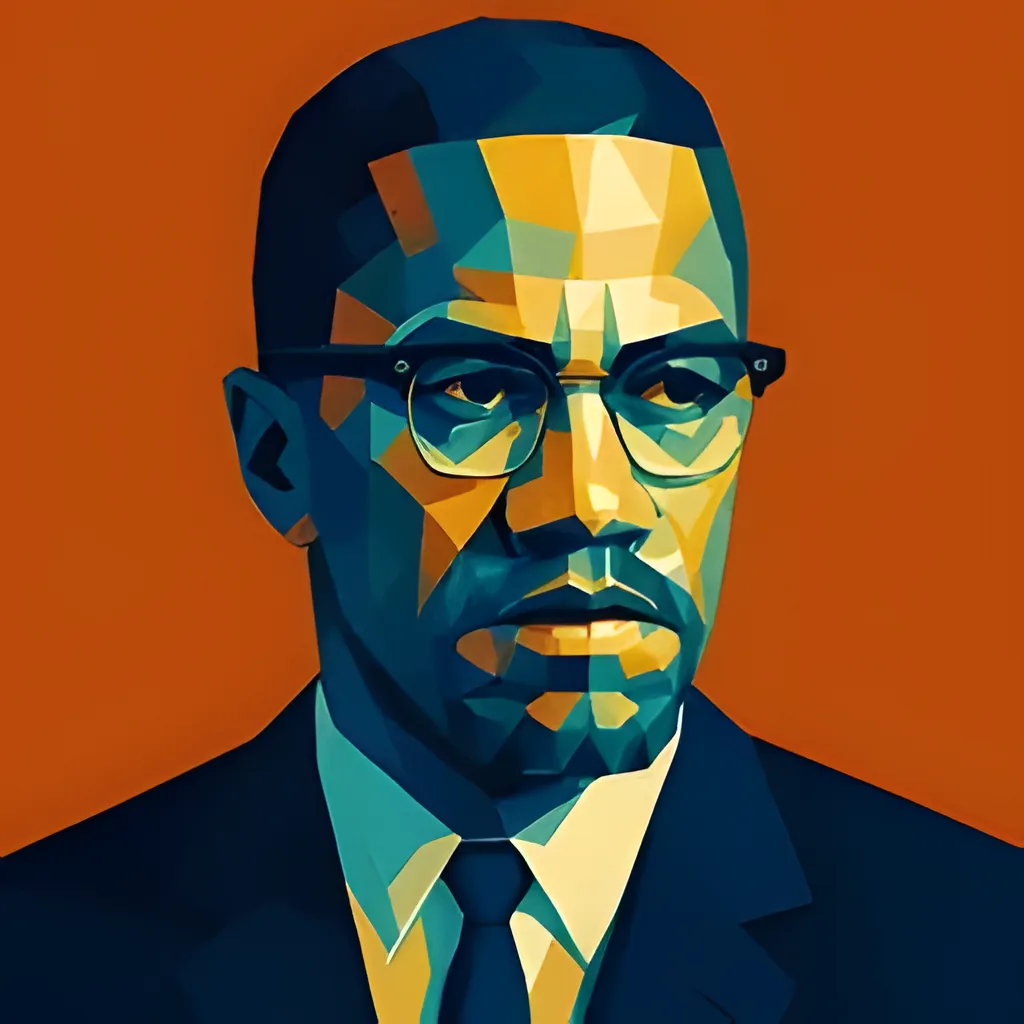
A life in brief
Malcolm X: life and timeline.
A teacher told him a Black boy should not expect to become a lawyer, and suggested carpentry instead. Malcolm Little was one of the top students in his school. He dropped out, drifted into burglary, and was sentenced to ten years in prison at twenty. He came out as Malcolm X, having read his way through history, philosophy and religion in a cell. Then, in the last year of his life, he took apart the beliefs that had made him famous.
- 1925
Born in Omaha
Born Malcolm Little on 19 May. His father, Earl Little, was a Baptist lay minister and a supporter of Marcus Garvey's Black nationalism, which made the family a target.
- 1929
The house burns
A suspected arson destroys the family home in Lansing, Michigan — one of the constant threats and harassments that followed his father's activism.
- 1931
His father dies
Earl Little is struck by a streetcar when Malcolm is six. Authorities rule it an accident; one insurer alleges suicide and refuses to pay. Many in the Black community suspect local white supremacists.
- 1939
The family is broken up
His mother, Louise, worn down by the Depression and raising eight children alone, is committed to a psychiatric hospital. Malcolm is fourteen. The children are separated into foster homes.
- 1946
Ten years
Arrested for burglary and sentenced to ten years, after drifting from shoeshine and railroad work into gambling, drug dealing and theft between Boston and Harlem.
- 1952
Released, and rebuilt
Leaves prison having educated himself in history, philosophy and religion, converted to the Nation of Islam, and replaced Little with X to symbolise his unknown African ancestry.
- 1963
Chickens coming home to roost
He describes Kennedy's assassination as America's violence returning to it. Elijah Muhammad uses the remark to silence him, and the relationship becomes irreparable.
- 1964
Leaving the Nation of Islam
Announces his departure in March and founds Muslim Mosque, Inc. He had discovered his mentor fathered children with young secretaries, violating the movement's own moral code.
- 1964
Mecca
On the hajj he worships alongside Muslims of every race and is moved by the brotherhood among pilgrims. He adopts orthodox Sunni Islam and the name El-Hajj Malik El-Shabazz.
- 1964
Africa and a human rights case
Travels to Africa and the Middle East. In Cairo he attends OAU meetings and circulates a memorandum urging African states to treat American racial discrimination as a human rights issue.
- 1965
The firebombing
His home is firebombed in February and his family flees. Despite the danger he continues his speaking engagements and his work with Alex Haley on the autobiography.
- 1965
Assassination
Shot dead on 21 February while giving a speech at the Audubon Ballroom in Harlem. The Autobiography of Malcolm X is published that year and becomes a bestseller.
Major achievements
Malcolm X: major achievements.
- 01
Building the Nation of Islam
After his release in 1952 he became its most effective minister and recruiter, helping establish or expand mosques in several cities and driving membership into the tens of thousands by the early 1960s.
- 02
A different answer
While King argued for non-violence and integration, Malcolm argued that Black people should defend themselves and build their own institutions rather than seek acceptance from their oppressors. He gave voice to urban African Americans the movement was not reaching.
- 03
The Organization of Afro-American Unity
Founded after his break with the Nation and modelled on the Organization of African Unity, to connect African Americans with people of African descent worldwide and reframe the struggle as one of human rights rather than civil rights.
- 04
The Autobiography of Malcolm X
Written with journalist Alex Haley and published in 1965, it became a bestseller and has stayed in print for nearly sixty years, carrying his story and analysis to a global audience.
- 05
Black Power before it had a name
His emphasis on Black pride and self-determination helped inspire the Black Power movement of the late 1960s. The Black Panther Party, founded shortly after his death, drew explicitly on his ideas about self-defence and international solidarity.
Turning points
Malcolm X: defining moments.
- c. 1939
The teacher's advice
He was one of the top students at his predominantly white junior high school in Mason, Michigan. When he said he wanted to be a lawyer, a teacher told him it was unrealistic for a Black person and suggested carpentry. He understood that his ability was not the limiting factor, and stopped trying.
- 1946–1952
Prison as a library
Ten years for burglary. He read extensively and educated himself in history, philosophy and religion in a cell. His brother Reginald introduced him to the Nation of Islam, whose leader Elijah Muhammad became the father figure he had lost at six. He walked out a different person with a different name.
- 1963
Chickens coming home to roost
He described Kennedy's assassination as America's own violence returning to it, and Elijah Muhammad used the remark to silence him. But the relationship was already failing: Malcolm had learned his mentor was fathering children with young secretaries, and wanted to connect the American struggle to liberation movements abroad.
- 1964
Mecca
On the hajj he worshipped alongside Muslims of every race and was moved by the genuine brotherhood among pilgrims from different backgrounds. It contradicted the doctrine he had preached for a decade — that white people were inherently evil. He took orthodox Sunni Islam, a new name, and a new argument about human rights.
- 1965
Too dangerous to too many
The Nation viewed him as a traitor; the FBI had monitored him for years and considered him a threat. His home was firebombed in February and his family fled. He kept speaking. On 21 February he was shot dead at the Audubon Ballroom. Questions about the full extent of the conspiracy remain.
chickens coming home to roost
Malcolm X, on the assassination of President John F. Kennedy, 1963
What you’ll take away
Lessons from Malcolm X’s life.
- 01
Change your mind in public
He had built a decade of authority on the doctrine that white people were devils. Mecca contradicted it, and he said so — knowing exactly what it would cost him with the organisation that had made him.
- 02
Education is not the same as school
A teacher pushed him out of school and into the street. He got his education from books in a prison cell instead, and came out able to out-debate civil rights leaders on national television.
- 03
Name the anger
The civil rights movement focused on the South and on integration. Malcolm spoke to urban African Americans who saw little benefit from either, and who had never heard their own frustration articulated by anyone with a microphone.
Did you know
Facts about Malcolm X.
- 01
Did you know that Malcolm X was a highly skilled debater who often lectured at prestigious universities like Harvard and Oxford while serving as a spokesman for the Nation of Islam?
- 02
Did you know that during his time in prison, Malcolm X meticulously copied an entire dictionary by hand, page by page, to improve his vocabulary and penmanship?
- 03
Did you know that Malcolm X adopted the 'X' in his name to represent his unknown African ancestral surname, discarding 'Little' which he considered a slave name?
If you liked Malcolm X…
Browse all → Civil Rights Leader16 min
Martin Luther King Jr.
The Preacher Who Led America's Fight for Civil Rights
 Independence Leader19 min
Mahatma Gandhi
The Father of a Nation
 Anti-Apartheid Leader17 min
Nelson Mandela
The Freedom Fighter Who United a Nation
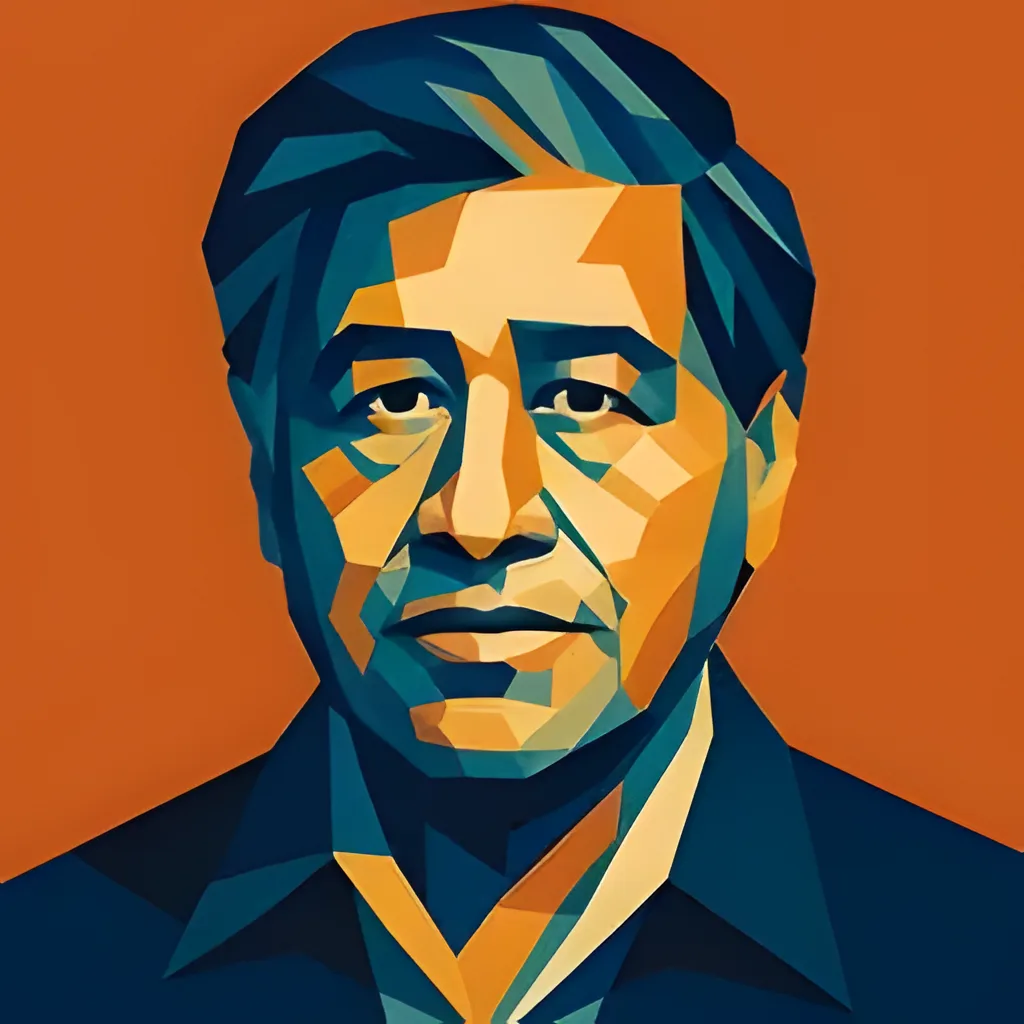 Labor Leader15 min
César Chávez
A Farm-worker Who Became One of America’s Most Influential Labor Leaders
FAQ
Frequently asked questions about Malcolm X.
What was Malcolm X's real name?
He was born Malcolm Little. He replaced “Little” with “X” in 1952, after joining the Nation of Islam, to reject the surname given to his ancestors by slaveholders. After his 1964 pilgrimage to Mecca he took the name el-Hajj Malik el-Shabazz.
Where did Malcolm X grow up?
Mostly in and around Lansing, Michigan. The family moved there from Omaha when he was young; in 1929 their house was burned, and in 1931 his father died. After his mother was committed to a psychiatric hospital in 1939 the children were split up, and Malcolm later moved to Boston and then Harlem.
What was Malcolm X's education?
He was one of the top students in his school in Mason, Michigan, but left after eighth grade when a teacher told him becoming a lawyer was “no realistic goal” for a Black boy. His real education came in prison, where he copied out the dictionary and read his way through the library.
Why did Malcolm Little change his name to X?
He joined the Nation of Islam in prison and replaced his surname with the letter X to symbolise his unknown African ancestry — the family name erased by slavery. After his 1964 pilgrimage to Mecca he adopted orthodox Sunni Islam and the name El-Hajj Malik El-Shabazz.
Why did Malcolm X leave the Nation of Islam?
Several reasons converged. He discovered Elijah Muhammad had violated the movement's moral code by fathering children with young secretaries. He wanted to link the African American struggle to liberation movements in Africa and Asia, which Elijah Muhammad opposed. And his 1963 remark about Kennedy gave the leadership an excuse to silence him. He announced his departure in March 1964.
How did Malcolm X differ from Martin Luther King Jr.?
King advocated non-violence and integration. Malcolm argued that Black people should defend themselves by any means necessary and build their own institutions rather than seek acceptance from white society, which he believed encouraged them to seek validation from their oppressors. Late in his life he began building bridges with King and other leaders.
What changed after his pilgrimage to Mecca?
During the hajj in 1964 he worshipped alongside Muslims of all races and ethnicities and was moved by the genuine brotherhood among pilgrims from different racial backgrounds. It challenged his previous belief in the inherent evil of white people. His message shifted toward the possibility of racial cooperation, and toward human rights rather than civil rights alone.
Who killed Malcolm X?
He was shot on 21 February 1965 at the Audubon Ballroom in Harlem. Talmadge Hayer, also known as Mujahid Abdul Halim, a Nation of Islam member, was convicted and admitted involvement. Two other men convicted in 1966, Muhammad A. Aziz and Khalil Islam, were exonerated in 2021 after a reinvestigation found serious miscarriages of justice and withheld evidence. Questions about the full extent of the conspiracy remain.
Published by Lyfestori, from Duck Pond Ventures Oy. About us and how to report a correction.
17 min · one sitting