Charlie Chaplin
The Little Tramp Who Became Cinema's Greatest Icon
Born Charles Spencer Chaplin on 16 April 1889 in London, Charlie Chaplin went from workhouse poverty to silent-film superstardom as the Little Tramp, writing, directing and starring in classics such as The Kid, City Lights and The Great Dictator.
- 17 min listen
- The Little Tramp
- Silent cinema
- United Artists co-founder
Charlie Chaplin’s full 17 min audio biography, The Little Tramp Who Became Cinema's Greatest Icon, is available on Lyfestori for iOS. Listen to a free preview below.
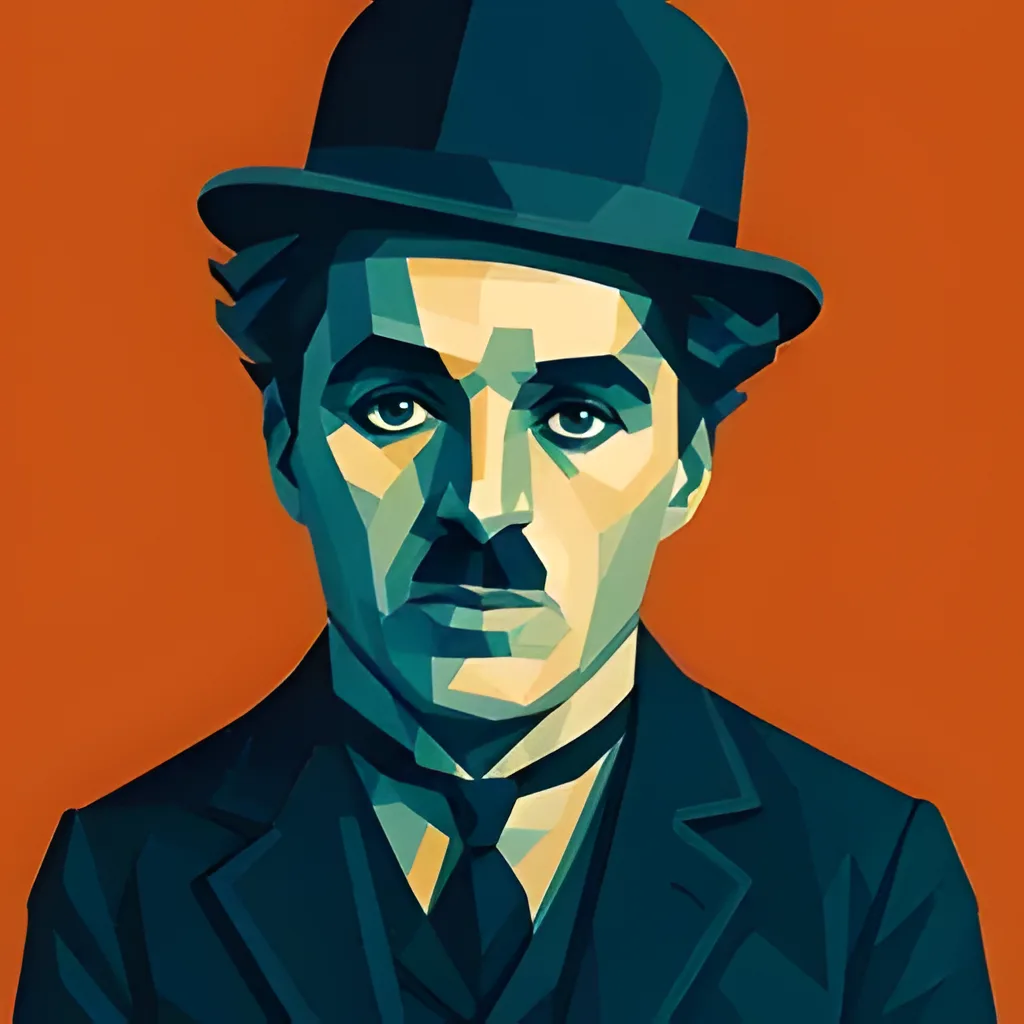
A life in brief
Charlie Chaplin: life and timeline.
His mother's voice failed on stage at a music hall in Aldershot, and five-year-old Charlie was pushed on in her place. He had already known workhouses and hunger; his father was absent, his mother ill. Two decades later he was among the highest-paid people in the world, writing, directing, producing, scoring and starring in his own films. The Little Tramp — baggy trousers, bowler, cane — was assembled from other actors' costumes in a dressing room, and became one of the most recognisable figures on earth.
- 1889
Born in Walworth
Born 16 April in East Street, Walworth, London, to two music hall performers. His father is an alcoholic and largely absent. His mother Hannah, who performs as Lily Harley, loses her voice and her health, and at times has to send her children to the workhouse.
- 1908
Fred Karno's company
Joins the influential comedy troupe of Fred Karno, a master of pantomime and slapstick, and learns to tell a story without words — using only his body and his face. Five years earlier he had toured as Billy the pageboy in Sherlock Holmes.
- 1914
The Little Tramp
Spotted on a Karno tour of America by Mack Sennett of Keystone, he debuts in February in Making a Living. In his second film, Kid Auto Races at Venice, he first wears the baggy trousers, tight coat, oversized shoes, bowler and cane.
- 1916
The highest-paid
Signs with Mutual Film Corporation for an unprecedented salary, making him one of the highest-paid people in the world. There he makes The Rink, Easy Street and The Immigrant.
- 1919
United Artists
Co-founds the studio with Mary Pickford, Douglas Fairbanks and D. W. Griffith, taking control of production and distribution. A studio executive quips that the inmates have taken over the asylum.
- 1921
The Kid
His first feature-length triumph: the Tramp caring for an abandoned child. It blends hilarity with heartbreak and proves audiences will sit for longer, more emotionally complex comedy.
- 1925
The Gold Rush
The dance of the dinner rolls; a boiled shoe eaten as a meal. A comedy adventure that doubles as a commentary on greed and the pursuit of the American Dream.
- 1931
City Lights
His answer to the talkies: an essentially silent film with a score he composed himself, about the Tramp's love for a blind flower girl. A critical and commercial success in a market already dominated by sound.
- 1940
The Great Dictator
His first full talking picture. He plays two roles — a Jewish barber who looks exactly like the Tramp, and Adenoid Hynkel, a dictator plainly based on Hitler — and ends the film with an oration about humanity and democracy.
- 1952
Exile
Travelling to London for the premiere of Limelight, he learns the U.S. Attorney General has revoked his re-entry permit. Rather than be interrogated about his politics, he settles in Switzerland with his fourth wife, Oona O'Neill.
- 1972
Return
After twenty years away he goes back to America to accept an honorary Academy Award, and receives what is widely described as the longest standing ovation in Oscars history — around twelve minutes.
- 1977
Death in Switzerland
Dies at home on 25 December, aged eighty-eight. Two years earlier Queen Elizabeth II had knighted him — recognition from his home country that mattered to him particularly.
Major achievements
Charlie Chaplin: major achievements.
- 01
The Little Tramp
A lovable vagrant in mismatched clothes who kept his dignity and optimism through constant hardship. He said that as soon as he put the costume on, he knew exactly how the character would walk, talk and behave.
- 02
The complete filmmaker
He wrote, directed, produced, edited, scored and starred in his own films, doing dozens of takes to get a scene right. Every gag and gesture served the story — the discipline that set him apart from other comedians of the era.
- 03
Co-founding United Artists
In 1919 he, Mary Pickford, Douglas Fairbanks and D. W. Griffith took control of their own production and distribution, helping establish the principle that artists should have control over their work.
- 04
Comedy that argued
Modern Times (1936) attacked what mechanisation did to human dignity. The Great Dictator (1940) mocked Hitler and warned about fascism while the world moved toward war. He used slapstick to carry arguments audiences would actually sit through.
- 05
Outlasting the technology
When sound arrived, other silent stars struggled and he refused, believing the Tramp worked best in silence where physical comedy crossed every language barrier. City Lights proved him right in 1931, years into the talkie era.
Turning points
Charlie Chaplin: defining moments.
- Childhood
Pushed on stage at five
His mother's voice failed at a music hall in Aldershot and Charlie was sent on to take her place. He charmed the audience. Behind that moment lay workhouses, odd jobs selling newspapers and assisting a barber, and long stretches without food or shelter — the material he would spend a career turning into comedy about the downtrodden.
- 1908–1913
Learning to speak without words
Fred Karno's troupe taught him pantomime and physical comedy: how to carry a story with a body and a face alone. It was, by accident, the exact training silent film would demand. On a Karno tour of America, Mack Sennett saw him and offered him pictures — a step down in prestige from theatre that he took anyway.
- 1914
A costume grabbed at random
Told to assemble a comedy outfit, he pulled pieces from other actors in the dressing room. Baggy trousers, a tight coat, oversized shoes, a bowler and a cane — mismatched, and somehow perfect. He said he knew the character the moment he put it on.
- 1915–1919
Taking control
He left Keystone because its crude slapstick constrained him, went to Essanay for creative control, then to Mutual for a salary that made him one of the richest men alive — and finally co-founded United Artists so that no studio could tell him what to make.
- 1952
Locked out of America
His left-leaning politics and criticism of capitalism drew the FBI and the suspicion of the McCarthy era. Sailing to London for a premiere, he learned his re-entry permit had been revoked. He did not fight it. He settled in Switzerland and stayed away for twenty years.
What you’ll take away
Lessons from Charlie Chaplin’s life.
- 01
Poverty was his material
Workhouses, hunger and an absent father gave him the subject he never left: the dignity of people the world steps over. The Tramp is funny because he keeps his self-respect, not because he is poor.
- 02
Own the work
Keystone, then Essanay, then Mutual, then his own studio — he traded security for control at every step. That is what let him spend years on one film and refuse the sound era on his own terms.
- 03
New technology is not an argument
When talkies arrived, everyone adapted. He asked instead what his art was for, decided the Tramp belonged in silence, and made City Lights — a silent film that succeeded in a market that had already moved on.
Did you know
Facts about Charlie Chaplin.
- 01
Did you know that Charlie Chaplin once secretly entered a 'Charlie Chaplin look-alike contest' in San Francisco and remarkably failed to even make the finals?
- 02
Did you know that Chaplin's iconic 'Tramp' costume—baggy pants, tight coat, small hat, and oversized shoes—was thrown together in minutes from the studio's wardrobe department?
- 03
Did you know that when Charlie Chaplin received an honorary Academy Award in 1972, he was given a 12-minute standing ovation, the longest in Oscars history?
If you liked Charlie Chaplin…
Browse all →
FAQ
Frequently asked questions about Charlie Chaplin.
What is Charlie Chaplin famous for?
The Little Tramp — the bowler-hatted, cane-twirling vagabond with a toothbrush moustache and oversized shoes who became the most recognisable figure of the silent era. Chaplin wrote, directed, produced, starred in and often scored his own films, from The Kid and The Gold Rush to Modern Times and The Great Dictator.
What was Charlie Chaplin's real name?
Charles Spencer Chaplin. He was born on 16 April 1889 in Walworth, south London, to two music-hall performers.
How did Charlie Chaplin die?
Peacefully, after a stroke in his sleep, on Christmas Day 1977 at his home in Corsier-sur-Vevey, Switzerland. He was eighty-eight.
How did Chaplin create the Little Tramp?
Almost by accident. Told to put together a comedy outfit for a film in 1914, he grabbed pieces from other actors in the dressing room: baggy trousers, a tight coat, oversized shoes, a bowler hat and a cane. He later said that as soon as he put the costume on, he knew exactly how the character would walk, talk and behave.
Why did Chaplin leave the United States?
He did not choose to. In 1952, travelling to London for the premiere of Limelight, he learned that the U.S. Attorney General had revoked his re-entry permit. His left-leaning politics and criticism of capitalism had made him an FBI target during the McCarthy era. Rather than face interrogation about his beliefs, he settled in Switzerland.
Did Chaplin ever make talking pictures?
Yes, but late and reluctantly. He believed the Tramp worked best in silence, where physical comedy transcended language. City Lights (1931) was essentially silent with a score he composed himself. Modern Times (1936) added sound effects and a song in nonsense language. The Great Dictator (1940) was his first full talking picture.
Did Chaplin ever return to America?
Once. In 1972 he went back to receive an honorary Academy Award for his contributions to cinema, and was given what is widely described as the longest standing ovation in Oscars history, lasting around twelve minutes. In 1975 Queen Elizabeth II knighted him.
Published by Lyfestori, from Duck Pond Ventures Oy. About us and how to report a correction.
17 min · one sitting