Dave Chappelle
The Comedy Legend Who Walked Away from Fame
Born David Khari Webber Chappelle on 24 August 1973 in Washington, D.C., Dave Chappelle started doing stand-up at fourteen, created the hit sketch series Chappelle's Show, walked away from a reported $50 million deal in 2005, and returned to become one of Netflix's biggest — and most debated — comedians.
- 19 min listen
- Chappelle's Show
- Stand-up
- Netflix specials
Dave Chappelle’s full 19 min audio biography, The Comedy Legend Who Walked Away from Fame, is available on Lyfestori for iOS. Listen to a free preview below.
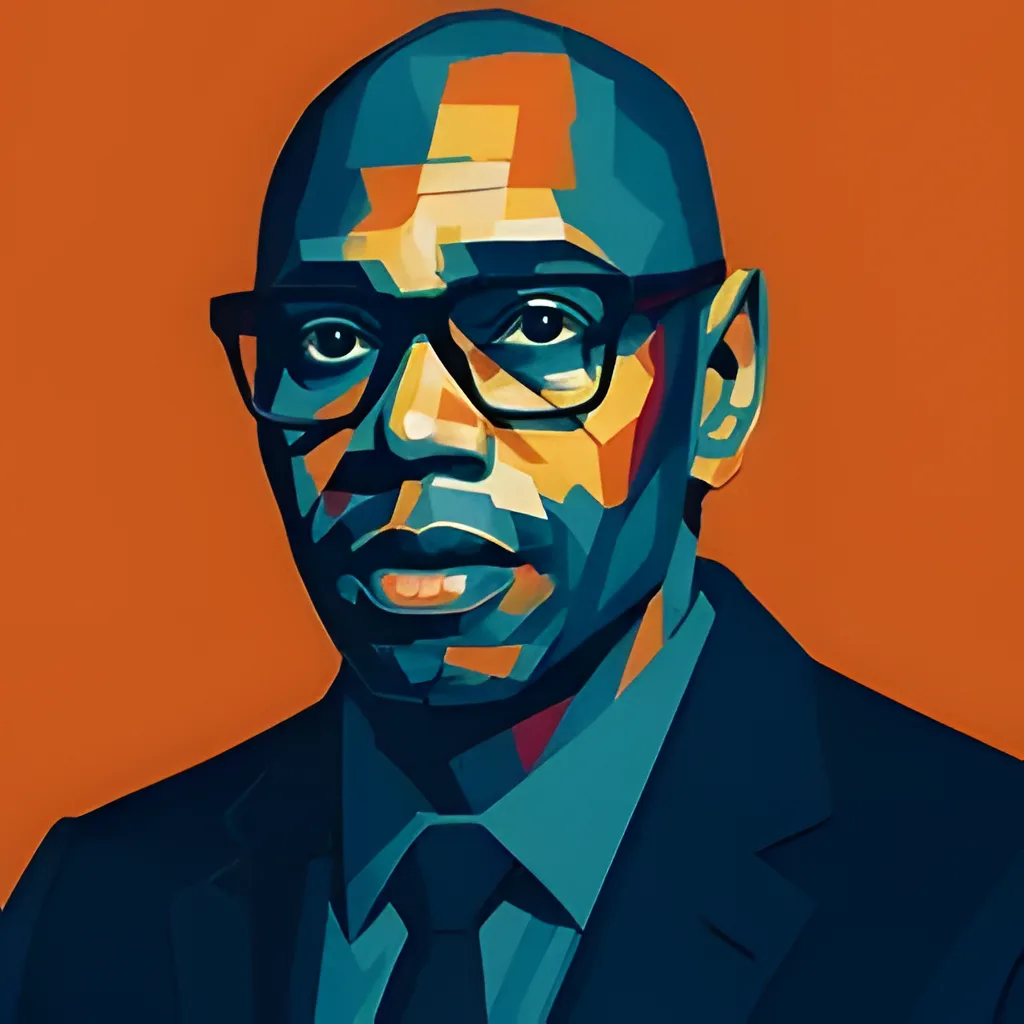
A life in brief
Dave Chappelle: life and timeline.
He was fourteen when he started doing open mics in Washington, D.C., and his parents — both professors — wanted him in college. He went to New York instead. By 2003 Chappelle's Show was one of the highest-rated things on Comedy Central and his catchphrases were everywhere. Then he noticed that some of the audience was laughing at the stereotypes rather than at the satire. In 2005, mid-production on a third season under a $50 million contract, he walked out and flew to South Africa.
- 1973
Born in Washington, D.C.
Born 24 August to two professors: William David Chappelle III, who taught music at Antioch College in Ohio, and Yvonne Seon, a professor who later became a Unitarian Universalist minister.
- 1992
Def Comedy Jam
His HBO set stands out immediately — sharp, fearless, and full of the social commentary that will define him. Casting directors and producers start calling within weeks.
- 1996
Buddies
Lands his first network show, on ABC. It struggles and only a handful of episodes air. He feels the network never understood his comedy — and learns what creative freedom is worth.
- 2000
Killin' Them Softly
His HBO special is a critical and commercial success, establishing him as one of the premier voices in comedy: observational, and willing to go straight at race, politics and social issues.
- 2001
Marries Elaine Mendoza
They raise their children together. He values being present as a husband and father over being consumed by the demands of fame.
- 2003
Chappelle's Show
Launches on Comedy Central and becomes one of its highest-rated programmes almost overnight. The Racial Draft and Charlie Murphy's True Hollywood Stories become phenomena, quoted in classrooms, offices and barbershops — viral before social media made virality ordinary.
- 2004
The $50 million deal
In August he signs with Comedy Central to produce two more seasons of the show.
- 2005
Walking away
During production of the third season, at the height of the show's popularity, he leaves — and goes to South Africa for peace and perspective. The media speculates wildly, some suggesting a breakdown.
- 2006
The Lost Episodes
Comedy Central airs sketches taped before his departure, compiled as 'Chappelle's Show: The Lost Episodes'. He objects publicly.
- 2013
Back on stage
Returns to stand-up regularly, headlining sold-out shows nationwide including the Oddball Comedy & Curiosity Festival. Audiences are reminded why he is considered one of the greatest alive.
- 2016
Netflix
Signs for a series of stand-up specials; Netflix reportedly pays around $60 million for the first three announced that year, making him one of the highest-paid comedians in the world.
Major achievements
Dave Chappelle: major achievements.
- 01
Chappelle's Show
A sketch series unlike anything else on television, satirising American culture and identity. It tackled what most programmes avoided — race, stereotypes, inequality — and made audiences laugh while challenging them to think.
- 02
Killin' Them Softly
The 2000 HBO special that established him as a premier voice in comedy, built on observational humour and a willingness to work on subjects most comedians stepped around.
- 03
Def Comedy Jam
His 1992 set put him on Hollywood's radar overnight and showed what would define him: humour and insight in the same breath, even on controversial ground.
- 04
The Netflix comeback
In 2016, after a decade of choosing his appearances carefully, Netflix reportedly paid around $60 million for three specials — the work of someone who had left the machine and returned by choice, sharper and more reflective.
- 05
Proof that no is available
Walking away from $50 million became a reference point for every artist weighing creative control against a contract. His reputation grew rather than shrank for it.
Turning points
Dave Chappelle: defining moments.
- Childhood
Two Americas
After his parents divorced he split his time between his father in Ohio — rural, predominantly white — and his mother in Washington, D.C., where he watched the crack epidemic tear through communities in the 1980s. The contrast handed him both his material and the double vision his comedy runs on.
- After high school
New York instead of college
His parents were professors who valued education. He moved to New York to do comedy full time, and it caused real tension at home. He played small rooms for little money in front of hostile crowds until the Comedy Cellar and Carolines started booking him.
- 1996
Buddies
His first network show barely aired. He felt ABC never understood his comedic style or the stories he wanted to tell. The disappointment taught him how much creative freedom mattered — a lesson that shaped every major project afterwards.
- 2004–2005
Walking away
He had signed for two more seasons at $50 million in August 2004. Mid-production on the third, he left the country. The press guessed at a breakdown; he said he needed to step back and work out what was important to him, and that the show had started to compromise his integrity. Underneath was a harder problem: he had set out to satirise stereotypes, and some of the audience was laughing at the stereotypes.
- 2013–2016
Coming back on his own terms
He returned to stand-up regularly in 2013 and signed with Netflix in 2016. The specials addressed the departure directly and carried the wisdom of someone who had stepped out of the machine and chosen to come back.
What you’ll take away
Lessons from Dave Chappelle’s life.
- 01
Know who is laughing, and at what
He meant to satirise the stereotypes; part of the crowd was enjoying them. Noticing the difference — and taking it seriously enough to act on it — is what separated him from the show he had built.
- 02
Freedom costs what it costs
Buddies showed him what a network does to material it does not understand. He spent the rest of his career buying creative control, and once paid $50 million for it.
- 03
Stepping away is not the end
The industry read his exit as a breakdown, or as unprofessional. He came back a decade later more respected than when he left — and the walking away is part of why.
Did you know
Facts about Dave Chappelle.
- 01
Did you know that Dave Chappelle famously walked away from a $50 million contract for the third season of 'Chappelle's Show' and abruptly flew to South Africa to escape the pressure?
- 02
Did you know that Chappelle grew up in Silver Spring, Maryland, and graduated from the prestigious Duke Ellington School of the Arts in Washington, D.C.?
- 03
Did you know that his father, William David Chappelle III, was a professor of vocal performance and the dean of students at Antioch College in Ohio?
If you liked Dave Chappelle…
Browse all →
FAQ
Frequently asked questions about Dave Chappelle.
What is Dave Chappelle's full name?
David Khari Webber Chappelle. He was born on 24 August 1973 in Washington, D.C., to two academics: William David Chappelle III, a music professor at Antioch College, and Yvonne Seon, a professor who became a Unitarian Universalist minister.
How did Dave Chappelle get his start?
At open mics in Washington, D.C., which he began playing at fourteen while studying theatre at the Duke Ellington School of the Arts. After graduating he moved to New York instead of going to college, appeared on Def Comedy Jam in 1992, and moved into film roles and his own sitcom before creating Chappelle's Show in 2003.
Where did Dave Chappelle grow up?
Mostly in Washington, D.C., and nearby Silver Spring, Maryland, with summers in Yellow Springs, Ohio, where his father taught at Antioch College. He later settled in Yellow Springs, which remains his home.
Why did Dave Chappelle quit Chappelle's Show?
He walked away during production of the third season in 2005, having signed a $50 million deal for two more seasons the previous August. He said he needed to step back and evaluate what was important to him, and felt the show was moving in a direction that compromised his integrity. He was also troubled that some viewers seemed to be laughing at the stereotypes he intended to satirise rather than at the satire.
Did he have a breakdown?
That was the media's speculation. His own account was different: the constant scrutiny, the loss of privacy, and a growing conflict between the industry's demands and his personal values and artistic vision. He left for South Africa seeking peace and perspective, and later addressed the departure directly in his Netflix specials.
What are The Lost Episodes?
In 2006 Comedy Central compiled sketches taped before his departure and aired them as 'Chappelle's Show: The Lost Episodes'. Chappelle publicly objected to the airings.
Why is his later work controversial?
Some critics have argued that his comedy became less progressive, particularly regarding LGBTQ+ issues. He has defended his right to joke about any topic, and the disagreement became a broader debate about the boundaries of comedy and the responsibilities of comedians.
Is Dave Chappelle Muslim?
Yes. He converted to Islam in the early 1990s and has described his faith as a guiding force in his life — shaping how he thinks, how he treats others and how he approaches his career. He rarely speaks about it publicly.
Published by Lyfestori, from Duck Pond Ventures Oy. About us and how to report a correction.
19 min · one sitting