Joe Rogan
From Stand-Up to Podcast King
Born Joseph James Rogan on 11 August 1967 in Newark, New Jersey, Joe Rogan went from Boston open mics to NewsRadio, UFC commentary and Fear Factor before launching The Joe Rogan Experience in 2009 — and turning long-form conversation into one of the most influential shows in modern media.
- 15 min listen
- Podcaster
- Stand-up comedian
- UFC commentator
Joe Rogan’s full 15 min audio biography, From Stand-Up to Podcast King, is available on Lyfestori for iOS. Listen to a free preview below.
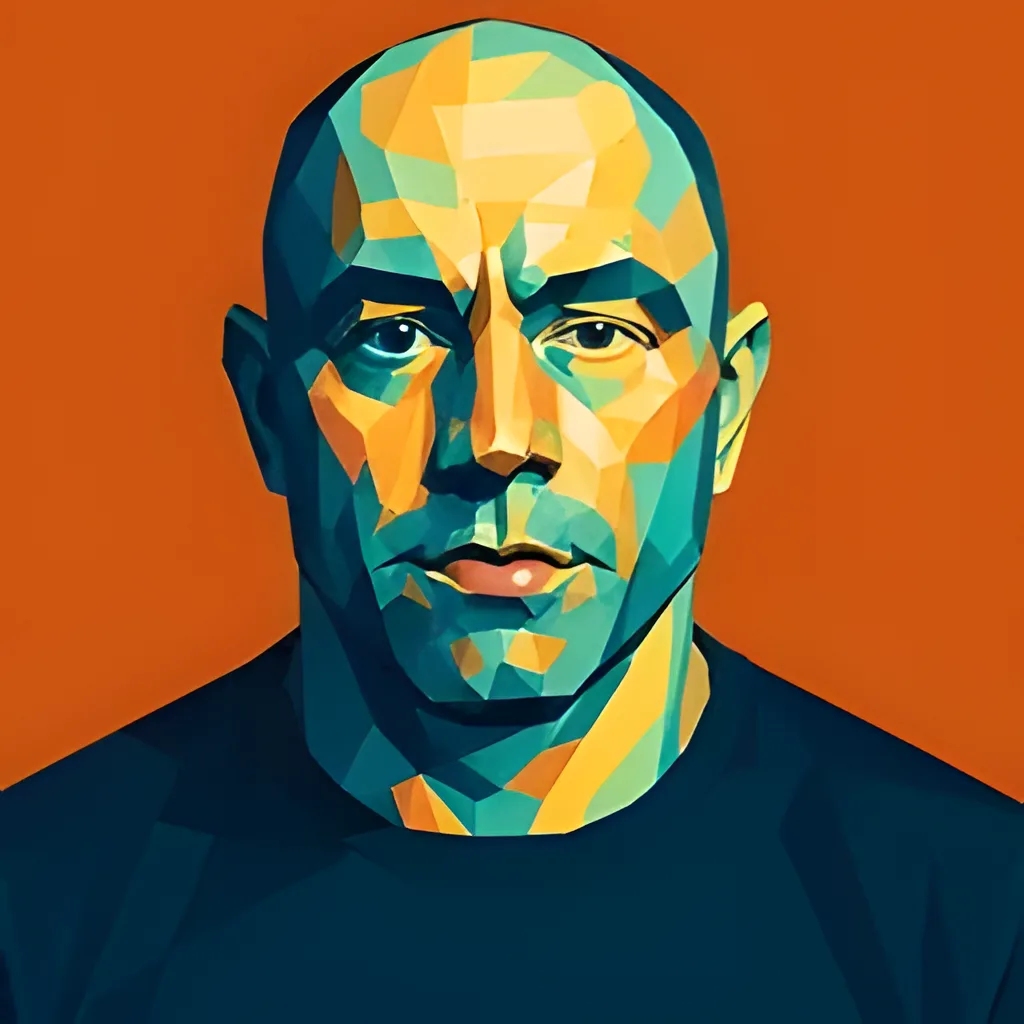
A life in brief
Joe Rogan: life and timeline.
His father left when he was five, and his mother moved the family through San Francisco and Florida before settling in Massachusetts. Joe Rogan found karate at thirteen, a state taekwondo title, and then a Boston open mic at nineteen. He spent the next two decades as a sitcom actor, the host of Fear Factor, and a UFC commentator who could break down a fight in real time. In 2009 he started recording conversations with friends. Spotify later paid an estimated $200 million for them.
- 1967
Born in Newark
Born 11 August in New Jersey. His father leaves when he is five, and he would later describe having no relationship with him at all. The family moves repeatedly before settling in Massachusetts when he is eleven.
- 1988
The first open mic
Performs stand-up for the first time at Stitches Comedy Club in Boston in August, at nineteen. Despite the nerves it is exhilarating, and he knows immediately he wants to pursue it seriously.
- 1994
Moves to Los Angeles
After years grinding the competitive Boston comedy circuit, he moves west for bigger opportunities in entertainment. The move proves crucial.
- 1995
NewsRadio
Cast in the NBC sitcom as Joe Garrelli, an electrician at a fictional radio station, alongside Dave Foley, Stephen Root and Phil Hartman.
- 1997
Joins the UFC
Starts as a backstage interviewer, then commentator, for a sport still considered niche and banned in many states. His martial arts knowledge lets him explain technique to casual viewers as it happens.
- 1998
Phil Hartman's murder
The killing of his NewsRadio co-star deeply affects Joe and the cast. He has frequently paid tribute to Hartman's professionalism and comic timing as an influence on his career.
- 1999
NewsRadio ends
The show closes after five seasons, having given him valuable experience in television production and industry credibility.
- 2001
Fear Factor
NBC's reality competition — extreme challenges, disgusting foods, common phobias — makes him a household name. He hosts contestants through their fears.
- 2006
Fear Factor's original run ends
Six seasons as host, and financial security. He hosts the revival from 2011 to 2012. He has been open about mixed feelings on the show's extremes.
- 2009
The Joe Rogan Experience
Launches in December with his friend Brian Redban producing. No master plan — just friends talking, uncensored, for two or three hours at a stretch, in a landscape built on sound bites.
- 2020
The Spotify deal
In May, Spotify signs an exclusive deal estimated at $200 million, taking the podcast off YouTube and other platforms — and bringing far more scrutiny with it.
Major achievements
Joe Rogan: major achievements.
- 01
The Joe Rogan Experience
Launched in 2009 as friends talking with no plan behind it. By 2020 it was one of the most popular podcasts in the world, regularly drawing millions of listeners per episode.
- 02
Making the UFC legible
From 1997 he broke down fights in real time for casual viewers, explaining styles and strategy. His knowledge and genuine enthusiasm helped bring legitimacy to a sport many states had banned.
- 03
Proving the long-form format
Two- and three-hour conversations were unusual in a media landscape dominated by short interviews. He demonstrated an appetite for depth, and much of the industry followed.
- 04
Independence from gatekeepers
He built a massive audience with no network or publisher behind him, and inspired other creators to pursue independent paths. The $200 million Spotify deal priced what that audience was worth.
- 05
A platform for outsiders
Elon Musk, Neil deGrasse Tyson, Jordan Peterson, Bernie Sanders, Edward Snowden. Episodes went viral and became a route for authors, scientists and thinkers to reach new audiences.
Turning points
Joe Rogan: defining moments.
- Age thirteen
Martial arts
He started karate at thirteen and was competing in tournaments by fifteen, later adding kickboxing and Brazilian jiu-jitsu and becoming a Massachusetts state champion in taekwondo. He considered turning professional, then stepped away over concerns about head injuries. The discipline and the mental approach stayed.
- 1988
Nineteen, at an open mic
He was naturally funny, but it took a Boston comedy show to make it look like a career. His first performance at Stitches was terrifying and exhilarating, and he knew immediately. He spent years in a vibrant, competitive scene building a high-energy style out of martial arts, philosophy and social observation.
- 2001–2006
Fear Factor's bargain
Hosting NBC's hit made him famous and financially secure. He has been open about the trade: he appreciated the opportunity and the paycheck, while sometimes feeling uncomfortable with the extreme challenges and questioning whether the show contributed anything positive.
- 2020
The Spotify deal and the scrutiny
An estimated $200 million moved the podcast behind one platform and made his conversations mainstream news. During the pandemic he made statements contradicting public health guidance and hosted guests promoting alternative treatments, prompting calls for Spotify to remove the show or label it.
What you’ll take away
Lessons from Joe Rogan’s life.
- 01
Curiosity travels further than expertise
He isn't a journalist and doesn't pretend to be. Asking the obvious question and admitting when he doesn't understand is exactly what makes the conversation usable to everyone listening.
- 02
The side project was the career
The podcast started with no format, no plan and no ambition beyond talking to friends. Twenty years of comedy, fighting and television turned out to be preparation for the thing he wasn't trying to build.
- 03
Reach is not neutral
The same open door that let scientists and authors find new audiences also let misinformation through. When millions are listening, who gets a chair stops being a private decision.
Did you know
Facts about Joe Rogan.
- 01
Did you know that Joe Rogan was a Massachusetts state champion in taekwondo and considered a professional career in martial arts before concerns about head injuries led him to step away?
- 02
Did you know that Joe Rogan's television breakthrough was playing an electrician and handyman named Joe Garrelli on the 1995 NBC sitcom "NewsRadio"?
- 03
Did you know that when Joe Rogan launched "The Joe Rogan Experience" in December 2009, there was no master plan for a media empire, just a way to have uncensored conversations with friends?
FAQ
Frequently asked questions about Joe Rogan.
What did Joe Rogan do before Fear Factor?
Stand-up comedy, acting and UFC commentary. He started doing stand-up in Boston in 1988, played electrician Joe Garrelli on the NBC sitcom NewsRadio from 1995 to 1999, and joined the UFC in 1997 — first as a backstage interviewer, then as a commentator. Fear Factor followed in 2001.
What is Joe Rogan's full name?
Joseph James Rogan. He was born on 11 August 1967 in Newark, New Jersey, and grew up in San Francisco and Florida before his family settled in Newton, Massachusetts, when he was eleven.
When did Joe Rogan start his podcast?
In December 2009, with his friend Brian Redban producing. It began as an informal way to have long, uncensored conversations with friends and fellow comedians — no format, no master plan, episodes running two to three hours.
Did Joe Rogan go to college?
Briefly. After graduating from Newton South High School in 1985 he enrolled at the University of Massachusetts Boston, but found it pointless and dropped out to pursue stand-up comedy.
How much was the Spotify deal worth?
An estimated $200 million. Announced in May 2020, it made The Joe Rogan Experience exclusive to Spotify and ended its presence on YouTube and other platforms — a controversial move among fans used to watching it.
Was Joe Rogan a professional fighter?
He competed rather than fought professionally. He started karate at thirteen, was in tournaments by fifteen, and became a Massachusetts state champion in taekwondo. He holds black belts in taekwondo and Brazilian jiu-jitsu, but stepped away from competitive fighting over concerns about head injuries.
Why is Joe Rogan controversial?
As his platform grew, critics argued he was amplifying misinformation, particularly about COVID-19 and vaccines, and called for Spotify to remove the podcast or add content warnings. Supporters counter that exploring controversial topics and airing different perspectives has value.
Published by Lyfestori, from Duck Pond Ventures Oy. About us and how to report a correction.
15 min · one sitting