Alex Jones
The Voice That Shook the Airwaves
Born Alexander Emerick Jones on 11 February 1974 in Dallas, Texas, Alex Jones went from public-access cable in Austin to founding InfoWars, built an audience of millions on conspiracy theories, and in 2022 was ordered to pay more than $1.4 billion in damages for lying about the Sandy Hook school shooting.
- 15 min listen
- InfoWars
- Talk radio
- Conspiracy media
Alex Jones’s full 15 min audio biography, The Voice That Shook the Airwaves, is available on Lyfestori for iOS. Listen to a free preview below.
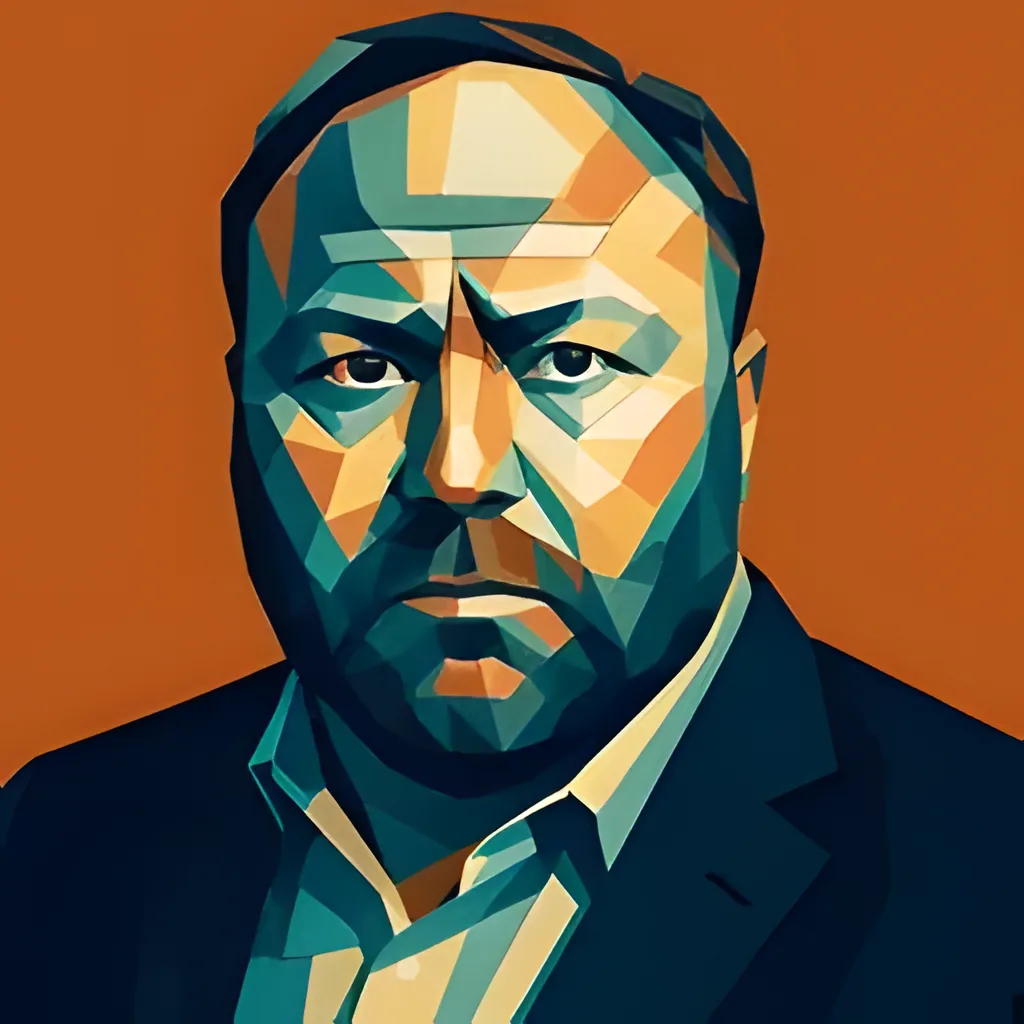
A life in brief
Alex Jones: life and timeline.
Alex Jones began on Austin public-access television in the mid-1990s and was fired from mainstream radio for refusing to broaden his topics. In 1999 he launched InfoWars from his home. The formula stayed consistent: reject the official account of a tragedy, supply a hidden-hand explanation, then sell survival gear and supplements to the audience the fear created. It grossed more than fifty million dollars a year. It also produced years of lies about Sandy Hook, and juries ordered him to pay the families nearly 1.5 billion dollars.
- 1974
Born in Dallas
Born Alexander Emerick Jones in Dallas, Texas, and raised in the suburbs of Austin. By his own account the upbringing was unremarkable, but books alleging a hidden cabal of international bankers shaped his worldview early.
- 1993
Waco
The federal raid on the Branch Davidian compound. He travels to Waco and films the aftermath, framing a law enforcement action as an act of tyranny against American citizens.
- 1995
Oklahoma City
The bombing kills 168 people. The world sees domestic terrorism carried out by Timothy McVeigh; Jones promotes the theory that the federal government was somehow involved and the official story a cover-up.
- 1999
InfoWars launches
Fired from mainstream radio for refusing to broaden his topics, he starts his own website and radio broadcast from his home in Austin. He had begun on public-access television in the mid-1990s.
- 2001
9/11 as catalyst
While the nation mourns he questions the official account, becoming a leading voice in the 9/11 Truth movement and pushing the baseless theory that the World Trade Center collapse was a controlled demolition.
- 2004
The documentary films
Releases The Masters of Terror, claiming the government was behind the Oklahoma City bombing. He also made Dark Secrets: Inside Bohemian Grove, sneaking into a secretive California retreat for powerful men.
- 2012
Sandy Hook
On 14 December a gunman murders twenty first-graders and six educators in Newtown, Connecticut. Jones begins telling his audience the massacre was a fabrication, staged to justify confiscating guns, and that the parents were hired actors.
- 2015
Trump on the show
In December, Donald Trump appears as a guest on The Alex Jones Show — a moment of validation that carries Jones from the fringes of the internet into the heart of a presidential campaign.
- 2016
Pizzagate, and a rifle in a restaurant
InfoWars amplifies the false claim that a Washington DC pizzeria hid a child-trafficking ring run by prominent Democrats. In December an armed man drives there to investigate and fires his weapon inside. Nobody is hurt.
- 2018
Deplatformed
Apple removes almost all InfoWars podcasts in early August and pulls the app on 7 September. Facebook, YouTube and Spotify follow, citing policies against hate speech and harassment.
- 2022
The verdicts
In three trials in Texas and Connecticut, juries order Jones and Free Speech Systems to pay the Sandy Hook families nearly 1.5 billion dollars. Both he and the company file for bankruptcy protection.
Major achievements
Alex Jones: major achievements.
- 01
InfoWars
Launched in 1999 from his home in Austin and grown into a sprawling enterprise. Court records later revealed it was generating fifty-plus million dollars a year by the mid-2010s.
- 02
An early grasp of internet media
While mainstream outlets were still grappling with the new landscape, he used InfoWars.com as a hub for his radio show, articles and films, bypassing traditional gatekeepers entirely.
- 03
The documentary films
The Masters of Terror in 2004, and Dark Secrets: Inside Bohemian Grove, for which he snuck into an exclusive retreat for powerful men in California and filmed the rituals.
- 04
A line into a presidential campaign
Trump's December 2015 appearance on his show moved him from the fringes into a major campaign. After the 2016 victory he boasted of receiving calls from the White House.
- 05
The merchandise engine
Free content created a constant sense of crisis; the cure — survival gear, water filters, dietary supplements — was for sale in the InfoWars store. Create the panic, then sell the remedy.
Turning points
Alex Jones: defining moments.
- 1993–1995
Waco and Oklahoma City
Two events became the cornerstones of his narrative. He filmed the aftermath at Waco and called the raid tyranny; when McVeigh's bomb killed 168 people in Oklahoma City, he said the government was involved. From these he built one message: hidden forces, often inside the US government, conspire against ordinary Americans.
- 1999
Fired, then free
Mainstream radio let him go for refusing to broaden his topics and for his increasingly controversial views. Being fired didn't silence him — it liberated him. He launched InfoWars from home just as the internet age was dawning, and was perfectly positioned for it.
- 2001
The formula finds its event
The 9/11 attacks were the single most powerful catalyst for the brand. Take a tragic, confusing event, reject the official explanation, offer a secret malevolent power instead. His audience grew exponentially.
- 2012–2022
Sandy Hook
He had built a career on shadowy, impersonal forces. This time his words targeted real, vulnerable people: he told millions the murdered first-graders were a fabrication and their parents were actors. His followers sent death threats, confronted families in public and desecrated the children's graves. Lenny Pozner, whose six-year-old son Noah was killed, moved home repeatedly to escape them.
- 2018
The platforms close
Apple removed almost all InfoWars podcasts in August and pulled the app on 7 September; Facebook, YouTube and Spotify deleted his pages. He called it censorship. The platforms had decided the liability of hosting his content, especially on Sandy Hook, had become too great.
What you’ll take away
Lessons from Alex Jones’s life.
- 01
Words land on real people
Conspiracies about impersonal forces cost him nothing for two decades. Naming grieving parents did. His audience acted on what he said, and that was the line that ended him.
- 02
Fear is a business model, and it sends a bill
Internal emails and analytics showed traffic and sales spiked whenever InfoWars discussed the massacre. The evidence that he was monetising the families' pain is what turned a media empire into a bankruptcy.
- 03
Real distrust, false answer
He tapped a genuine vein of distrust in institutions and twisted it into a paranoid worldview that harmed innocent people and corroded the very idea of a shared reality.
Did you know
Facts about Alex Jones.
- 01
Did you know that controversial radio host Alex Jones began his broadcasting career on a public-access television cable TV channel in Austin, Texas?
- 02
Did you know that Jones made a cameo appearance in Richard Linklater's acclaimed 2001 film 'Waking Life', playing a man ranting in a car?
- 03
Did you know that before launching InfoWars, Jones was fired from an Austin radio station because his views made it too hard for the station to sell advertising?
If you liked Alex Jones…
Browse all →
FAQ
Frequently asked questions about Alex Jones.
What is Alex Jones's full name?
Alexander Emerick Jones. He was born on 11 February 1974 in Dallas, Texas, and grew up in the suburbs of Austin.
How did Alex Jones get his start?
On public-access cable television in Austin in the mid-1990s, soon after leaving high school. His show led to a talk-radio slot on Austin's KJFK, and after being dropped from it in 1999 he started broadcasting independently online — the origins of InfoWars.
What is InfoWars?
A website and radio broadcast Alex Jones launched from his Austin home in 1999, built on the claim that a secret globalist cabal — a 'New World Order' — intends to enslave humanity. Court records later showed it generated fifty-plus million dollars a year by the mid-2010s, largely by selling survival gear and dietary supplements to its audience.
What did Alex Jones say about Sandy Hook?
That the 2012 murder of twenty first-graders and six educators was a 'giant hoax' — a 'false flag' staged by the government as a pretext to confiscate guns — and that the grieving parents were 'crisis actors' hired to play a part. He and his staff promoted the lie for years. Under oath in 2022 he admitted the massacre was '100% real'.
How much does Alex Jones owe the Sandy Hook families?
In three separate trials in Texas and Connecticut, juries ordered Jones and his parent company Free Speech Systems to pay nearly 1.5 billion dollars in compensatory and punitive damages — one of the largest defamation awards in American history. Both filed for bankruptcy protection.
Why was Alex Jones removed from social media?
In the summer of 2018 Apple removed almost all InfoWars podcasts and then pulled the app; Facebook, YouTube and Spotify deleted his pages and channels, citing violations of their policies against hate speech and harassment. He called it censorship; for the platforms, the liability had become too great.
Is Alex Jones still on the air?
Yes. He still broadcasts from a studio in Austin, still selling supplements and warning of globalist plots — but as a diminished figure facing a court-ordered debt so vast it can likely never be repaid.
Published by Lyfestori, from Duck Pond Ventures Oy. About us and how to report a correction.
15 min · one sitting