Alexander the Great
The Young Conqueror Who Built the Ancient World’s Greatest Empire
Born Alexander III of Macedon in Pella in 356 BC, son of King Philip II and Queen Olympias, Alexander the Great was tutored by Aristotle, became king at twenty and, in eleven years of campaigning, built an empire stretching from Greece and Egypt to India — spreading Greek culture across three continents before his death at thirty-two.
- 15 min listen
- King of Macedonia
- Conqueror
- Hellenistic world
Alexander the Great’s full 15 min audio biography, The Young Conqueror Who Built the Ancient World’s Greatest Empire, is available on Lyfestori for iOS. Listen to a free preview below.
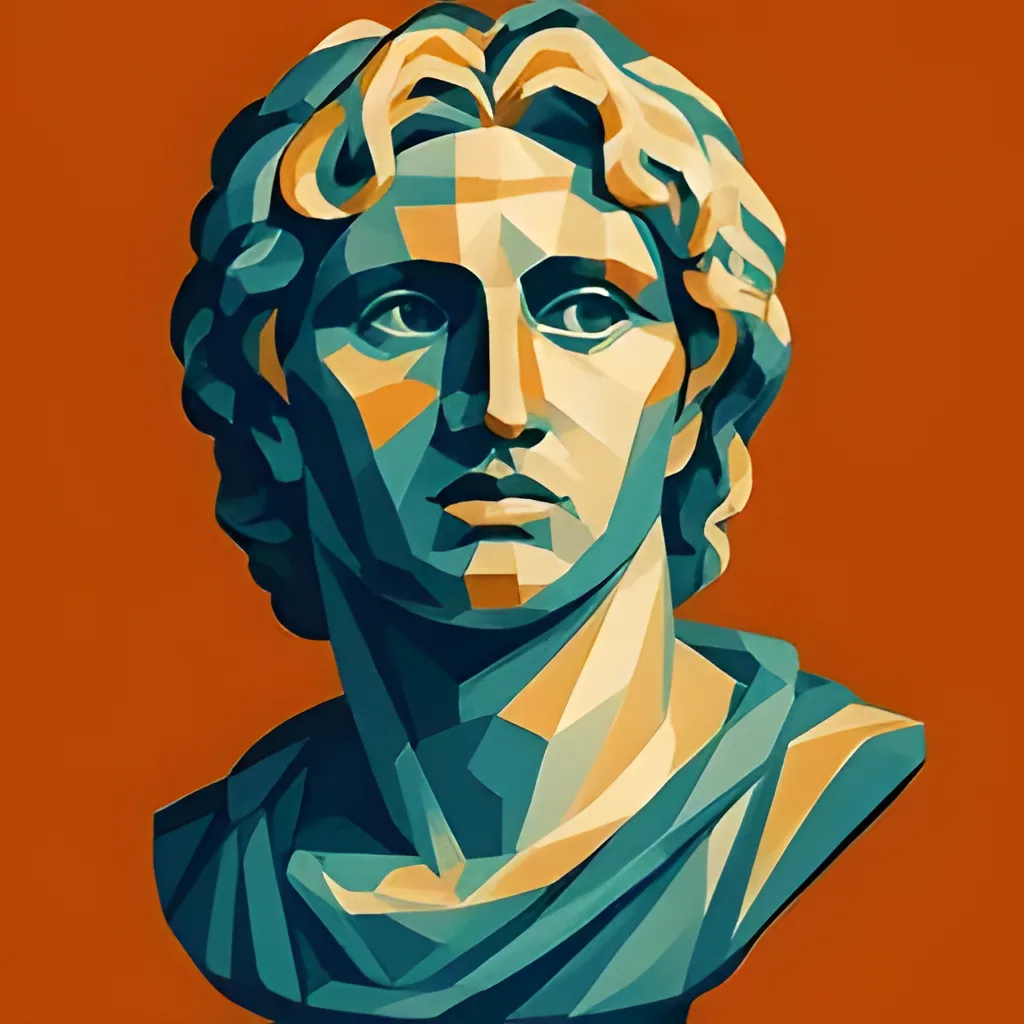
A life in brief
Alexander the Great: life and timeline.
Alexander was tutored by Aristotle at thirteen, ruled Macedonia as regent at sixteen, and led the cavalry charge that won his father Greece at eighteen. He was king at twenty. He then spent eleven years marching, never turning back until his own army refused to go further — 11,000 miles from home, past the Indus. He carried a copy of the Iliad and believed he was a new Achilles, destined for glory and an early death. He died in Babylon at thirty-two.
- 356
Born in Pella (356 BC)
Born in the Macedonian capital to King Philip II and Queen Olympias. Philip had already turned a kingdom that many southern Greeks thought backward and uncivilised into a military powerhouse.
- 338
Chaeronea
At eighteen he commands the left wing against the combined forces of Athens and Thebes, and leads a cavalry charge that helps secure a decisive victory. Macedonia now controls all of Greece, and Alexander is marked as his father's heir.
- 337
The wedding feast
Philip marries Cleopatra Eurydice, threatening Alexander's inheritance. When her uncle suggests the match will produce legitimate heirs, Alexander throws a cup at him; Philip draws his sword on his own son and is too drunk to stay upright. Alexander and Olympias flee Macedonia.
- 336
King at twenty
Philip is assassinated by his bodyguard Pausanias at a wedding. Alexander takes the throne against rivals who think him too young, and when Thebes revolts he destroys the city — thousands killed, tens of thousands enslaved, though temples and the house of Pindar are spared.
- 334
Crossing the Hellespont
Invades Persia with roughly 35,000 men. At the Granicus River he personally leads a cavalry charge across the water and nearly dies when a Persian nobleman strikes his helmet with an axe.
- 333
Issus
He faces Darius III himself and, heavily outnumbered, wins through tactics and the discipline of his troops. Darius flees the field, abandoning his family to Alexander.
- 332
Tyre, then Egypt
A seven-month siege of an island city that seemed impregnable: his engineers build a causeway from the mainland and attack from land and sea. Its fall removes the last major Persian naval base. He enters Egypt as a liberator and founds Alexandria.
- 331
Gaugamela
Darius picks ground to suit his chariots and cavalry. Alexander opens a gap in the Persian line and drives a cavalry strike straight at the king, who flees. Organised Persian resistance is finished.
- 328
The killing of Cleitus
Deep in Asia, having adopted Persian customs his officers find servile, he spears his friend Cleitus the Black — the man who saved his life at the Granicus — during a drunken argument. It haunts him for the rest of his life.
- 327
Into India
He crosses into a world entirely foreign to the Greeks. At the Hydaspes he defeats King Porus and his 200 war elephants, then is so impressed by Porus's courage that he leaves him ruling his own territory as an ally. Soon after, his exhausted army refuses to go further.
- 324
The desert and the return
Part of the army marches back through the Gedrosian Desert, one of the most barren regions on Earth. The crossing is a disaster costing thousands of lives. He reaches the imperial heartlands and reorganises his realm from cities such as Susa.
- 323
Death in Babylon
He enters Babylon meaning to make it his capital, planning an invasion of Arabia and working to integrate his domains. In June, after a prolonged fever, he dies aged thirty-two, having ruled thirteen years.
Major achievements
Alexander the Great: major achievements.
- 01
An empire in eleven years
Between 334 and 323 BC he built a realm stretching from Greece to the Indus River, covering roughly two million square miles — and he was dead at thirty-two.
- 02
The great battles
Granicus, Issus, Gaugamela, the Hydaspes. Heavily outnumbered at Issus and again at Gaugamela, he won both by tactical design: open a gap in the enemy line, then strike at the king himself.
- 03
The siege of Tyre
Seven months against an island fortress that seemed impregnable. His engineers built a causeway from the mainland to the island while his forces attacked from land and sea, eliminating the last major Persian naval base.
- 04
Alexandria
Founded on the Mediterranean coast near the Nile delta, it became one of the greatest cities of the ancient world and its foremost centre of learning.
- 05
The Hellenistic world
Greek language, art, science and philosophy blended with local traditions from Egypt to India. Building on Persian networks like the Royal Road, his campaigns and city foundations boosted long-distance trade and exchange across three continents.
Turning points
Alexander the Great: defining moments.
- Age thirteen to sixteen
Aristotle, Homer, and a sense of destiny
His parents hired Aristotle to tutor him at thirteen. For three years he learned philosophy, science, medicine and literature — and above all the heroic ideals of Homer. He became obsessed with the Iliad, carried a copy through every campaign, and saw himself as a new Achilles: destined for glory, doomed to die young. His mother Olympias told him his real father was Zeus.
- 336 BC
A throne at twenty
Philip was assassinated and Alexander inherited a kingdom full of rivals who thought him too young and inexperienced to rule. Greek cities rebelled, expecting to break free. He destroyed Thebes and sold its people into slavery — a message to every other city about the cost of defying him.
- 331 BC
King of Asia
After Gaugamela, Darius fled and organised resistance collapsed. Alexander proclaimed himself king of Asia and was welcomed into Babylon as a liberator. Then he let his troops loot and burn Persepolis — revenge for the Persian destruction of Athens 150 years earlier, or a drunken celebration that got away from him.
- 328 BC
Killing Cleitus
He had begun adopting Persian customs and demanding that his subjects prostrate themselves before him. His Macedonian officers found it un-Greek and servile. When Cleitus the Black, who had saved his life at the Granicus, said so during a drunken argument, Alexander ran him through with a spear. It marked a turning point with his closest companions.
- After the Hydaspes
The army says no
He wanted the Ganges and whatever lay beyond it. His men had been fighting for eight years and had marched over 11,000 miles from Macedonia, and they refused to take another step. Faced with mutiny, the man who never turned back turned back — and the retreat he chose through the Gedrosian Desert killed thousands.
What you’ll take away
Lessons from Alexander the Great’s life.
- 01
Inherit the machine, then use it
Philip built the army and planned the Persian invasion. Alexander's genius was not starting from nothing — it was taking an instrument someone else had made and driving it further than its maker imagined.
- 02
Conquest is not administration
He took two million square miles and left no clear heir. Within a few decades his generals had torn the empire into competing kingdoms. What survived him was not the state but the culture.
- 03
The winning habit has no brake
Eight years of never turning back ended in a mutiny, and the retreat he chose cost thousands of lives in the Gedrosian Desert. He could beat Darius. He could not stop.
Did you know
Facts about Alexander the Great.
- 01
Did you know that Alexander the Great was personally tutored by the famous philosopher Aristotle until the age of 16?
- 02
Did you know that in 15 years of constant warfare across three continents, Alexander never lost a single battle?
- 03
Did you know that Alexander the Great named more than 70 cities after himself, including Alexandria in Egypt, but he also named one city 'Bucephala' after his beloved horse?
If you liked Alexander the Great…
Browse all → Philosopher22 min
Aristotle
The Master of Those Who Know
 Roman Statesman15 min
Julius Caesar
The Roman General Who Conquered Gaul and Changed History Forever
 Mongol Conqueror17 min
Genghis Khan
The Conqueror Who Built the World's Largest Land Empire
 European Commission President19 min
Ursula von der Leyen
From Doctor to Europe's Most Powerful Woman
FAQ
Frequently asked questions about Alexander the Great.
What is Alexander the Great known for?
Building one of the largest empires of the ancient world in little more than a decade — from Greece and Egypt through Persia to north-west India — without losing a major battle. His conquests spread Greek language and culture across the Near East and Central Asia and began what historians call the Hellenistic age.
Where was Alexander the Great born?
In Pella, the capital of the ancient kingdom of Macedonia in what is now northern Greece, in 356 BC. He was the son of King Philip II and Queen Olympias.
How old was Alexander the Great when he became king?
Twenty. His father Philip II was assassinated in 336 BC and Alexander secured the throne within months. He had already ruled Macedonia as regent at sixteen and led the decisive cavalry charge at the Battle of Chaeronea at eighteen.
Who was Alexander the Great's teacher?
Aristotle. His parents hired the philosopher when Alexander was thirteen, and for three years taught him philosophy, science, medicine and literature, with a particular emphasis on Greek culture and the heroic ideals in Homer. Alexander became obsessed with the Iliad and carried a copy with him throughout his conquests.
How large was Alexander's empire?
At his death it stretched from Greece to the Indus River — roughly two million square miles — built in about eleven years of campaigning between 334 and 323 BC.
How did Alexander the Great die?
In June 323 BC in Babylon, after a prolonged fever. He was thirty-two and had ruled for thirteen years. He had been wounded many times and had pushed his body to its limits; the disastrous crossing of the Gedrosian Desert may have contributed to his declining health.
Why did Alexander stop his conquests in India?
His army stopped him. After defeating King Porus at the Hydaspes he wanted to press on to the Ganges and beyond, but his soldiers had been fighting for eight years and had marched over 11,000 miles from Macedonia. They refused to go any further, and faced with mutiny he turned back.
What happened to his empire after he died?
It fell into chaos almost immediately. He left no clear heir, and his generals — the Diadochi — fought for control of different regions, fragmenting the empire into competing kingdoms within a few decades. The cultural changes he set in motion lasted centuries.
Published by Lyfestori, from Duck Pond Ventures Oy. About us and how to report a correction.
15 min · one sitting