Julius Caesar
The Roman General Who Conquered Gaul and Changed History Forever
Born Gaius Julius Caesar around 100 BC in Rome, Julius Caesar conquered Gaul, crossed the Rubicon to win a civil war and made himself dictator of Rome — until a group of senators stabbed him to death on the Ides of March, 44 BC.
- 15 min listen
- Roman general
- Conquest of Gaul
- Dictator
Julius Caesar’s full 15 min audio biography, The Roman General Who Conquered Gaul and Changed History Forever, is available on Lyfestori for iOS. Listen to a free preview below.
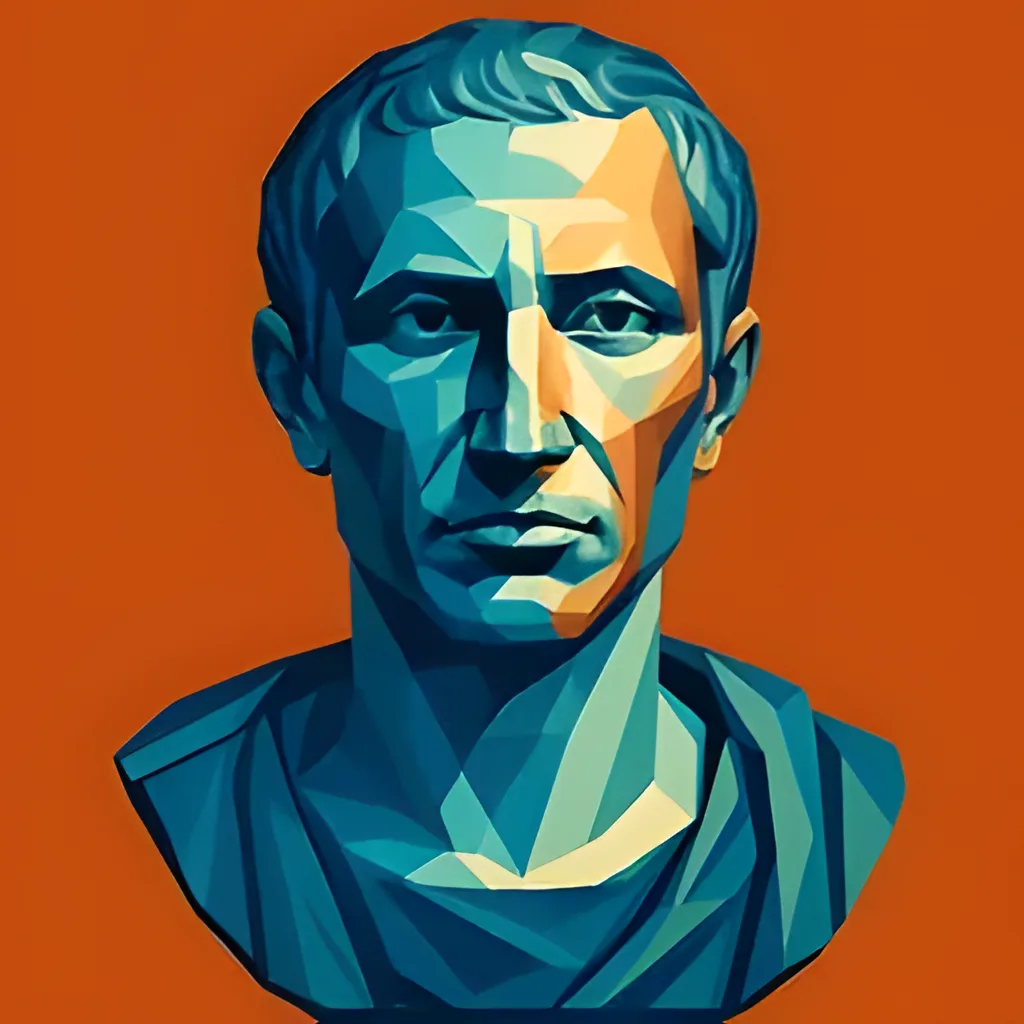
A life in brief
Julius Caesar: life and timeline.
He was born into a patrician family that claimed descent from the goddess Venus and had neither money nor power to show for it. Julius Caesar borrowed enormously to buy popularity with public games, won election as Rome's chief priest, then spent eight years conquering Gaul — sending home dispatches so well written they are still read as literature. Ordered to disband his army in 49 BCE, he crossed the Rubicon with a single legion instead. Five years later, sixty senators stabbed him twenty-three times.
- 100
Born in Rome
Born around 100 BCE into a patrician family claiming descent from the goddess Venus — noble blood, but neither wealthy nor politically powerful. His family had connections to Gaius Marius, a general who championed the common people.
- 63
Pontifex Maximus
Wins election as Rome's chief priest in 63 BCE, a lifetime appointment carrying religious authority and real political standing. He holds the praetorship the following year.
- 60
The First Triumvirate
Around 60 BCE he allies with Pompey, Rome's most successful general, and Crassus, its wealthiest man. An informal pact and never a legal office — but enough to dominate Roman politics.
- 59
Consul
The triumvirate secures his election. As consul he delivers land grants for Pompey's veterans and measures favouring Crassus's tax companies, and takes for himself a five-year command of Cisalpine Gaul and Illyricum. Transalpine Gaul is added soon after.
- 58
Gaul
He departs with four legions in 58 BCE. The Helvetii migration gives him his pretext: he defeats them and frames it as protecting Rome's allies. Eight years follow, each regional dispute becoming grounds to widen the war.
- 52
Alesia
Vercingetorix unites the tribes in a final attempt to drive out the Romans and is besieged at a hilltop fortress. When a massive relief army arrives, Caesar is trapped between two forces — and beats both at once, ending organised resistance in Gaul.
- 49
Crossing the Rubicon
The Senate orders him to disband his armies and return as a private citizen, where prosecution awaits. On 10 January 49 BCE he leads a single legion across the river dividing his province from Italy, and starts a civil war.
- 48
Pharsalus
Outnumbered in Greece, his veteran legions defeat Pompey's forces through superior tactics and discipline. Pompey flees to Egypt and is murdered by men hoping to curry favour with Caesar, who is reportedly horrified.
- 45
Master of Rome
With the remaining republican forces beaten in Africa and Spain, he is the undisputed master of the Roman world by 45 BCE — and pardons many who fought against him, appointing some to high office.
- 44
The Ides of March
On 15 March 44 BCE, about sixty senators led by Brutus and Cassius surround him at the Curia of Pompey. He falls at the base of a statue of Pompey, bleeding from twenty-three wounds.
Major achievements
Julius Caesar: major achievements.
- 01
The conquest of Gaul
Eight years from 58 BCE subjugating most of what is now France and Belgium and parts of Switzerland, with expeditions across the Rhine and to Britain — demonstrations of reach rather than lasting conquests. It made him rich, popular and dangerous.
- 02
Alesia
Besieging Vercingetorix at a hilltop fortress, then trapped between the town and a massive Gallic relief army, he built fortifications facing both ways and defeated both armies simultaneously through engineering and tactical skill.
- 03
The Julian calendar
As dictator he reorganised the calendar. His version remained in use for over fifteen centuries and laid the foundation for modern timekeeping.
- 04
The Commentaries
The reports he sent back from Gaul were self-promotion that worked, written in a clear, compelling style that enhanced his reputation in Rome. They are still recognised as masterpieces of military literature.
- 05
Reforms as dictator
Citizenship for many provincials, a reformed tax system, massive public works employing Rome's urban poor, and planned colonies for veterans and landless citizens — alongside a clemency toward defeated enemies that was remarkable for the time.
Turning points
Julius Caesar: defining moments.
- 60–59 BCE
The alliance that bought a province
Deep in debt from the public games that had bought his popularity, he allied with Pompey's prestige and Crassus's money. The pact made him consul, and the consulship got him a five-year command in Gaul. Everything after this is what he did with that command.
- 58–50 BCE
Gaul made him
He went out with four legions and a migration crisis, and came back with a province, an enormous fortune, and an army fanatically loyal to him personally rather than to Rome — because he paid them generous bonuses out of the conquest. That army is what made the Rubicon thinkable.
- 49 BCE
The Rubicon
Crassus was dead, killed by the Parthians in 53 BCE, and Pompey had grown suspicious of his power. The Senate ordered him home without his legions, planning to prosecute him for alleged crimes; without office he faced exile or worse. Obedience meant political destruction, defiance meant civil war. On 10 January he chose the river.
- 44 BCE
The clemency that killed him
He pardoned Brutus after Pharsalus and Cassius too, and made both praetors. They recruited about sixty senators, called themselves the Liberators, and stabbed him to restore a Republic his death actually finished. Mark Antony turned the public against them, and Caesar's heir Octavian became Augustus, Rome's first emperor.
Alea iacta est — the die is cast.
Julius Caesar, by legend, crossing the Rubicon in 49 BCE
What you’ll take away
Lessons from Julius Caesar’s life.
- 01
Debt bought the crowd
He borrowed heavily for public games because popularity was the currency the cursus honorum ran on. That financial burden drove many of his later decisions — including the need for a province rich enough to clear it.
- 02
Write your own dispatches
He sent regular, well-written reports of his victories back to Rome. The Commentaries are literature and were also propaganda: he understood that the account of the war reaching home was part of winning it.
- 03
Mercy is not a strategy on its own
His clemency was genuine and unusual — he pardoned enemies and promoted them to high office. Brutus and Cassius were both pardoned men. Generosity alone did not buy loyalty: the men he spared organised his murder.
Did you know
Facts about Julius Caesar.
- 01
Did you know that Julius Caesar was kidnapped by pirates in his twenties, but he felt his ransom was too low and actually demanded they increase it before later returning to capture them?
- 02
Did you know that the month of July is named in honor of Julius Caesar, who reformed the Roman calendar to create the 365-day solar calendar we still use the basis of today?
- 03
Did you know that Julius Caesar famously crossed the Rubicon river in 49 BC with his army, sparking a civil war and coining the phrase 'the die is cast' (alea iacta est)?
If you liked Julius Caesar…
Browse all → King & Conqueror15 min
Alexander the Great
The Young Conqueror Who Built the Ancient World’s Greatest Empire
 French Emperor18 min
Napoleon Bonaparte
The Emperor Who Dominated Continental Europe and Changed History Forever
 European Commission President19 min
Ursula von der Leyen
From Doctor to Europe's Most Powerful Woman
 President of Finland17 min
Alexander Stubb
Navigating Power and Politics
FAQ
Frequently asked questions about Julius Caesar.
What was Julius Caesar's full name?
Gaius Julius Caesar. Gaius was his personal name, Julius his clan (the Julii, who claimed descent from the goddess Venus) and Caesar his family branch — a name later adopted as a title by Roman emperors and echoed in “Kaiser” and “Tsar.”
How did Julius Caesar die?
He was stabbed to death on 15 March 44 BC — the Ides of March — at a meeting of the Senate in the Theatre of Pompey in Rome. Around sixty conspirators, led by Brutus and Cassius, took part; he was stabbed twenty-three times.
When was Julius Caesar born?
Around 100 BCE — the exact date is not certain. He was born into a patrician family that claimed descent from the goddess Venus but was neither particularly wealthy nor politically powerful at the time of his birth.
What does 'crossing the Rubicon' mean?
The Rubicon was the river dividing Caesar's province from Italy proper, and bringing an army across it meant war with the Senate. On 10 January 49 BCE he crossed with a single legion. The phrase has since entered common usage as a metaphor for an irreversible decision.
What were Caesar's last words?
Ancient sources disagree. Some report he said, in Greek, 'Kai su, teknon?'. Others say he said nothing at all. He fell at the base of a statue of Pompey, bleeding from twenty-three wounds.
Did killing Caesar save the Roman Republic?
It did the opposite. The conspirators fatally underestimated the loyalty of his supporters and his popularity with ordinary people. Mark Antony turned public opinion against them with a masterful funeral oration, thirteen more years of civil war followed, and the winner — Caesar's adopted heir Octavian — became Augustus, Rome's first emperor.
Was Caesar's relationship with Cleopatra real?
He backed her in the civil war against her brother Ptolemy XIII and helped restore her to the throne as co-ruler. Their relationship was both political and romantic, and likely produced a son, Caesarion, with whom she later ruled.
Published by Lyfestori, from Duck Pond Ventures Oy. About us and how to report a correction.
15 min · one sitting