Sam Altman
Silicon Valley's AI Pioneer
Born Samuel Harris Altman on 22 April 1985 in Chicago and raised in St. Louis, Sam Altman dropped out of Stanford to found Loopt, ran the startup accelerator Y Combinator, and co-founded OpenAI — the company behind ChatGPT, which he leads as CEO.
- 16 min listen
- OpenAI
- ChatGPT
- Y Combinator
Sam Altman’s full 16 min audio biography, Silicon Valley's AI Pioneer, is available on Lyfestori for iOS. Listen to a free preview below.
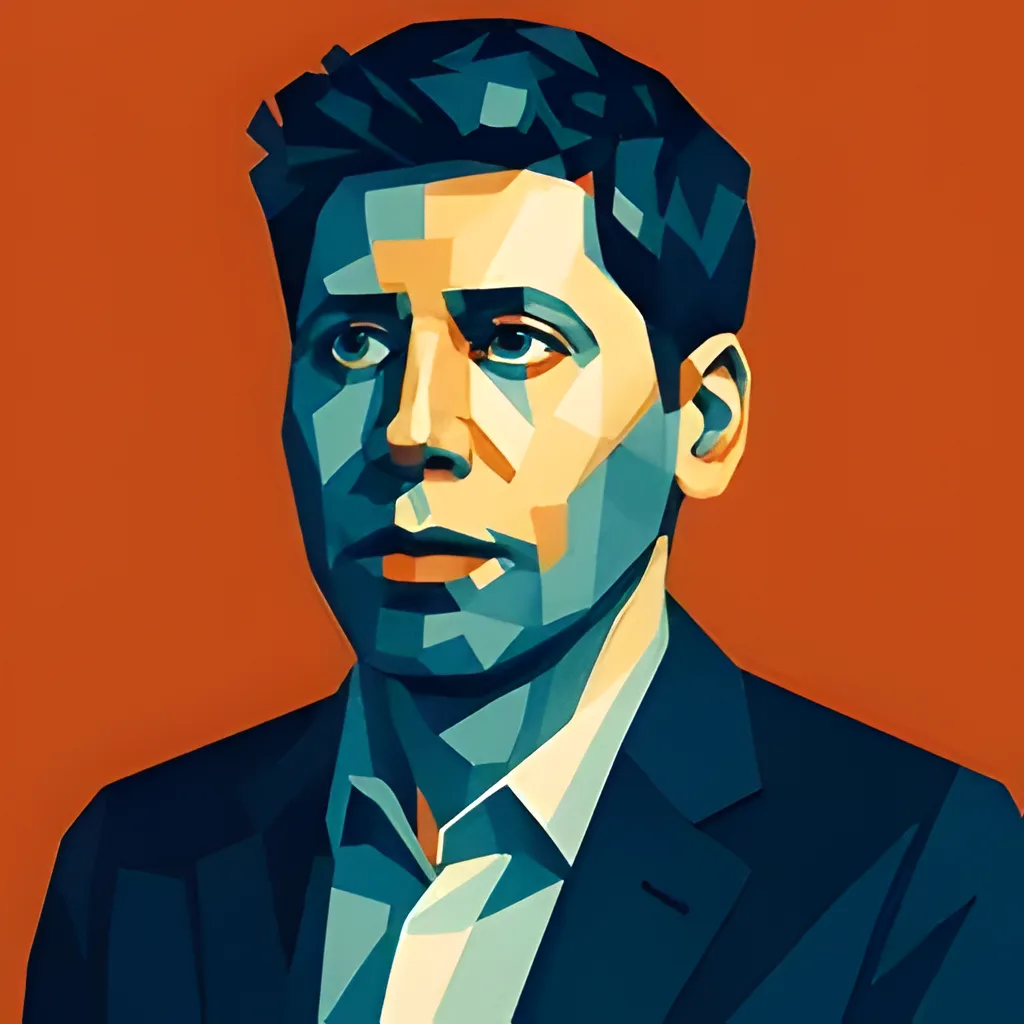
A life in brief
Sam Altman: life and timeline.
In November 2023 OpenAI's board fired Sam Altman. Within five days nearly every employee had threatened to quit unless he returned, Microsoft had offered him a blank cheque to start over, and he was back with more power than before. He had dropped out of Stanford at nineteen, sold his first company for less than he hoped, and been handed Y Combinator at twenty-eight. He now runs the company that built ChatGPT, and compares the job to the Manhattan Project.
- 1985
Born in Chicago
Born 22 April to Leonard, a real estate broker, and Connie, a dermatologist. The eldest of four, he grows up in the suburbs of St. Louis, Missouri, in a household that values education and curiosity.
- 1993
The first Macintosh
At eight he is given an Apple Macintosh and immediately takes it apart. His mother finds computer parts scattered across his bedroom floor as he tries to rebuild machines from scratch.
- 2003
Stanford
Enrols to study computer science as Google goes public and Facebook starts in dorm rooms. He excels at debate and maths competitions — and later jokes he learned more playing poker with classmates than in lectures.
- 2005
Drops out for Loopt
At nineteen he leaves Stanford to co-found a mobile app for sharing your location with friends, years before the iPhone or GPS in every pocket. Loopt joins Y Combinator's first batch of eight companies on six thousand dollars from Paul Graham.
- 2012
Loopt sold
Green Dot Corporation acquires it for $43.4 million in March. Not the explosive success he wanted after raising over thirty million from investors including Sequoia, but an education in products, teams, capital and failing gracefully.
- 2014
President of Y Combinator
At twenty-eight he takes over from Paul Graham and Jessica Livingston. He wants to fund a thousand companies a year and push YC beyond software into nuclear energy, biotechnology and artificial intelligence.
- 2015
Co-founds OpenAI
Launched in December with Elon Musk, Peter Thiel and other tech luminaries as a nonprofit with a billion dollars and an audacious mission: artificial general intelligence that benefits all humanity.
- 2019
Leaves YC to run OpenAI
Steps down as president in March to become CEO full-time, leaving a proven success to bet everything on a technology that might not work.
- 2022
ChatGPT
Released in November. It reaches 100 million users in two months, the fastest consumer technology adoption in history, and turns him from a Silicon Valley CEO into the face of the AI revolution.
- 2023
Fired and reinstated
The board removes him in November. Almost every OpenAI employee threatens to quit, Microsoft offers a blank cheque, and within five days he is CEO again with more power than before.
- 2024
The Giving Pledge
He and his husband, engineer Oliver Mulherin, sign in May, promising to donate most of their wealth.
Major achievements
Sam Altman: major achievements.
- 01
OpenAI
Co-founded in 2015 and led as CEO since 2019. It is valued at over 150 billion dollars, one of the most valuable startups in history, and expected revenue to triple to 12.7 billion dollars in 2025.
- 02
ChatGPT
Released in November 2022: 100 million users in two months, and over 400 million weekly active users by early 2025. The fastest consumer technology adoption ever recorded.
- 03
Y Combinator
As president from 2014 he made it the most influential startup accelerator in the world. Its portfolio — Airbnb, Reddit, Twitch, Instacart, DoorDash, Stripe — passed a combined 100 billion dollars in valuation.
- 04
Betting on hard technology
Created YC Continuity, a 700 million dollar fund, and YC Research, a nonprofit lab on universal basic income and urban planning. He funded nuclear fusion and longevity research when the next social app was the easier bet.
- 05
The voice on AI policy
Testified before Congress on AI regulation and met leaders from over 22 countries, positioning himself as the advocate for responsible development of the technology he is racing to build.
Turning points
Sam Altman: defining moments.
- 2005
Leaving Stanford at nineteen
Two years in, he dropped out to co-found Loopt. The idea was too early — the market was not ready and people were not yet comfortable sharing their location constantly — but it put him in Y Combinator's first batch and into the network that would shape the next twenty years.
- 2014
Handed the keys to Silicon Valley
Paul Graham and Jessica Livingston asked him to run Y Combinator, impressed by his mix of analytical intelligence and emotional maturity. He was twenty-eight. He used it to argue that the companies that mattered would solve humanity's biggest challenges rather than sell ads, and funded accordingly.
- 2019
Leaving a sure thing
He stepped down from YC's proven success to run OpenAI full-time, because the GPT models had convinced him the technology was genuinely revolutionary. It was a risky move on something that might not work at all.
- 2023
Five days in November
The board fired him. Nearly every employee threatened to leave, Microsoft offered a blank cheque, and he was reinstated within the week with more power than before. It settled the question of whether the company could exist without him.
how to notice patterns in people over time, how to make decisions with very imperfect information
Sam Altman, on what poker taught him
What you’ll take away
Lessons from Sam Altman’s life.
- 01
Learn to read people, not just systems
He credits poker with teaching him to notice patterns in people and decide on imperfect information. Those were the skills that survived the boardroom — not the computer science he left behind.
- 02
Early is the same as wrong, until it isn't
Loopt predicted the smartphone era and failed because the market was not ready. He kept making bets on timing — hard technology, fusion, AI — but learned that being right is a question of when.
- 03
Loyalty is a strategy
When the board removed him, it was the employees, not the governance, who put him back. He had spent two decades building the network and the trust that made that possible.
Did you know
Facts about Sam Altman.
- 01
Did you know that OpenAI CEO Sam Altman co-founded a location-based social networking app called Loopt in 2005, which he later sold for $43.4 million?
- 02
Did you know that Altman briefly served as the CEO of Reddit for exactly eight days in 2014 following the resignation of Yishan Wong?
- 03
Did you know that Sam Altman dropped out of Stanford University, where he was studying computer science, to focus full-time on building his first startup?
If you liked Sam Altman…
Browse all → AI Researcher15 min
Demis Hassabis
Architect of Intelligent Machines
 Venture Capitalist15 min
Peter Thiel
The Contrarian Billionaire Who Shaped Silicon Valley
 Tech CEO17 min
Jensen Huang
The Dishwasher Who Built the AI Empire
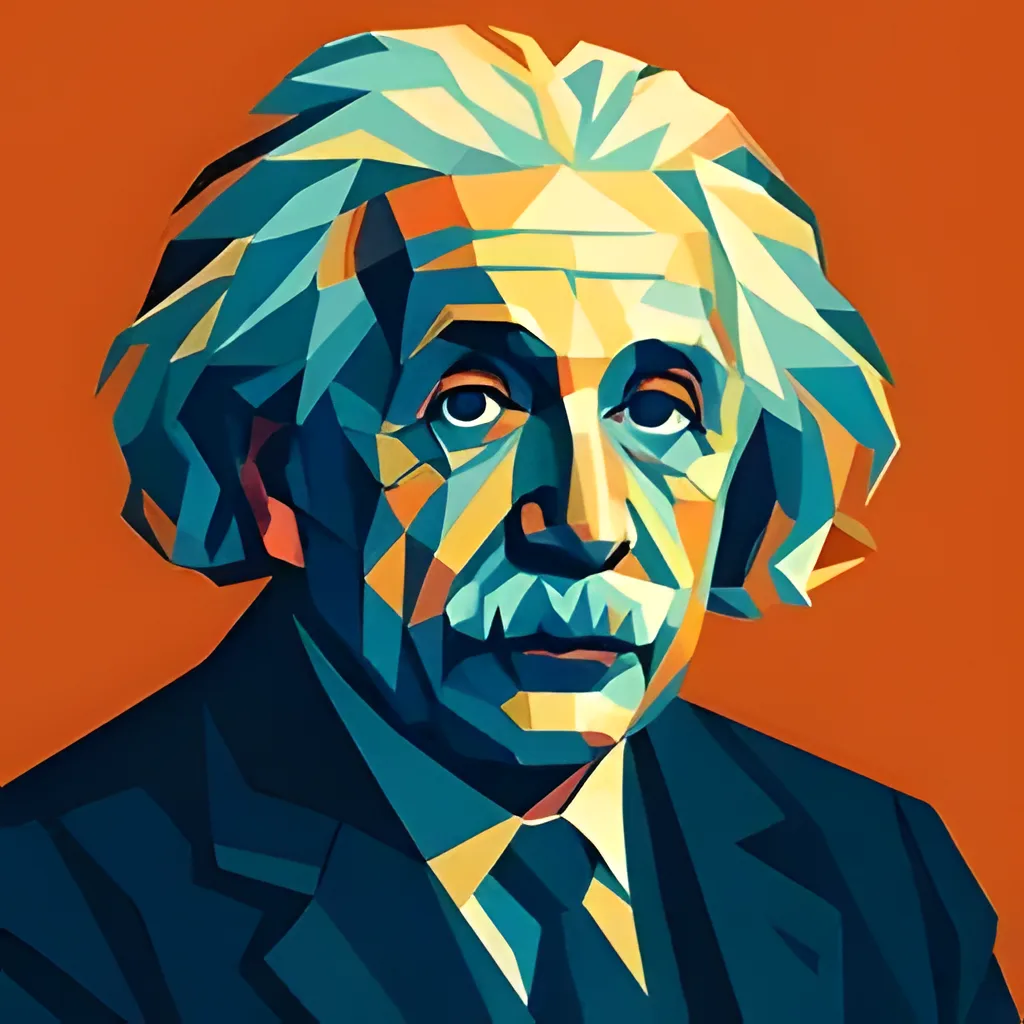 Theoretical Physicist20 min
Albert Einstein
The Genius Who Changed Our Understanding of the Universe
FAQ
Frequently asked questions about Sam Altman.
What did Sam Altman do before OpenAI?
He co-founded the location-sharing app Loopt after leaving Stanford in 2005, sold it in 2012, and became president of the startup accelerator Y Combinator in 2014. He co-founded OpenAI in 2015 and left Y Combinator in 2019 to run it full-time.
Where did Sam Altman grow up?
In the suburbs of St. Louis, Missouri. He was born in Chicago into a Jewish family, the eldest of four children of a real estate broker and a dermatologist, and attended a private school in Ladue before studying computer science at Stanford.
Why was Sam Altman fired from OpenAI?
The board removed him as CEO in November 2023. Within five days almost every OpenAI employee threatened to quit unless he was brought back, Microsoft offered him a blank cheque to start fresh, and he was reinstated with more power than before.
Did Sam Altman finish university?
No. He enrolled at Stanford in 2003 to study computer science and dropped out after two years, at nineteen, to co-found Loopt.
What was Loopt?
A mobile app, co-founded in 2005 with two Stanford classmates, that let you share your location with friends — before the iPhone and before social media as we know it. It raised over thirty million dollars but struggled for users, and Green Dot Corporation acquired it for $43.4 million in 2012.
What did he do at Y Combinator?
He became a part-time partner in 2011 and president in 2014, at twenty-eight. Under him YC backed Airbnb, Reddit, Twitch, Instacart, DoorDash and Stripe, and expanded into hard technology like nuclear energy and biotech. He stepped down in 2019 to run OpenAI.
Why does he compare his work to the Manhattan Project?
He has said running OpenAI is like being in charge of it, and he shares a birthday with Robert Oppenheimer. The comparison is about the weight of building something world-changing — though unlike Oppenheimer, he believes he is building something that will save the world rather than destroy it.
Published by Lyfestori, from Duck Pond Ventures Oy. About us and how to report a correction.
16 min · one sitting