Marie Curie
Pioneer of Science and Champion of Discovery
Born Maria Salomea Skłodowska on 7 November 1867 in Warsaw, Marie Curie discovered polonium and radium with her husband Pierre, coined the word “radioactivity,” and became the first person to win Nobel Prizes in two sciences — physics in 1903 and chemistry in 1911.
- 19 min listen
- Nobel Laureate
- Radioactivity
- Physics & chemistry
Marie Curie’s full 19 min audio biography, Pioneer of Science and Champion of Discovery, is available on Lyfestori for iOS. Listen to a free preview below.
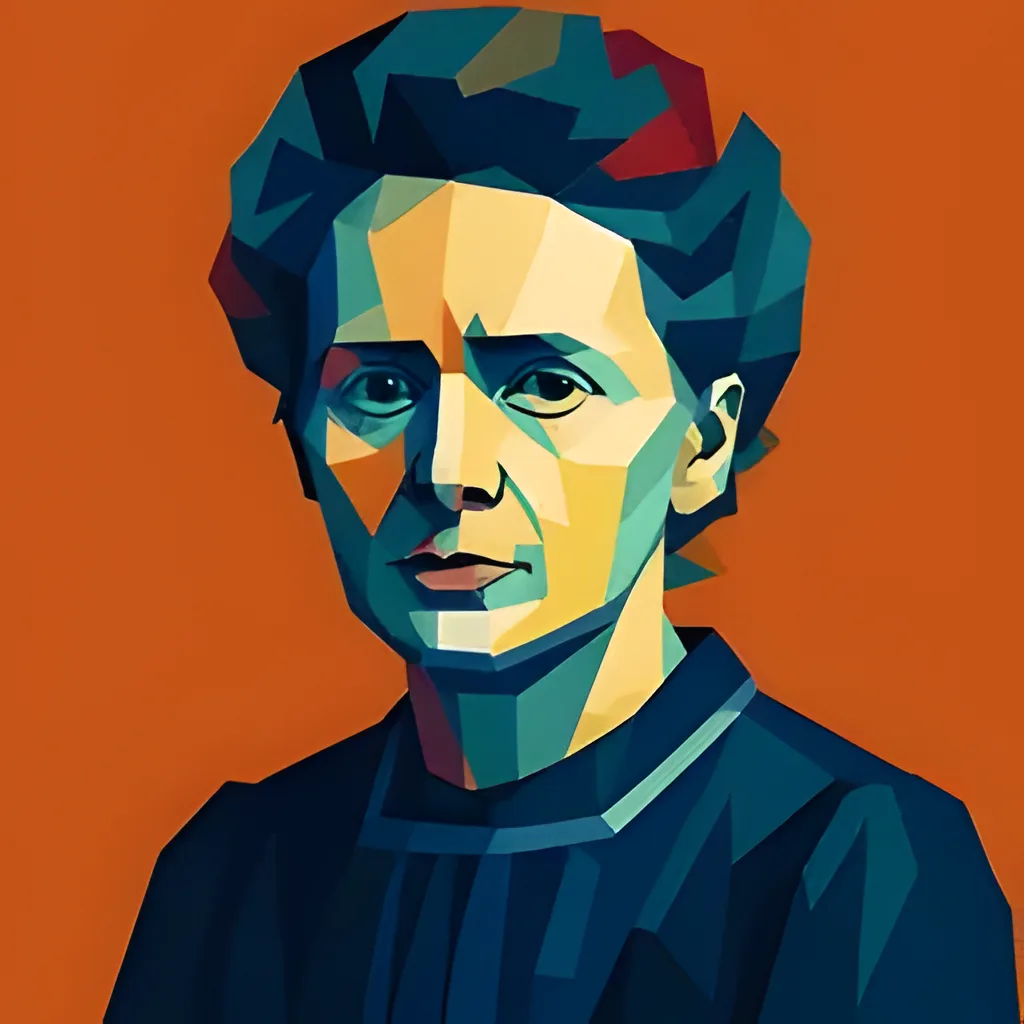
A life in brief
Marie Curie: life and timeline.
She was not allowed to attend university in her own country, so she studied at secret classes that moved from place to place to avoid the police. Marie Curie reached Paris at twenty-four, lived on bread and tea in a freezing sixth-floor room, and sometimes fainted during lectures from hunger. Then she boiled tons of ore in a cold, damp shed to prove two new elements existed. She named radioactivity, won Nobel Prizes in two different sciences, and died of what she had discovered.
- 1867
Born in Warsaw
Born Maria Sklodowska on 7 November, youngest of five children of two teachers, in a Poland controlled by Russia. Her father loses good jobs for being proud to be Polish.
- 1891
Paris at last
After years as a governess funding her sister Bronya's medical studies, she enrols at the Sorbonne at twenty-four and changes her name to the French Marie.
- 1893
First in her class
Graduates in physics at the top of her class, having learned French only a few years earlier. A mathematics degree follows the next year, second in her class.
- 1895
Marriage to Pierre Curie
She had met Pierre the year before — eight years older, already known for work on crystals and magnetism, and unusual for treating her as an equal. They marry on 26 July, she in a dark blue dress practical enough for the laboratory, and honeymoon by bicycle.
- 1898
Polonium and radium
Pitchblende proves more radioactive than pure uranium, so it must contain unknown elements. In July they announce polonium, named for her homeland; radium follows months later. Other scientists want proof.
- 1902
A tenth of a gram
After four years processing tons of pitchblende waste, she isolates pure radium chloride — enough to prove radium exists and measure its properties.
- 1903
First Nobel Prize
Shares the Nobel Prize in Physics with Pierre and Henri Becquerel, the first woman to win one. The committee had planned to omit her; Pierre insisted the research had been her idea.
- 1906
Pierre's death
Pierre slips on wet pavement on 19 April and is killed under the wheels of a horse-drawn wagon. Marie takes his professorship — the first woman to teach at the University of Paris.
- 1911
Second Nobel Prize
Wins the Nobel Prize in Chemistry after isolating pure radium metal with André Debierne — the first person to win in two different sciences. French newspapers attack her over Paul Langevin; she goes to Stockholm and accepts.
- 1914
The little Curies
She builds mobile X-ray units and drives them to the front herself, sets up France's first military radiology service, and trains women to operate the equipment. They help treat over a million wounded.
- 1921
A gram of radium from America
Tours the United States in triumph. American women had raised the money to buy her a gram of radium for her research.
- 1934
Death from her own discovery
Dies 4 July, aged sixty-six, of aplastic anemia — almost certainly caused by decades of handling radioactive material.
Major achievements
Marie Curie: major achievements.
- 01
Naming radioactivity
She showed the strength of uranium's rays depended only on how much uranium was present, not what compound it was in — so the rays came from the atoms themselves. That was a new idea in science, and she named it.
- 02
Polonium and radium
Identified two new elements hiding in pitchblende in 1898, then spent four years processing tons of ore to isolate a tenth of a gram of pure radium chloride and prove they were real.
- 03
Nobel Prizes in two sciences
Physics in 1903, chemistry in 1911 — the first woman to win a Nobel Prize and still the only person to win in two different sciences.
- 04
The little Curies
Mobile X-ray units she designed and drove to the front in the First World War, plus France's first military radiology service. They are estimated to have helped treat more than a million wounded soldiers.
- 05
First woman professor at the University of Paris
Took Pierre's chair after his death in 1906. Hundreds came to her first lecture to see a woman teaching science at university level.
- 06
The Radium Institute
Founded in Paris, it became a leading centre for research on radioactivity and cancer treatment. She helped establish a counterpart in Warsaw, fulfilling a long-held wish for her homeland.
Turning points
Marie Curie: defining moments.
- 1883–1891
The pact with Bronya
Barred from university in Russian-controlled Poland, Marie and her sister agreed to fund each other in turn: Marie would work first, then Bronya would repay it. Marie spent years as a governess, often lonely and looked down on, sending every penny to Paris. She also attended the Flying University — Polish classes banned by the Russian government, held in secret and moved from place to place to avoid the police.
- 1898–1902
The shed
Pitchblende was more radioactive than the uranium in it, which meant unknown elements were hiding there. Pierre abandoned his own research to help. They boiled tons of ore in huge iron pots in a cold, damp shed with no proper equipment, stirring with iron rods until their hands cracked — and visited at night to admire the green glow of their samples, not knowing what it was.
- 1906
Continuing without Pierre
Pierre was killed by a wagon on a Paris street. Marie lost her husband, her closest friend and her scientific partner at once, and wrote letters to him in her diary. Everyone expected her to give up the work and raise her two daughters — Irène was nine, Eve was two. She took his professorship instead.
- 1911
A prize and a scandal
Her second Nobel arrived alongside newspaper attacks over her relationship with Paul Langevin, a married physicist who had been Pierre's student. She was called a foreign home-wrecker, and some suggested she should not accept the prize. She travelled to Stockholm, accepted it, and gave a speech about her science.
- 1914–1918
Turning the science on the war
X-ray machines could find bullets and broken bones, but sat in hospitals far from the fighting. She put them in vehicles, drove them to dangerous areas near the front herself, and trained women to run them.
What you’ll take away
Lessons from Marie Curie’s life.
- 01
Fund the person ahead of you
The deal with Bronya — one sister works while the other studies, then they swap — bought Marie an education no institution in her own country would give her.
- 02
Measure what everyone assumes
Nobody expected the strength of uranium's rays to depend only on the amount of uranium. Checking that one relationship told her the rays came from inside atoms.
- 03
Credit has to be defended
The 1903 Nobel committee planned to give the prize to Pierre and Becquerel alone, not believing a woman could have made the discoveries. Pierre told them the research had been Marie's idea and she had done most of the work.
Did you know
Facts about Marie Curie.
- 01
Did you know that Marie Curie is the only person in history to win Nobel Prizes in two different sciences: Physics in 1903 and Chemistry in 1911?
- 02
Did you know that to fund her education in Paris, Marie Curie worked as a governess and attended secret classes at the "Flying University," an underground school in Russian-controlled Poland?
- 03
Did you know that during World War I, Marie Curie developed mobile X-ray units, nicknamed "little Curies," which she personally drove to the front lines to help treat over a million wounded soldiers?
If you liked Marie Curie…
Browse all → Theoretical Physicist20 min
Albert Einstein
The Genius Who Changed Our Understanding of the Universe
 Inventor18 min
Nikola Tesla
The Visionary Inventor Who Electrified the World
 Theoretical Physicist21 min
Stephen Hawking
The Brilliant Mind That Unlocked the Secrets of the Universe
 Tech CEO17 min
Jensen Huang
The Dishwasher Who Built the AI Empire
FAQ
Frequently asked questions about Marie Curie.
What is Marie Curie famous for?
Pioneering research on radioactivity — a word she coined — and discovering two elements, polonium and radium. She was the first woman to win a Nobel Prize and remains the only person to win Nobels in two different sciences. In the First World War she also built mobile X-ray units to treat wounded soldiers near the front.
Who discovered radium?
Marie and Pierre Curie, working in Paris in 1898. They announced polonium in July and radium in December that year, after processing tonnes of pitchblende ore by hand. By 1902 Marie had isolated a tenth of a gram of radium chloride, and in 1910 she isolated radium as a pure metal.
What was Marie Curie's real name?
Maria Salomea Skłodowska. She was born in Warsaw, then under Russian rule, went by Marie after moving to Paris in 1891, and took the name Curie when she married Pierre Curie in 1895.
What did Marie Curie win her Nobel Prizes for?
The 1903 Nobel Prize in Physics, shared with Pierre Curie and Henri Becquerel, was for their work on radioactivity. The 1911 Nobel Prize in Chemistry was for her discovery of polonium and radium and for isolating pure radium metal. She is the only person to have won in two different sciences.
How did Marie Curie die?
Of aplastic anemia, on 4 July 1934, at sixty-six. She had spent decades handling radioactive materials with bare hands and keeping samples in her pockets and on her desk. The danger was not understood at the time — she and Pierre thought their sore hands and tiredness came from overwork.
Why is polonium called that?
Marie named it after Poland, her homeland, which was then controlled by Russia. She and Pierre announced evidence of it in July 1898; radium followed a few months later.
What were the 'little Curies'?
Mobile X-ray units Marie developed during the First World War so doctors near the front could find bullets and broken bones. She drove them to dangerous areas herself and trained women to operate them. They are estimated to have helped treat more than a million wounded soldiers.
Was Marie Curie the first woman to teach at the University of Paris?
Yes. After Pierre's death in 1906, the university offered her his professorship. Hundreds came to her first lecture to see what was then an unusual sight — a woman teaching science at university level.
Further reading
Published by Lyfestori, from Duck Pond Ventures Oy. About us and how to report a correction.
19 min · one sitting