Marcus Aurelius
The Philosopher Emperor
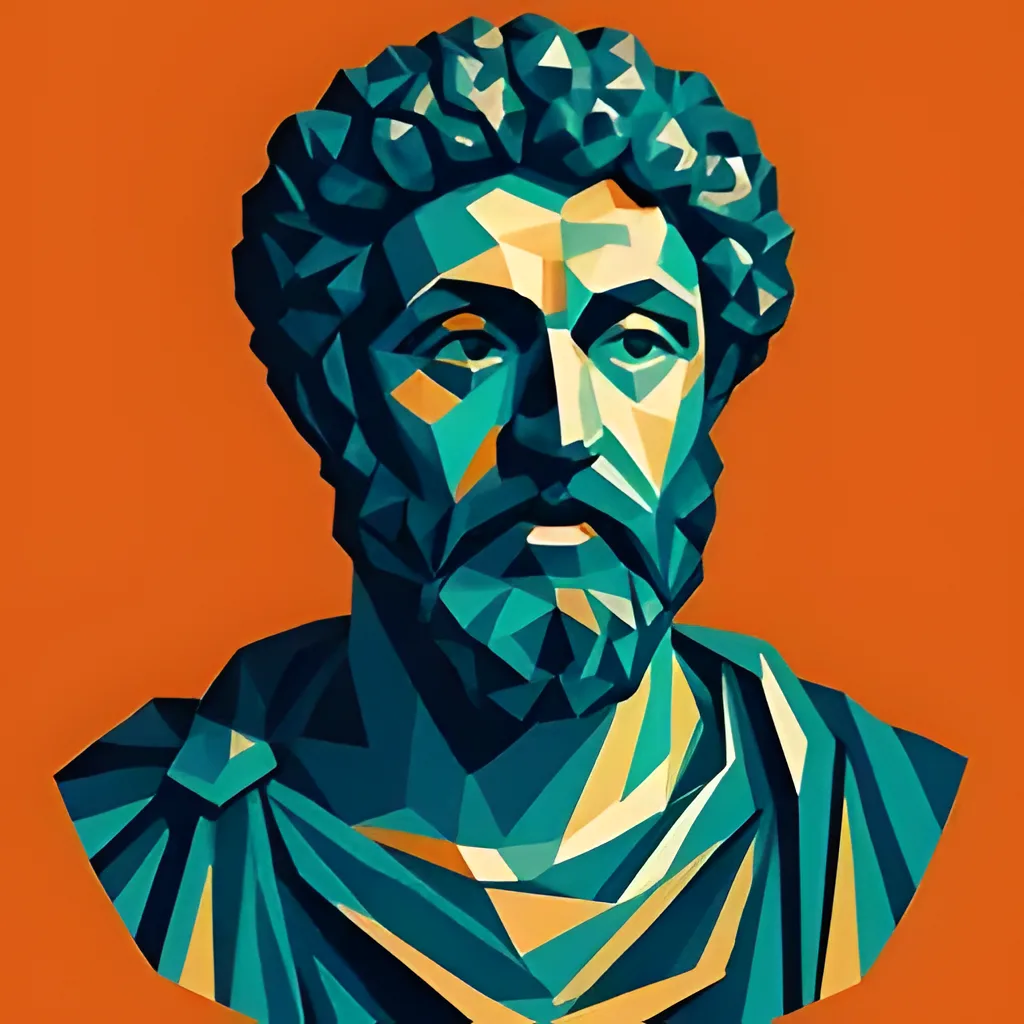
Born Marcus Annius Verus on 26 April 121 in Rome, Marcus Aurelius was groomed for the throne from his teens, ruled the Roman Empire from 161 to 180 through plague and war on the frontiers, and wrote the private Stoic notebooks now known as Meditations.
- 18 min listen
- Roman Emperor
- Stoicism
- Meditations
Marcus Aurelius’s full 18 min audio biography, The Philosopher Emperor, is available on Lyfestori for iOS. Listen to a free preview below.
A life in brief
Marcus Aurelius: life and timeline.
He slept on the floor to toughen himself and dressed plainly, years before he had an empire to run. Marcus Aurelius commanded Rome's armies from frontier camps along the Danube, ruled through plague, flood and invasion, and spent his evenings writing private notes to himself about anger, duty and death. He never meant them to be read. Published as Meditations, they have outlasted the empire he defended — and the son he left in charge of it.
- 121
Born in Rome
Born Marcus Annius Verus on 26 April into a wealthy, well-connected family. His father dies while he is young, and his grandfather, a former consul, raises him. He prefers reading to games.
- 138
Hadrian's condition
Hadrian names Antoninus Pius his successor on one condition: Antoninus must adopt Marcus, then seventeen, and Lucius Ceionius Commodus, so the two would succeed in tandem.
- 138
Twenty-three years of apprenticeship
Antoninus Pius rules until 161. Marcus learns administration, law and military affairs, holds office including the consulship, and studies Epictetus, a former slave who became one of the great Stoics.
- 161
Emperor at forty
Antoninus dies. Marcus takes power and shares it with Lucius Verus — the first formally constituted arrangement in which two emperors governed as equals rather than as senior and junior.
- 161
Crisis on every frontier
Parthia attacks in the east, Germanic tribes press in the north, and floods, earthquakes and plague strike the empire. Marcus sends Verus east and stays in Rome. The victorious army brings the plague home.
- 180
Death on campaign
Dies 17 March at fifty-eight, still on the Germanic frontier, after nineteen years as emperor. His death ends the Pax Romana.
- 180
Commodus takes the throne
His son, uninterested in philosophy or government, proves one of Rome's worst emperors — beginning the decline that ends in the fall of the Western Empire.
Major achievements
Marcus Aurelius: major achievements.
- 01
Meditations
Twelve books of private reflections on virtue, mortality and self-control, written for no reader but himself. In continuous publication since its first printing in the 16th century, and translated into dozens of languages.
- 02
Legal protection for slaves and gladiators
Tightened statutes to classify the unjust killing of a slave as homicide and improve regulation of gladiatorial schools — modest but real humanitarian steps by Roman standards.
- 03
Shared power by choice
Made Lucius Verus his equal rather than his subordinate, the first formal co-emperorship — treating the throne as a responsibility to divide rather than a prize to hoard.
- 04
Held the northern frontier
Spent years in frontier towns directing operations against multiple tribal confederations along the Danube, eventually pushing the invaders back at enormous cost in money and lives.
- 05
The last of the Five Good Emperors
Closed the era historians count as Rome's height — accessible to ordinary petitioners, providing relief after disasters, and judged just and merciful even by his enemies.
Turning points
Marcus Aurelius: defining moments.
- Childhood
Given philosophy instead of games
His teachers introduced him to the Stoics, who taught that we cannot control what happens to us, only how we respond. As a young man he dressed simply, slept on the floor to toughen himself, and spent hours each day in study and reflection. The training arrived decades before the power that would test it.
- 138
Written into someone else's promotion
At seventeen, Marcus entered the imperial succession as a term of another man's adoption. He did not seek the throne — Hadrian noticed his character and attached him to Antoninus Pius as a condition. Twenty-three years of apprenticeship followed before he needed any of it.
- 161
Splitting the throne
On becoming emperor he immediately shared power with Lucius Verus as an equal, the first arrangement of its kind in Rome. It was a philosophical position made practical: the emperorship was a responsibility to be shared, not a prize to be hoarded, and Verus was a capable commander.
- Late 160s–180
The frontier years
Germanic invasions across the Danube forced him out of Rome for most of the rest of his life. He preferred study and reflection to military campaigns, and went anyway, because duty required it. In the evenings, after a day of military business, he wrote in the journal that became Meditations.
- 180
The succession he did not fix
Roman emperors had been choosing successors on merit rather than blood — that is how Marcus got the throne. He left it to his son Commodus, who preferred gladiatorial games and personal pleasure to the serious business of ruling. As a philosopher he succeeded; his greatest failure as an emperor may have been the heir he prepared.
What you’ll take away
Lessons from Marcus Aurelius’s life.
- 01
Control the response, not the event
The Stoics taught him that what happens is not ours to choose, only what we do about it. He governed plague, invasion and a disappointing son on that principle.
- 02
Write for yourself
Meditations has force precisely because nobody was meant to read it. He admitted failures, argued with himself, and kept encouraging himself to do better — not instructing students.
- 03
Power is a duty, not a prize
He had more of it than almost anyone in history and a philosophy telling him it did not matter. He shared it, spent it on petitioners and disaster victims, and kept his principles inside it.
Did you know
Facts about Marcus Aurelius.
- 01
Did you know that the famous philosophical text 'Meditations' by Roman Emperor Marcus Aurelius was never meant to be published, but rather served as his personal journal?
- 02
Did you know that despite being known as a philosopher-king, Aurelius spent almost his entire reign commanding military campaigns on the frontiers of the Roman Empire?
- 03
Did you know that Marcus Aurelius sold off his own imperial palace furnishings and jewels to help relieve the massive debts of the Roman state during a financial crisis?
FAQ
Frequently asked questions about Marcus Aurelius.
What was Marcus Aurelius's full name?
He was born Marcus Annius Verus. On his adoption by the future emperor Antoninus Pius in 138 he became Marcus Aelius Aurelius Verus, and as emperor he ruled as Imperator Caesar Marcus Aurelius Antoninus Augustus.
How did Marcus Aurelius die?
Of an illness while on campaign against Germanic tribes on the Danube frontier, on 17 March 180, aged fifty-eight — most likely at Vindobona (modern Vienna) or Sirmium. Many historians suspect the Antonine Plague, which had ravaged the empire during his reign.
What is Meditations?
Twelve books of short personal reflections Marcus wrote for his own use, largely in the evenings during his frontier campaigns. He never intended them to be published. They cover virtue, the temporary nature of all earthly things, accepting what cannot be controlled, and the duty to serve others.
Was Marcus Aurelius a good emperor?
He was known for fairness and compassion — reforming laws to protect slaves and gladiators, providing relief for disaster victims, and remaining accessible to ordinary citizens who petitioned him. Even his enemies acknowledged he was just. He also fought wars and dealt firmly with rebellions when he judged force necessary.
Why did he share power with Lucius Verus?
Hadrian's succession plan had adopted them both, and Marcus believed the throne was a responsibility rather than a prize. Verus was a capable military commander. It was the first formally constituted arrangement in which two Roman emperors governed as equals rather than as senior and junior.
What went wrong with his son Commodus?
Commodus showed little interest in philosophy or good government, preferring gladiatorial games and personal pleasure. He succeeded Marcus in 180 and proved one of Rome's worst emperors — cruel and unstable — beginning the decline that eventually led to the fall of the Western Roman Empire.
Was Marcus Aurelius one of the Five Good Emperors?
He was the last of them — the period historians count as Rome's height, when the empire was ruled by wise and capable leaders. His reign marked both the peak of Roman power and the beginning of its decline.
Published by Lyfestori, from Duck Pond Ventures Oy. About us and how to report a correction.
18 min · one sitting