Liam Bright
The Last Logical Positivist
Raised in South London in a socialist, Catholic household, Liam Kofi Bright is a British philosopher of science at the London School of Economics whose work on scientific fraud, peer review and W. E. B. Du Bois argues that logical positivism and the Africana tradition shared a democratic, empirical project — and won him a Philip Leverhulme Prize in 2020.
- 18 min listen
- Philosopher of science
- Social epistemology
- Africana philosophy
Liam Bright’s full 18 min audio biography, The Last Logical Positivist, is available on Lyfestori for iOS. Listen to a free preview below.
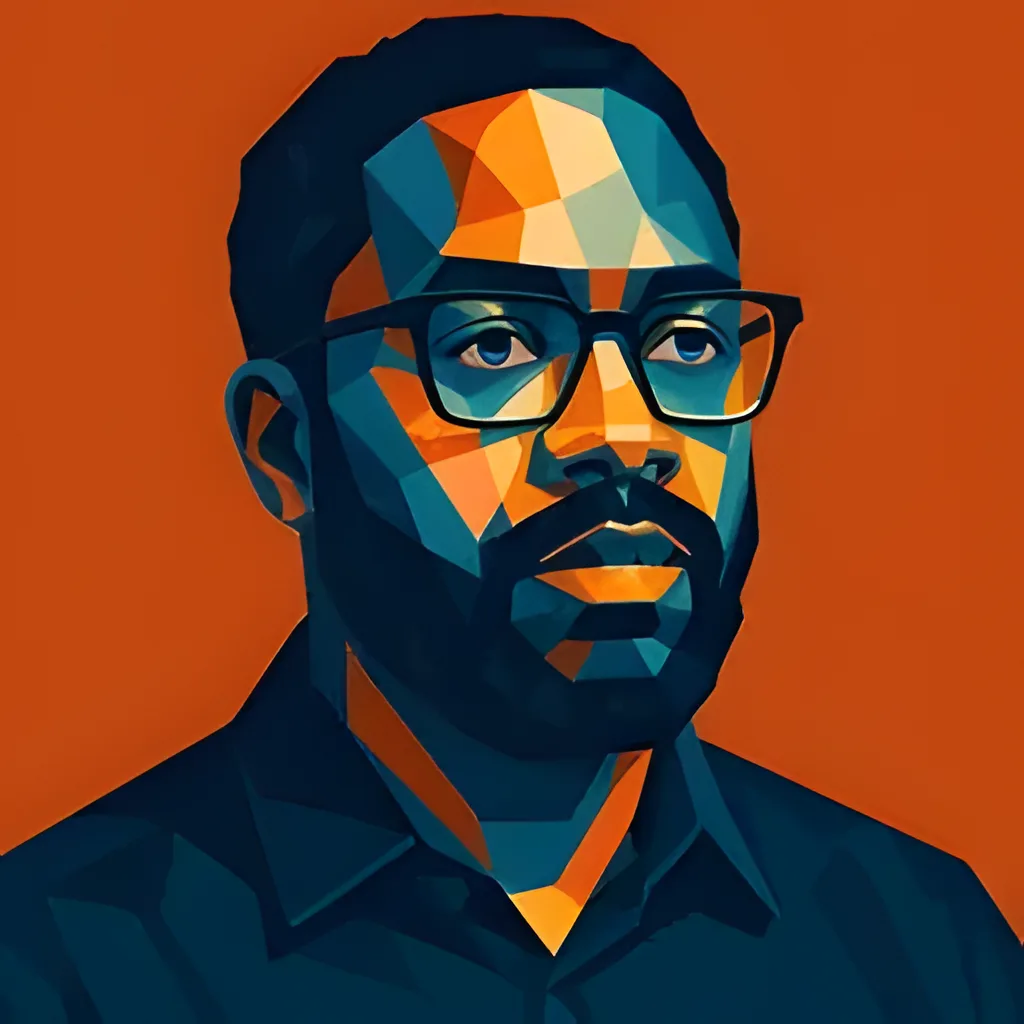
A life in brief
Liam Bright: life and timeline.
As a teenager in South London he told his father he was revising at the library, then sat reading Augustine and Kierkegaard instead. Liam Kofi Bright studied philosophy at Warwick, saw his first plan for graduate school fall apart, and spent time in jobs outside academia before an MSc at LSE and a PhD at Carnegie Mellon. Back at LSE he built a career on an unlikely pairing — the Vienna Circle and W. E. B. Du Bois — and calls himself, half in jest, the last positivist.
- 2005
Reading instead of revising
A teenager in South London, he reads Augustine's Confessions, Kierkegaard's Fear and Trembling, Fanon and More's Utopia in the library when he is meant to be revising, and argues about Catholic theology with strangers online.
- 2009
Philosophy at Warwick
Studies for a BA in philosophy at the University of Warwick, where his interest in formal logic deepens and he is drawn to the mathematically serious style of philosophy taught at Carnegie Mellon.
- 2010
Plans fall through
A planned move to the University of Melbourne for graduate work in philosophical logic collapses after what he has called a series of unfortunate events. He works outside academia, including in administrative jobs, and reads philosophy in the evenings.
- 2013
MSc at the LSE
Returns to study with an Arts and Humanities Research Council scholarship, taking an MSc in the philosophy of science at the London School of Economics.
- 2015
Modelling intersectionality
As a Carnegie Mellon graduate student, co-authors 'Causally Interpreting Intersectionality Theory' with Daniel Malinsky and Morgan Thompson in Philosophy of Science.
- 2017
On Fraud
Publishes 'On Fraud' in Philosophical Studies, arguing that a sincere drive to produce true beliefs can, under the wrong incentives, make scientific fraud more likely rather than less.
- 2018
PhD and a return to the LSE
Completes a PhD in Logic, Computation and Methodology at Carnegie Mellon under Kevin Zollman, with a thesis titled 'Valuing Questions', and joins the LSE's Department of Philosophy, Logic and Scientific Method as an assistant professor.
- 2020
Leverhulme Prize
Wins a £100,000 Philip Leverhulme Prize in philosophy and theology, to connect Africana philosophy with the mathematical social epistemology of science. The same year he becomes an associate professor and publishes 'Is Peer Review a Good Idea?' with Remco Heesen.
- 2022
Why I Am Not a Liberal
A post on his blog, The Sooty Empiric, explains why he rejects liberalism as unworkable and draws responses well beyond academic philosophy.
- 2023
White Psychodrama
Publishes 'White Psychodrama' in the Journal of Political Philosophy, arguing that American racial politics has drifted into symbolic, psychological performance and away from material questions of power and distribution.
Major achievements
Liam Bright: major achievements.
- 01
Rethinking scientific fraud
'On Fraud' turned a moral question into a structural one: using formal models, he showed that good intentions combined with flawed credit systems can produce misconduct.
- 02
Questioning peer review
With Remco Heesen he argued in the British Journal for the Philosophy of Science that pre-publication peer review may do more harm than good, and that science might be better served by publishing first and scrutinising openly afterwards.
- 03
Du Bois as a philosopher of science
His work reads W. E. B. Du Bois's sociology as a defence of a value-free ideal for science, grounded in democracy: citizens must be able to deliberate about evidence that political commitments have not already shaped.
- 04
Recovering the political Vienna Circle
He has argued that logical empiricists such as Otto Neurath and Rudolf Carnap held anti-racist and reformist commitments, and that their project overlapped with the Africana tradition more than standard histories admit.
- 05
A Philip Leverhulme Prize
The 2020 award, one of the UK's leading prizes for early-career researchers, recognised work spanning formal modelling, history of philosophy and political theory.
Turning points
Liam Bright: defining moments.
- c. 2010
The detour
His route to graduate school in Melbourne fell through, and he spent a period working outside academia.
- Carnegie Mellon
Formal tools for social questions
In Pittsburgh he trained in a department known for treating logic and philosophy of science with mathematical rigour. He has credited his adviser, Kevin Zollman, with going well beyond duty to help him get support when his health deteriorated.
- 2018
Back to London
Joining the LSE gave him a base to combine game theory, Bayesian modelling and intellectual history. Papers on peer review, co-authorship, Du Bois and the Vienna Circle followed in quick succession.
- 2022–2023
A public philosopher
'Why I Am Not a Liberal', 'White Psychodrama' and his talk on the end of analytic philosophy carried his arguments into political and professional debates, drawing detailed replies and hostile reactions alike.
What you’ll take away
Lessons from Liam Bright’s life.
- 01
Bet on the pleasant bureaucrats
Bright's case against the lone genius is that knowledge advances through institutions, criticism and shared results — unglamorous work done by many people, not visionary leaps by a few.
- 02
Look at incentives before motives
His work on fraud and peer review asks what a system rewards, rather than who is virtuous. Bad outcomes can come from good people working inside badly designed structures.
- 03
Old traditions can be read together
Placing Carnap and Neurath beside Du Bois and Fanon showed that what looks like opposite camps can share commitments to evidence, clarity and democratic reform.
If you liked Liam Bright…
Browse all → Philosopher16 min
Agnes Callard
The Philosopher Who Refuses to Stop Becoming
 Philosopher & Author17 min
Kate Manne
The Philosopher Who Named the Mechanism
 Philosopher & Economist16 min
Karl Marx
The Revolutionary Thinker Who Reshaped Modern Society
 Pre-Socratic Philosopher22 min
Anaximander
The First Scientist
FAQ
Frequently asked questions about Liam Bright.
Who is Liam Bright?
A British philosopher of science. Liam Kofi Bright is an associate professor in the Department of Philosophy, Logic and Scientific Method at the London School of Economics, working on social epistemology, the philosophy of science and Africana philosophy.
What is Liam Bright's philosophy about?
How science works as a social system. He uses formal models to study fraud, peer review and credit in science, and argues that logical positivism and thinkers such as W. E. B. Du Bois shared a democratic, empirical vision of knowledge.
When did Liam Bright join the LSE?
In 2018. After completing his PhD at Carnegie Mellon he joined the LSE's Department of Philosophy, Logic and Scientific Method as an assistant professor, and became an associate professor in 2020.
What is Liam Bright's blog called?
The Sooty Empiric. He uses it for public philosophy on politics, the state of the discipline, aesthetics and science fiction, alongside his online identity as the 'last positivist'.
What is 'Why I Am Not a Liberal' by Liam Bright?
A 2022 essay on his blog. It argues that academics who reject liberalism should explain why, and sets out his own reasons for considering liberalism unworkable.
Where did Liam Bright study?
Warwick, the LSE and Carnegie Mellon. He took a BA in philosophy at Warwick, an MSc in the philosophy of science at the LSE, and an MSc and PhD in logic, computation and methodology at Carnegie Mellon.
What prize did Liam Bright win?
A Philip Leverhulme Prize, in 2020. The £100,000 award in philosophy and theology supported his project connecting Africana philosophy with the mathematical social epistemology of science.
Published by Lyfestori, from Duck Pond Ventures Oy. About us and how to report a correction.
18 min · one sitting