Kate Manne
The Philosopher Who Named the Mechanism
Born in 1983 and raised in Cottles Bridge, outside Melbourne, Kate Manne is the Cornell philosopher who redefined misogyny as the "law enforcement" branch of patriarchy in Down Girl, coined the term "himpathy" and went on to write Entitled and Unshrinking, a National Book Award longlisted study of fatphobia.
- 17 min listen
- Philosopher
- Feminist author
- Coined "himpathy"
Kate Manne’s full 17 min audio biography, The Philosopher Who Named the Mechanism, is available on Lyfestori for iOS. Listen to a free preview below.

A life in brief
Kate Manne: life and timeline.
To take the International Baccalaureate she moved to the boys' campus of a Melbourne private school — one of three girls. Boys soaked her locker in fish oil, and at the leavers' assembly she was given a joke award about her body while the hall laughed. Kate Manne went on to study analytic philosophy, wrote an MIT dissertation on moral reasons and joined Cornell in 2013. Then Julia Gillard's misogyny speech and the Isla Vista killings sent her back to the word that described her school years.
- 1983
Born in Australia
Born to the political writer Robert Manne and the essayist Anne Manne, she grows up on twenty acres of bush at Cottles Bridge, about an hour north-east of Melbourne.
- 1999
The boys' campus
For her last two years of school she transfers to the boys' campus of Ivanhoe Grammar to take the International Baccalaureate, as one of three girls. She later describes sustained misogynistic bullying there.
- 2005
University of Melbourne
Completes an honours degree in philosophy, having also studied logic and computer science. A lecture by Sally Haslanger in Melbourne shows her that concepts can be redesigned as tools.
- 2011
MIT doctorate
Finishes a PhD at MIT under Haslanger, with a dissertation on moral reasons and motivation. She becomes a Junior Fellow at Harvard's Society of Fellows.
- 2012
Gillard's misogyny speech
Watching from the United States as Prime Minister Julia Gillard denounces misogyny in Parliament, she realises the word is not yet part of her philosophical vocabulary.
- 2013
Joins Cornell
Takes up a post at the Sage School of Philosophy at Cornell University, where she is now an associate professor. Her early work is on metaethics, Hume and Bernard Williams.
- 2017
Down Girl
Oxford University Press publishes Down Girl: The Logic of Misogyny, which separates sexism, the ideology, from misogyny, the system that polices and punishes women. It introduces "himpathy".
- 2018
The Kavanaugh essay
Her New York Times essay "Brett Kavanaugh and America's 'Himpathy' Reckoning" carries the word into mainstream debate during the confirmation hearings.
- 2019
Prospect's top 50 thinkers
Prospect magazine names her one of the world's top 50 thinkers. Late that year her daughter is born.
- 2020
Entitled
Entitled: How Male Privilege Hurts Women argues that women are cast as "human givers" of care, sex and attention to men.
- 2024
Unshrinking
Published in January, Unshrinking: How to Face Fatphobia draws on her own body-image struggles and is longlisted for the National Book Award for Nonfiction. In May she shares the Lebowitz Prize from Phi Beta Kappa and the American Philosophical Association.
Major achievements
Kate Manne: major achievements.
- 01
Redefining misogyny
Down Girl moved the concept away from individual men's hatred toward a social enforcement mechanism — a definition that explains why misogyny persists even when no one admits to hating women.
- 02
Coining "himpathy"
Her term for the disproportionate sympathy shown to men who harm women spread widely after 2018 and is now used across journalism and academic writing.
- 03
Human givers
In Down Girl and Entitled she argued that patriarchy treats women not as less than human but as people who owe care, admiration and comfort to men.
- 04
Unshrinking
Her study of fatphobia, longlisted for the 2024 National Book Award for Nonfiction, linked weight stigma to the policing of women's bodies.
- 05
Public philosophy
Through essays in the New York Times and elsewhere and her Substack, More to Hate, she brought analytic philosophy into debates about #MeToo, politics and the body.
Turning points
Kate Manne: defining moments.
- c. 1999–2000
One of three girls
At the boys' campus she endured pranks and humiliations aimed at her body. She has said decades later that she could not approach that part of Melbourne without panicking, and that the experience largely explains her fascination with misogyny.
- Melbourne
Hearing Sally Haslanger
Haslanger argued that philosophical concepts are tools we can redesign and judge by what they do in the world. Manne later called it a whole new realm of inquiry opened in one afternoon, and used the method to rebuild the concept of misogyny.
- 2012–2014
From metaethics to misogyny
Gillard's speech and Elliot Rodger's killings near UC Santa Barbara, after which some commentators resisted calling the attack misogynistic, gave her a question: what should the concept explain? Essays followed, then Down Girl.
- 2020–2024
Turning the lens on herself
Promoting Entitled, she found herself avoiding public appearances because of body-image distress. Not wanting her daughter to see her that way, she wrote Unshrinking.
What you’ll take away
Lessons from Kate Manne’s life.
- 01
Name the mechanism
Defining misogyny by its effects rather than men's feelings made it something you could observe and argue about, instead of something easy to deny.
- 02
Concepts are tools
From Haslanger she took the idea that a definition should be judged by the work it does. Redesigning one word reshaped a public conversation.
- 03
A few punishments teach everyone
Her invisible-fence image explains how misogyny works: it does not need to punish every woman, only enough of them, visibly enough, for the rest to learn the boundary.
- 04
Theory can start at home
Unshrinking began with her own body-image distress. Applying her ideas to herself produced her most widely read book.
If you liked Kate Manne…
Browse all →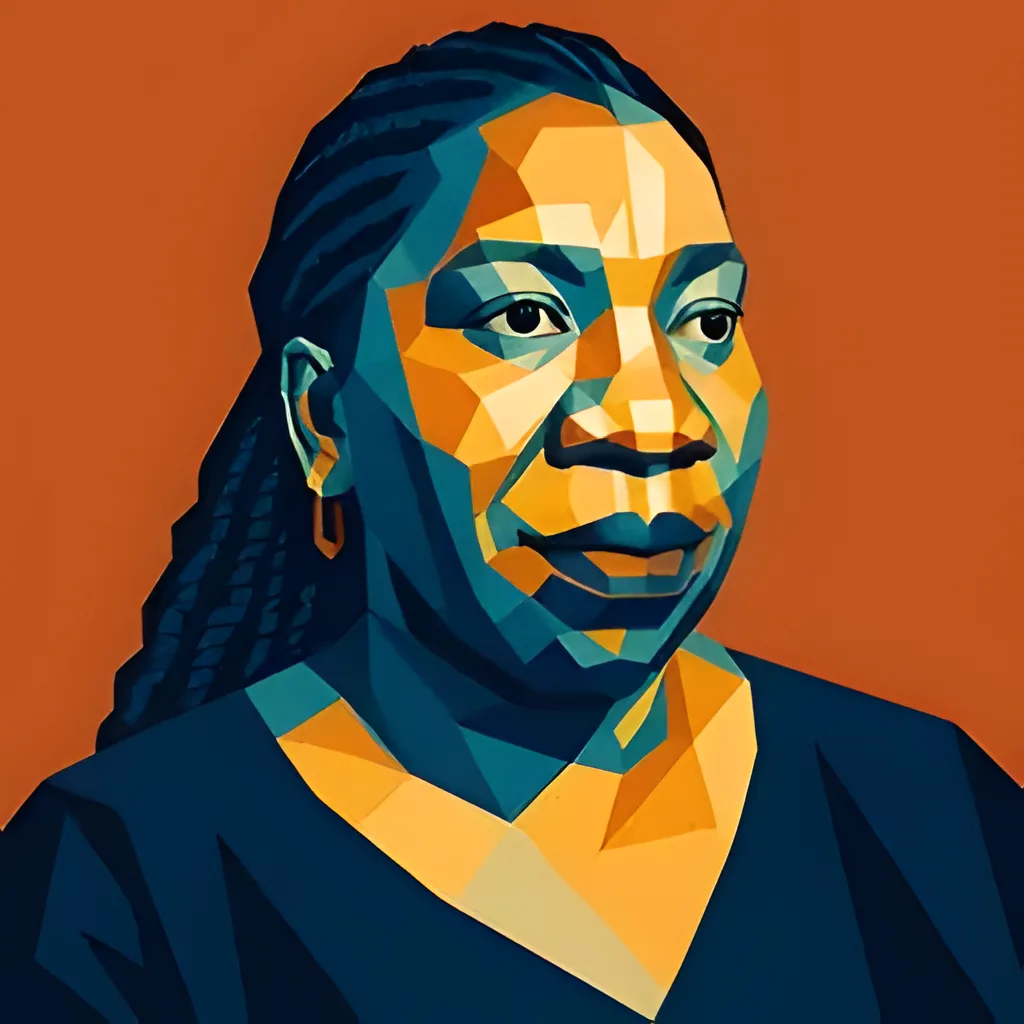



FAQ
Frequently asked questions about Kate Manne.
Who is Kate Manne?
An Australian philosopher at Cornell University. She is best known for Down Girl: The Logic of Misogyny (2017), which redefined misogyny as a system that polices women, and for coining the word "himpathy".
How old is Kate Manne?
She was born in 1983, so she is in her early forties. Her exact birth date has not been widely published.
What books has Kate Manne written?
Three: Down Girl: The Logic of Misogyny (2017), Entitled: How Male Privilege Hurts Women (2020) and Unshrinking: How to Face Fatphobia (2024), which was longlisted for the National Book Award for Nonfiction.
What does "himpathy" mean?
The disproportionate sympathy shown to men who harm women, especially powerful or promising men. Manne coined it in Down Girl, and it spread widely after her 2018 New York Times essay on Brett Kavanaugh.
Where does Kate Manne teach?
At Cornell University in Ithaca, New York, where she has been on the faculty of the Sage School of Philosophy since 2013 and is an associate professor.
Does Kate Manne have a Substack?
Yes. It is called More to Hate, where she publishes essays on misogyny, fatphobia and politics.
Is Kate Manne married?
Yes. She has written about her husband and their daughter, born in 2019, but keeps her family largely private.
Who are Kate Manne's parents?
Robert Manne, the political commentator and La Trobe University politics professor, and Anne Manne, an essayist and author. She grew up in Cottles Bridge, Victoria.
Published by Lyfestori, from Duck Pond Ventures Oy. About us and how to report a correction.
17 min · one sitting