Katie Bouman
The Computer Scientist Who Showed Us a Black Hole
Born Katherine Louise Bouman in 1989 and raised in West Lafayette, Indiana, Katie Bouman is the computer scientist who helped develop the imaging and validation methods behind the Event Horizon Telescope's first picture of a black hole in 2019 — and later the image of the Milky Way's own black hole, Sagittarius A*.
- 16 min listen
- Computational imaging
- Event Horizon Telescope
- Caltech professor
Katie Bouman’s full 16 min audio biography, The Computer Scientist Who Showed Us a Black Hole, is available on Lyfestori for iOS. Listen to a free preview below.
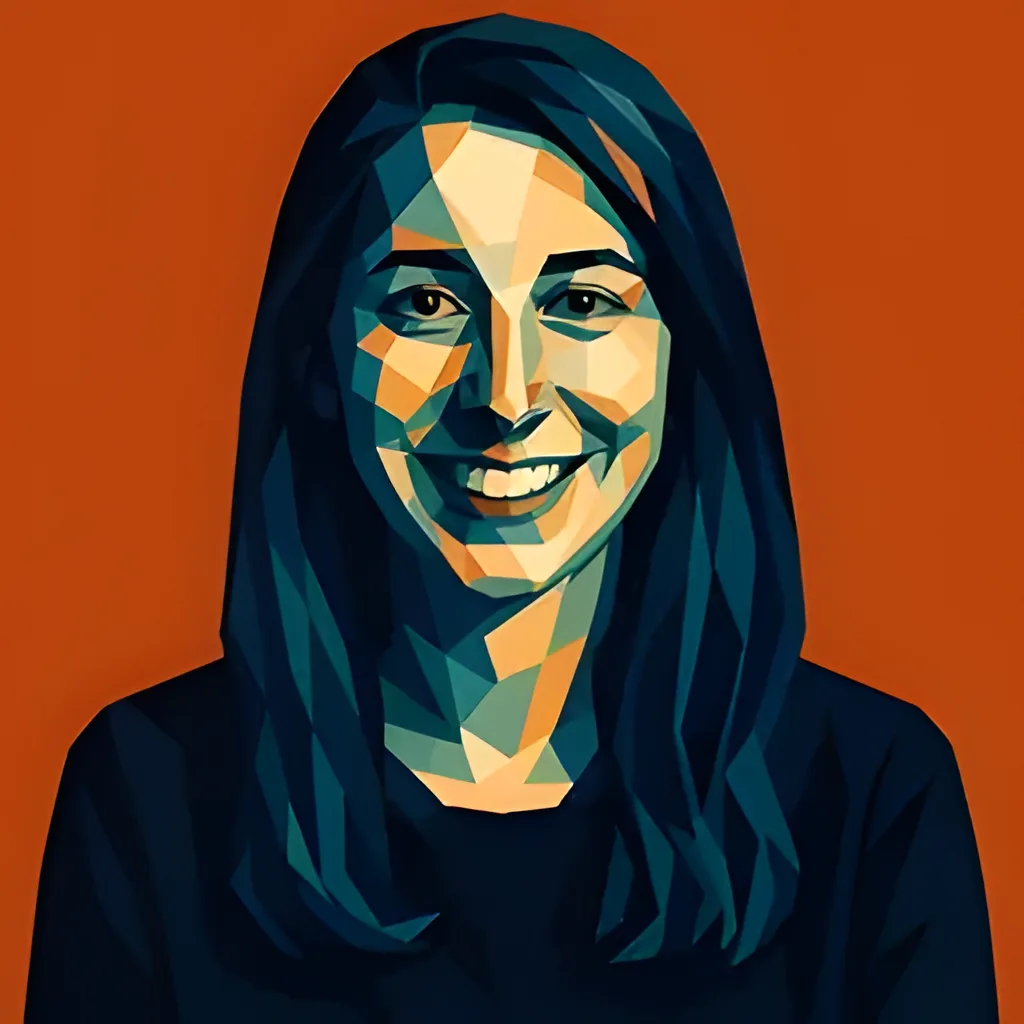
A life in brief
Katie Bouman: life and timeline.
In high school she called programming boring and stupid, then took the class to fill an empty slot. Katie Bouman, the daughter of a Purdue imaging engineer, went on to MIT, where a 2013 talk about photographing a black hole pulled her into a problem she knew nothing about — except the maths. Inside the Event Horizon Telescope she helped design the tests that proved the first image of a black hole was real. When her reaction photo went viral in 2019, she kept pointing at the team.
- 1989
Born, raised in West Lafayette
Grows up in the Purdue college town of West Lafayette, Indiana. Her father, Charles Bouman, is a Purdue electrical engineer who works on turning noisy signals into images — a field she wants nothing to do with as a child.
- 2006
The class she called boring
As a junior at West Lafayette Junior-Senior High School she fills an empty slot with a programming class. It leads to a summer project in a Purdue lab, identifying which camera took a photograph from hidden digital signatures in the image.
- 2011
Graduates from Michigan
Completes an electrical engineering degree at the University of Michigan summa cum laude. Her senior design team photographs a crumpled, stained sheet of music and builds software to reconstruct and play it.
- 2013
The lecture at MIT
A PhD student in William T. Freeman's group at MIT's Computer Science and Artificial Intelligence Laboratory, she hears Sheperd Doeleman describe the Event Horizon Telescope — an Earth-sized array of radio dishes. She has no astrophysics background but recognises the maths.
- 2016
CHIRP
Leads development of CHIRP (Continuous High-resolution Image Reconstruction using Patch priors), an algorithm that borrows ideas from computer vision to fill the huge gaps in sparse telescope data. A TEDx talk explaining the problem later passes millions of views.
- 2017
PhD and the observing run
In April the EHT's eight sites observe the black hole in galaxy M87 together. The same year she completes her PhD at MIT and moves to Harvard as a postdoctoral fellow on the EHT imaging team.
- 2019
The first image of a black hole
On 10 April the collaboration reveals the shadow of M87's black hole, 55 million light-years away, at simultaneous press conferences in six cities. A photo of her reacting goes viral, and within days she is the target of a sexist harassment campaign.
- 2019
Joins Caltech
In June she starts as an assistant professor at Caltech, with appointments spanning computing and mathematical sciences, electrical engineering and astronomy.
- 2022
Sagittarius A*
On 12 May the EHT releases the first image of the black hole at the centre of the Milky Way. Its glowing gas changes on a scale of minutes, and the imaging work she helped lead had to account for that rapid variability.
- 2025
Presidential award and full professorship
In January she is among the recipients of the Presidential Early Career Award for Scientists and Engineers. The same year Caltech promotes her to full professor, six years after she arrived.
Major achievements
Katie Bouman: major achievements.
- 01
Proving the image was real
She helped design and coordinate the blind tests behind the M87 image: separate teams with different software worked in isolation for weeks, and synthetic decoys — including a snowman — checked that the methods were not inventing structure.
- 02
CHIRP
Her algorithm used closure quantities from groups of three telescopes to cancel atmospheric errors and learned image patches to fill missing data. It was not one of the final 2019 pipelines, but its ideas shaped how the collaboration approached imaging.
- 03
Imaging the Milky Way's black hole
For Sagittarius A*, released in May 2022, the source shifted shape within minutes. The imaging effort required new methods to separate a stable picture from that flicker.
- 04
A computational imaging lab at Caltech
Her group applies the same ideas beyond astronomy — to radio interferometry, medical imaging and scientific instruments — and is helping plan the next-generation Event Horizon Telescope.
- 05
Recognition
A Sloan Research Fellowship in 2024, the Presidential Early Career Award for Scientists and Engineers in 2025, the BBC's 100 Women list in 2019, and an asteroid, 291387 Katiebouman, named after her.
Turning points
Katie Bouman: defining moments.
- High school
Signing up anyway
She wanted to be as different from her engineer father as possible and dismissed programming out of hand. The class she took to fill a gap led to a Purdue lab and the idea that would define her work: hidden information sits inside signals the eye cannot see.
- 2013
A problem outside her field
Sheperd Doeleman's talk at MIT framed the black hole as an astronomy project. She saw it as a computational imaging problem — sparse, gappy data in need of reconstruction — and persuaded her advisor to let her work on it despite not knowing what an event horizon was.
- April 2019
The viral photo and the backlash
Her Facebook photo, shared by a friend and then by MIT, made her the face of the image. Within days, trolls claimed a colleague, Andrew Chael, had written nearly all the code. Chael publicly rejected the attacks and said she had been a major contributor; she kept insisting no single person or algorithm made the image.
- 2019 onwards
From student to lab head
She moved to Caltech that June and built her own lab. Within three years she was helping lead the imaging of Sagittarius A*, a harder target than M87, and by 2025 she was a full professor.
What you’ll take away
Lessons from Katie Bouman’s life.
- 01
Ask how you would know you are wrong
Her most important contribution was not a picture but a test. Teams working blind, and decoy images fed to the software, guarded against the easiest error in a historic result: seeing what you hoped to see.
- 02
Outsiders can recognise the shape of a problem
She arrived with no astrophysics training. What she had was experience pulling images out of incomplete data, which is exactly what the black hole problem turned out to need.
- 03
Credit belongs where the work was
When the internet cast her as a lone genius, and then as a fraud, she gave the same answer both times: the image was made by a collaboration of more than two hundred people.
If you liked Katie Bouman…
Browse all → Theoretical Physicist21 min
Stephen Hawking
The Brilliant Mind That Unlocked the Secrets of the Universe
 Theoretical Physicist20 min
Albert Einstein
The Genius Who Changed Our Understanding of the Universe
 Mathematician18 min
Maryna Viazovska
The 23 Pages That Stunned the Mathematical World
 Tech CEO17 min
Jensen Huang
The Dishwasher Who Built the AI Empire
FAQ
Frequently asked questions about Katie Bouman.
What is Katie Bouman famous for?
Her role in the first image of a black hole. As a PhD student and postdoctoral researcher she developed imaging methods for the Event Horizon Telescope and helped design the validation tests that showed the 2019 image of M87's black hole was real.
What did Katie Bouman actually do on the black hole image?
She worked on the computational side. She led development of the CHIRP algorithm and helped coordinate the blind tests in which independent teams reconstructed the image separately; the final 2019 image came from other pipelines, but her methods and validation work shaped the result.
Where does Katie Bouman work?
At Caltech in Pasadena. She joined as an assistant professor in June 2019 and is now a professor of computing and mathematical sciences, electrical engineering and astronomy.
What was Katie Bouman's early life like?
She grew up in West Lafayette, Indiana, the daughter of Purdue electrical engineer Charles Bouman. A high-school programming class she took reluctantly led to a summer research project in a Purdue lab.
How old is Katie Bouman?
She was born in 1989. She was twenty-nine when the first black hole image was released in April 2019.
Did Katie Bouman discover black holes?
No. Black holes were predicted by general relativity and studied for decades before her work. What she helped achieve was the first direct image of one — the shadow of the supermassive black hole in galaxy M87.
Where did Katie Bouman study?
The University of Michigan and MIT. She earned an electrical engineering degree at Michigan in 2011, then a master's in 2013 and a PhD in 2017 at MIT, where she was advised by William T. Freeman.
Published by Lyfestori, from Duck Pond Ventures Oy. About us and how to report a correction.
16 min · one sitting