Johann Sebastian Bach
The Master Who Shaped Western Classical Music
Born on 31 March 1685 in Eisenach, Germany, into a family of musicians, Johann Sebastian Bach was orphaned at ten, became cantor of St Thomas in Leipzig, and wrote the Brandenburg Concertos, the Goldberg Variations and the St Matthew Passion — music largely forgotten after his death and revived to become the bedrock of Western classical music.
- 16 min listen
- Baroque composer
- Organist
- Counterpoint
Johann Sebastian Bach’s full 16 min audio biography, The Master Who Shaped Western Classical Music, is available on Lyfestori for iOS. Listen to a free preview below.
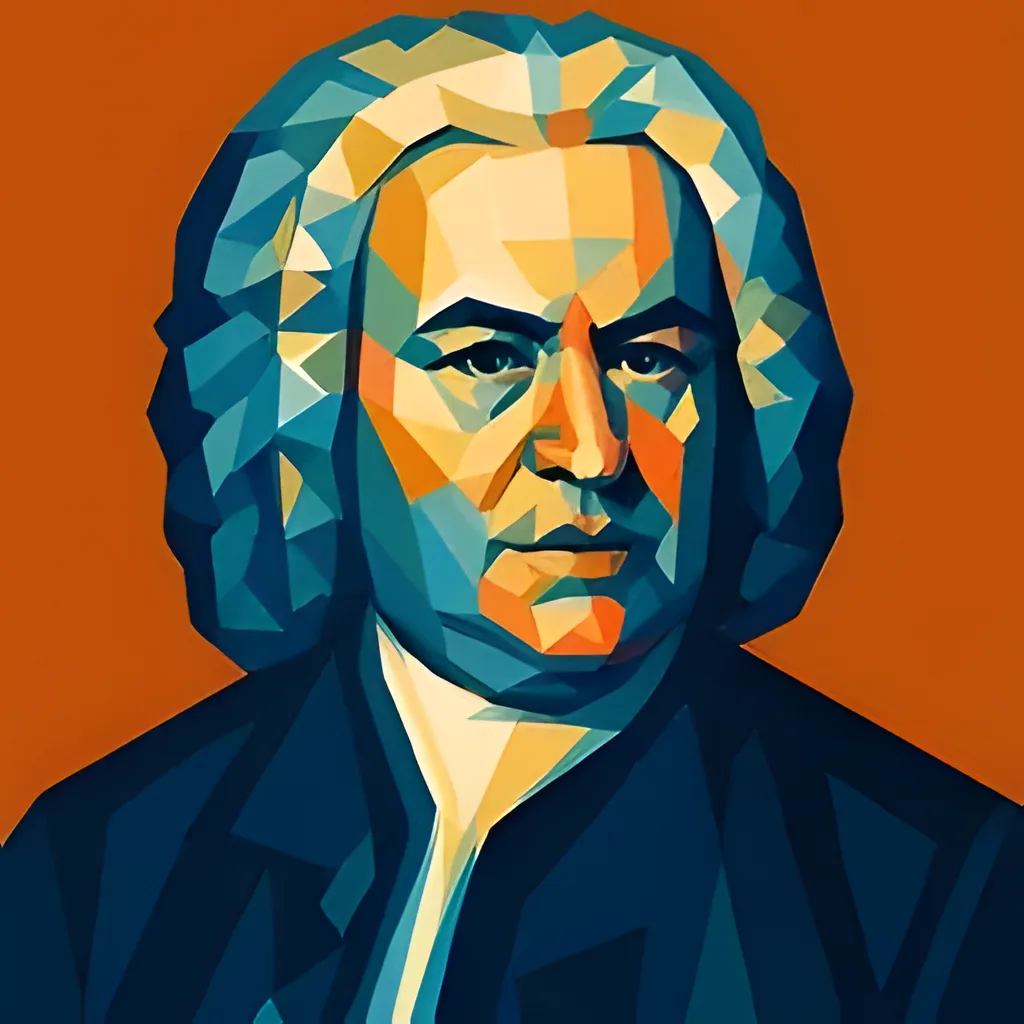
A life in brief
Johann Sebastian Bach: life and timeline.
He was orphaned at ten and sent to live with an older brother, an organist, whose collection of manuscripts he copied in secret by candlelight. Johann Sebastian Bach walked nearly thirty miles to hear a great organist play, and took four months' leave when he had been granted one. In his lifetime he was known as a keyboard player and a difficult employee, not as a composer. His music went out of fashion entirely after he died — until Mendelssohn conducted the St Matthew Passion in 1829.
- 1685
Born in Eisenach
Born 31 March in Thuringia into a family that had produced musicians for over two centuries. His father Johann Ambrosius led the town musicians.
- 1702
A working musician
Completes his education around 1702 and takes his first job at Weimar as a court musician, playing violin in the orchestra. Within about a year he moves to Arnstadt as organist at the New Church, where his skill is already legendary and his improvisations amaze audiences.
- 1705
Four months with Buxtehude
Granted a month's leave to hear Dietrich Buxtehude play in Lübeck, he stays four — to the annoyance of his employers in Arnstadt. Buxtehude's innovations go straight into his own style.
- 1707
Mühlhausen and marriage
Becomes organist at St Blasius Church and marries his cousin, Maria Barbara Bach. The post gives him more freedom to compose; cantatas and organ works follow.
- 1708
Court organist at Weimar
Returns as court organist and chamber musician to Duke Wilhelm Ernst. Over nine years he composes many of his greatest organ works, and musicians across Germany seek him out for lessons.
- 1717
Kapellmeister at Cöthen
Prince Leopold's court follows the Reformed tradition, which uses simpler music in services — so he turns to instrumental and secular writing. The Brandenburg Concertos and the Well-Tempered Clavier come from these years.
- 1720
Maria Barbara dies
She dies suddenly while Bach is travelling with the prince, leaving him with four young children. The following year he marries Anna Magdalena Wilcken, a singer who becomes a musical partner and copies his manuscripts.
- 1723
Cantor at St Thomas, Leipzig
Teaching at the St Thomas School, directing the choirs, and supplying music for the city's principal churches. In his first years he produces multiple annual cycles of cantatas — an enormous undertaking, met with remarkable success.
- 1727
The St Matthew Passion
Likely first performed on Good Friday, and revised later, notably in 1736. Two orchestras, two choirs and soloists tell the crucifixion according to Matthew, with extraordinary emotional power.
- 1750
Death in Leipzig
His eyesight had failed badly. Two eye operations by the itinerant oculist John Taylor both fail and may have made things worse. He dies on 28 July, aged sixty-five, having worked almost to the end.
- 1829
Mendelssohn's revival
Felix Mendelssohn conducts the first performance of the St Matthew Passion since Bach's death, introducing a new generation to it and sparking a revival that has not stopped since.
Major achievements
Johann Sebastian Bach: major achievements.
- 01
The Well-Tempered Clavier
Preludes and fugues in all twenty-four major and minor keys, demonstrating what well-tempered tuning made possible. It became essential study material for keyboard players and has never stopped being so.
- 02
The Brandenburg Concertos
Six concertos, each showcasing a different combination of instruments, written at Cöthen — the pinnacle of Baroque orchestral writing.
- 03
The St Matthew Passion
Two orchestras, two choirs and vocal soloists, likely first performed on Good Friday 1727. It combines profound religious feeling with sophisticated technique, and it is the work Mendelssohn used to bring Bach back.
- 04
The Mass in B minor
Completed in his Leipzig years, it synthesises centuries of musical tradition into a unified masterpiece — too long and complex for regular church use, and his ultimate statement of faith and craft.
- 05
The Leipzig cantatas
Over two hundred cantatas across twenty-seven years, written to the relentless schedule of Sundays and feast days while he also taught, directed choirs and argued with the authorities.
Turning points
Johann Sebastian Bach: defining moments.
- Aged nine and ten
Orphaned
His mother died when he was nine; his father the following year. He and his younger brother went to live with their eldest brother Johann Christoph, an organist in Ohrdruf, who became guardian and teacher. Johann Sebastian secretly copied his brother's collection of manuscripts by candlelight, learning the masters note by note.
- 1705
Four months to hear Buxtehude
He was given a month's leave and took four. Buxtehude's playing and compositions changed his sense of what was possible, and the techniques went straight into his own work. His Arnstadt employers were not amused — the same perfectionism and independence that made him great made him a difficult employee everywhere he went.
- 1717–1723
A court that didn't want church music
At Cöthen, Prince Leopold's Reformed tradition used simpler music in services. The constraint pushed Bach out of cantatas and into instrumental writing — and produced the Brandenburg Concertos and the Well-Tempered Clavier.
- 1723–1750
Leipzig
Cantor at St Thomas: teaching, directing choirs, supplying music for the city's main churches. He disputed responsibilities and working conditions with church and school authorities for twenty-seven years, and produced the greatest body of work of his career anyway.
What you’ll take away
Lessons from Johann Sebastian Bach’s life.
- 01
Copy the masters by hand
He learned composition by transcribing other people's manuscripts in secret, at night, by candlelight. Reproducing the work of people better than you is slower than reading about it, and it teaches what reading cannot.
- 02
Constraints choose your subject
A court that wanted no elaborate church music produced the Brandenburg Concertos. A Leipzig schedule of Sundays and feast days forced out two hundred cantatas. He wrote what the job demanded, then wrote past it.
- 03
Recognition runs on its own clock
In his lifetime he was admired as an organist while critics called his music old-fashioned. It sat in obscurity for decades after he died. It took Mendelssohn, in 1829, for the verdict to change — and it has not changed back.
Did you know
Facts about Johann Sebastian Bach.
- 01
Did you know that Johann Sebastian Bach once walked over 250 miles from Arnstadt to Lübeck just to hear the famous organist Dieterich Buxtehude play?
- 02
Did you know that Bach fathered 20 children across his two marriages, and several of them went on to become prominent composers in their own right?
- 03
Did you know that Bach spent a month in prison in Weimar after he angered his employer, the Duke of Weimar, by requesting to be dismissed to take another job?
If you liked Johann Sebastian Bach…
Browse all → Composer18 min
Wolfgang Amadeus Mozart
The Child Prodigy Who Became Music's Greatest Genius
 Fashion Designer16 min
Coco Chanel
The Revolutionary Designer Who Liberated Women's Fashion
 Chef15 min
Jamie Oliver
The Chef Who Changed How Britain Eats
 Musician18 min
John Lennon
The Dreamer Who Imagined a Better World
FAQ
Frequently asked questions about Johann Sebastian Bach.
What is Bach's most famous piece?
There is no single answer, but the most widely known include the Brandenburg Concertos, the Cello Suites, the Goldberg Variations, the Air from his Orchestral Suite No. 3 (often called “Air on the G String”), the Mass in B minor and the St Matthew Passion.
What was Bach's religion?
He was a devout Lutheran. Much of his work was written for church services in Leipzig, and he often signed his scores “SDG” — Soli Deo gloria, “to God alone the glory.”
What nationality was Bach?
German. He was born in Eisenach in Thuringia and spent his whole life in central Germany, working in Arnstadt, Mühlhausen, Weimar, Cöthen and, for his last twenty-seven years, Leipzig.
Was Bach famous in his lifetime?
As an organist and teacher, yes — his technical skill and knowledge were considered unparalleled, and students came from across Germany to study with him. As a composer he was less celebrated; some contemporary critics found his music old-fashioned next to the newer, simpler style becoming popular.
How did Bach's music get rediscovered?
Felix Mendelssohn conducted the St Matthew Passion in 1829 — the first performance since Bach's death — and introduced a new generation to it. The Bach revival that began there continues today.
How many children did Bach have?
Seven with his first wife, Maria Barbara, and thirteen with Anna Magdalena, though several died in infancy as was common then. Carl Philipp Emanuel and Johann Christian both became famous composers in the Classical period.
Did Bach write the Toccata and Fugue in D minor?
It is long associated with him and remains one of the most recognisable pieces in classical music, but modern scholarship debates both its exact authorship and its date.
How did Bach die?
His eyesight had deteriorated badly in his later years, making it hard to compose and perform. In 1750 he underwent two eye operations by the itinerant oculist John Taylor; both were unsuccessful and may have worsened his condition. He died on 28 July 1750, aged sixty-five.
Published by Lyfestori, from Duck Pond Ventures Oy. About us and how to report a correction.
16 min · one sitting