John Lennon
The Dreamer Who Imagined a Better World
Born John Winston Lennon on 9 October 1940 in Liverpool, during a German air raid, John Lennon co-founded The Beatles, wrote with Paul McCartney the songs that changed popular music, and as a solo artist and peace activist recorded Imagine — before he was shot outside his New York home in 1980.
- 18 min listen
- The Beatles
- Songwriter
- Peace activist
John Lennon’s full 18 min audio biography, The Dreamer Who Imagined a Better World, is available on Lyfestori for iOS. Listen to a free preview below.
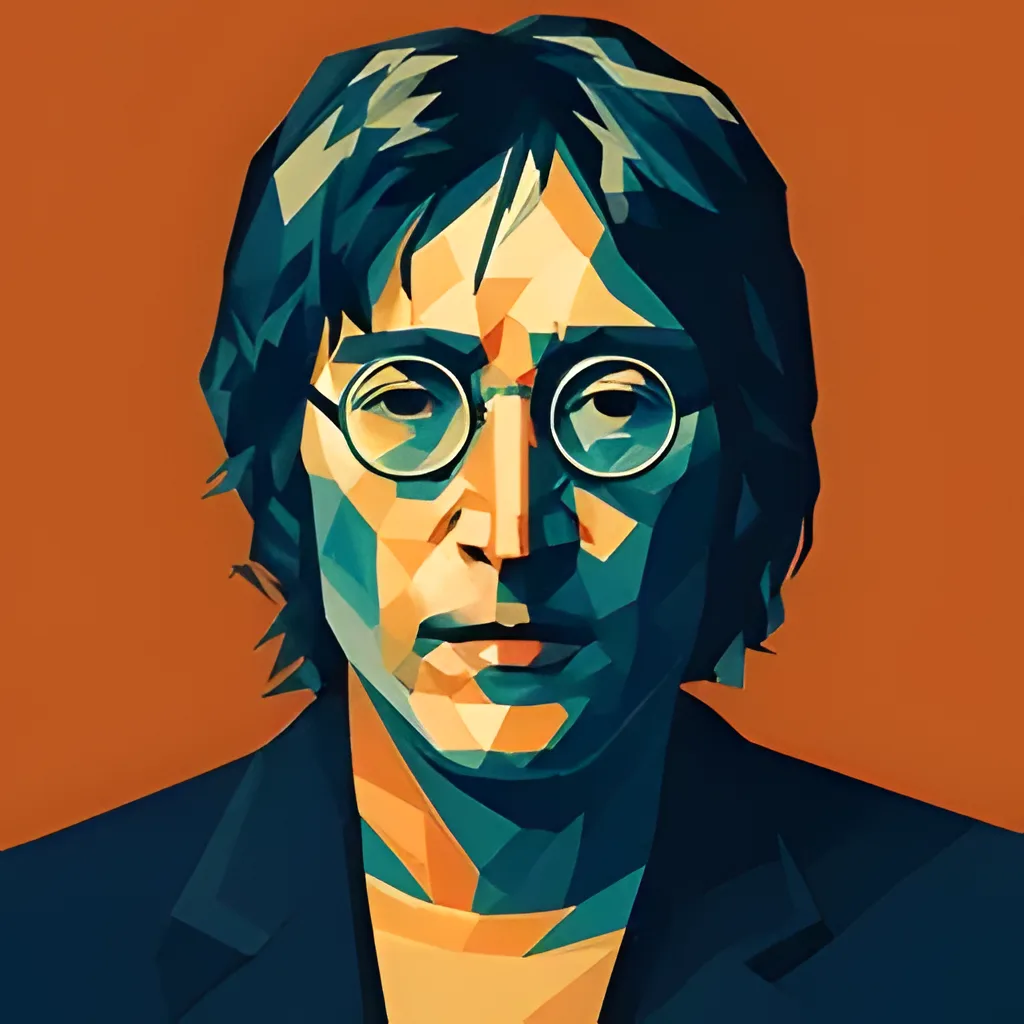
A life in brief
John Lennon: life and timeline.
He was born during a German air raid on Liverpool and raised by his aunt Mimi, who told him the guitar would never earn him a living. John Lennon met Paul McCartney at a church fete in 1957 because Paul could tune a guitar and knew all the words. What followed was Hamburg, Beatlemania, the sitar on Norwegian Wood, then Imagine and bed-ins for peace. He was shot outside his New York apartment at forty, the year he came back to music.
- 1940
Born in Liverpool
Born 9 October at Oxford Street Maternity Hospital during a German air raid, with bombs falling on the city. He entered a world at war and spent much of his life fighting for peace.
- 1957
Meeting Paul McCartney
On 6 July, at a church fete, John's skiffle band The Quarrymen play. Paul McCartney is younger, but impresses John by tuning a guitar properly and knowing all the words to songs John knows only fragments of.
- 1958
Losing Julia
In July his mother is killed by a drunk driver while crossing the road near Mimi's house. John is seventeen. The loss shapes his music for decades — 'Mother' and 'Julia' address it directly. The same year, George Harrison joins.
- 1960
Hamburg
The band plays the rough clubs of the red-light district, sometimes eight hours a night, kept awake on Preludin. They return transformed from amateur teenagers into a tight professional band. John later said it was where The Beatles really learned to play.
- 1962
The record deal
After rejections from multiple labels, George Martin signs them to Parlophone. Pete Best is replaced by Ringo Starr. 'Love Me Do' is released in October and reaches No. 17. He marries Cynthia Powell; their son Julian is born the next year.
- 1964
America
Newspapers had coined 'Beatlemania' by 1963 for the hysteria following them everywhere. In February an estimated seventy-three million people watch them on The Ed Sullivan Show — one of the most-watched television events in history.
- 1965
Rubber Soul
The album marks a turning point in sophistication, and 'Norwegian Wood' is among the first popular songs to feature the Indian sitar. 'Help!', released the same year, is a genuine cry for assistance from inside the fame.
- 1968
India, and Yoko
The Beatles study with the Maharishi Mahesh Yogi in India, where much of The White Album is written, though John comes away disillusioned with the Maharishi. Back in London he meets the artist Yoko Ono at her exhibition.
- 1970
The end and the beginning
Paul McCartney announces the breakup in April. John releases 'John Lennon/Plastic Ono Band' — brutally honest songs about his childhood, his parents and his disillusionment with fame and religion.
- 1971
Imagine
His most famous solo song asks listeners to imagine a world without religion, countries or possessions. Its gentle melody and hopeful tone carry an essentially atheistic message into universal appeal.
- 1975
The househusband years
Sean is born and John withdraws from music almost entirely to raise him while Yoko manages their business affairs. He called it among the happiest times of his life. In October he wins a key ruling against the Nixon administration's attempt to deport him.
- 1980
Double Fantasy, and the Dakota
He returns to music after five years away. On 8 December he is shot and killed outside his apartment building by Mark David Chapman, a disturbed fan who had asked for his autograph earlier that same day. He was forty.
Major achievements
John Lennon: major achievements.
- 01
The Beatles
As founding member and, alongside Paul, the band's primary songwriter, he was at the centre of a group that evolved from pop stars into serious artists across Sgt. Pepper's, The White Album and Abbey Road.
- 02
The Lennon–McCartney partnership
Formed when two Liverpool teenagers met at a church fete in 1957, it became one of the most successful songwriting partnerships in the history of music.
- 03
Imagine
His 1971 solo song asked listeners to picture a world without religion, countries or possessions. It became his most beloved song and an unofficial anthem for peace movements around the world.
- 04
Confession as a form
'John Lennon/Plastic Ono Band' put childhood trauma, his parents and his disillusionment with fame and religion directly into songs — 'Mother', 'God' — in a way Beatles records never had, and it shocked even longtime fans.
- 05
Fame turned into activism
Bed-ins for peace in Amsterdam and Montreal, concerts and events against the Vietnam War. He made the case that a pop star could be a political actor — and the Nixon administration took him seriously enough to try to deport him.
Turning points
John Lennon: defining moments.
- 1958
Losing Julia twice
His mother had given him to her sister Mimi to raise, then lived nearby, visited, taught him the banjo and played him Elvis and Little Richard. When she was killed by a drunk driver near Mimi's house, John was seventeen. The wound stayed in the work for the rest of his life.
- 1960
Hamburg
Eight-hour nights in the clubs of the red-light district, kept awake on stimulants. Amateur teenagers went in and a tight, professional band came out with the stage presence to match. He later said it was where The Beatles really learned to play music.
- 1965–1968
Outgrowing the fame
'Help!' was an actual cry for assistance. 'Rubber Soul' and the sitar on 'Norwegian Wood' pointed toward Eastern philosophy; India followed in 1968 and produced much of The White Album. Then he met Yoko Ono, and the collaboration that began as art ended his marriage and, fans decided, his band.
- 1975–1980
Five years out
After Sean was born he stopped almost entirely and became a house husband while Yoko ran their business affairs — among the happiest times of his life, he said. He returned in 1980 with 'Double Fantasy', talking in interviews that autumn about his happiness and his plans. He was killed that December.
What you’ll take away
Lessons from John Lennon’s life.
- 01
Ten thousand hours in a bad room
Hamburg was grim, exhausting and unglamorous — eight hours a night in a red-light district. It is also the only reason a group of Liverpool teenagers came home able to play.
- 02
The wound is material
He put his mother, his absent father and his disgust with fame straight into 'Mother', 'Julia' and 'God'. It shocked fans who wanted the moptop. It is also the work that lasted.
- 03
You are allowed to stop
At the height of his fame he walked away for five years to raise his son, and called it among the happiest times of his life. The career was not the point, and he worked that out earlier than most people do.
Did you know
Facts about John Lennon.
- 01
Did you know that John Lennon grew up without living with his parents—he was raised by his maternal aunt, Mimi Smith, in Woolton, Liverpool?
- 02
Did you know that the famous song 'Strawberry Fields Forever' was named after a Salvation Army children's home located near the house where Lennon grew up?
- 03
Did you know that in 1974, Lennon claimed to have seen a UFO from his New York apartment balcony, an event he later referenced in the song 'Nobody Told Me'?
If you liked John Lennon…
Browse all →
FAQ
Frequently asked questions about John Lennon.
What was John Lennon's middle name?
Winston, after Winston Churchill — he was born in 1940, during the war. When he married Yoko Ono in 1969 he changed it by deed poll to John Winston Ono Lennon.
How did John Lennon meet Paul McCartney?
At a church fete on 6 July 1957, where John's skiffle band The Quarrymen was playing. Paul was younger, but he could tune a guitar properly and knew all the words to songs John only knew fragments of. He joined the band.
Who raised John Lennon?
His aunt Mimi Smith and her husband George. His father, a merchant seaman, essentially abandoned the family when John was five, and his mother Julia — young and unprepared for single motherhood — let her older sister raise him. Julia lived nearby, visited regularly, taught him banjo and introduced him to rock and roll.
Did Yoko Ono break up The Beatles?
Many fans blamed her, but the reality was more complex. The band had been growing apart artistically and personally for years, and John's increasing involvement with Yoko was as much a symptom of the dissolution as a cause.
What were the bed-ins for peace?
Events John and Yoko staged in Amsterdam and Montreal, where they stayed in bed for days while talking to journalists about peace — using the press attention their relationship attracted to argue against the Vietnam War.
How did John Lennon die?
He was shot on 8 December 1980 as he and Yoko returned to the Dakota, their New York apartment building, by Mark David Chapman, a disturbed fan who had asked for his autograph earlier that same day. He was pronounced dead at Roosevelt Hospital, aged forty.
Published by Lyfestori, from Duck Pond Ventures Oy. About us and how to report a correction.
18 min · one sitting