Georges St-Pierre
The Complete Fighter
Born on 19 May 1981 in Saint-Isidore, Quebec, Georges St-Pierre took up karate as a boy to deal with bullies, became UFC welterweight champion at twenty-five and retired as a two-division champion — widely ranked among the greatest mixed martial artists of all time.
- 15 min listen
- UFC Welterweight Champion
- Two-division champion
- Mixed martial arts
Georges St-Pierre’s full 15 min audio biography, The Complete Fighter, is available on Lyfestori for iOS. Listen to a free preview below.
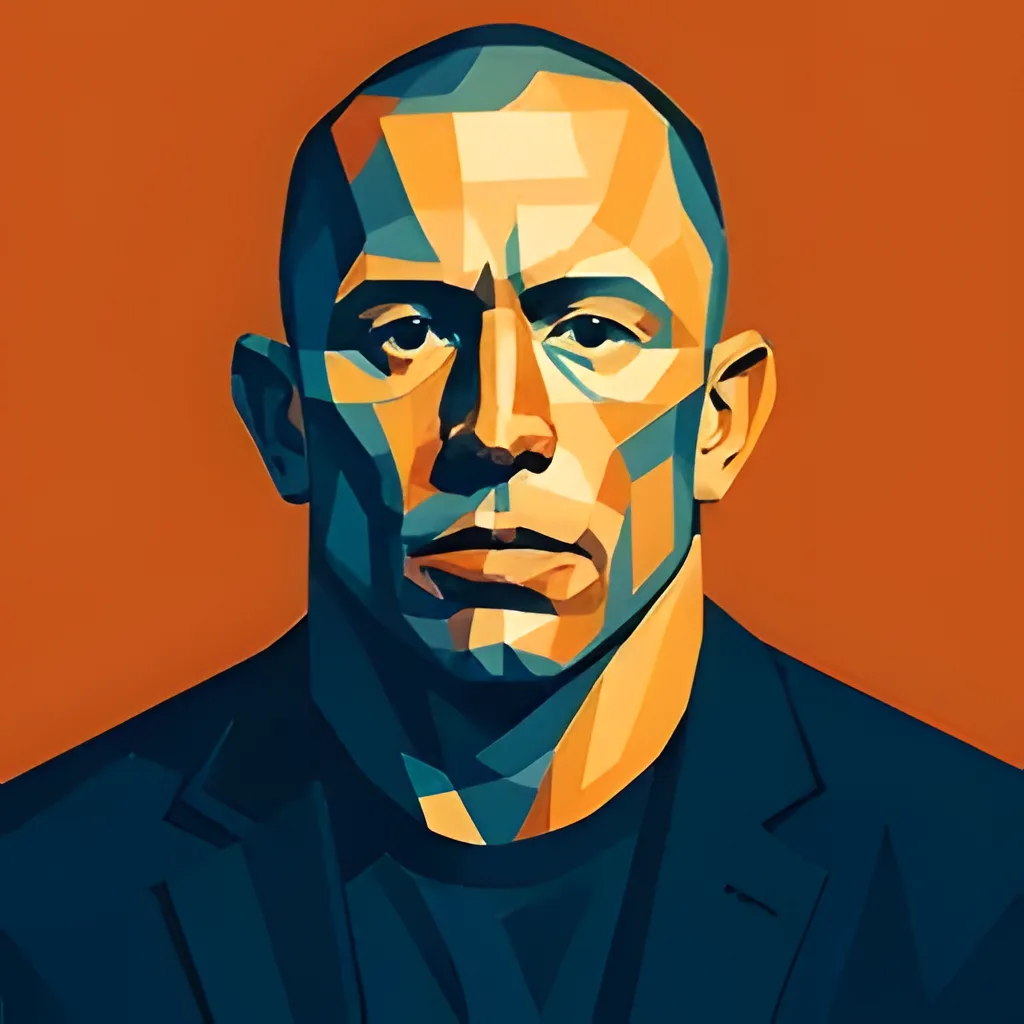
A life in brief
Georges St-Pierre: life and timeline.
He was the bullied kid in a small Quebec farming town, and at seven his parents put him in karate because the intimidation had become that bad. Georges St-Pierre stopped being a target, but the dojo kept him — respect and technique mattered there more than size. He built himself into a fighter the way an engineer builds: karate, then Brazilian jiu-jitsu, wrestling, boxing, hours of video study, a specialist for every discipline. He defended the UFC welterweight title nine straight times, then walked away from it at thirty-two.
- 1981
Born in Saint-Isidore
Born 19 May in a small rural community outside Montreal, Quebec — a long way from the fighter he would become.
- 2002
Professional debut
Turns pro at twenty-one against Ivan Menjivar and wins by technical knockout in the first round. He takes his first seven fights, already blending striking, wrestling and submission grappling.
- 2004
The UFC calls
Signs with the premier organisation in the sport. His debut against judo specialist Karo Parisyan goes to the scorecards and he wins a unanimous decision, then beats Jay Hieron convincingly to announce himself as a contender.
- 2006
Champion at twenty-five
At UFC 65 he takes the welterweight title from Matt Hughes — one of the most dominant champions in UFC history — with a head kick and punches in the second round. Hughes had rarely even been hurt by strikes before.
- 2013
Walking away
After beating Johnny Hendricks at UFC 167 he vacates the title and steps away, citing personal reasons and the pressure of being champion. He is thirty-two and showing no sign of decline.
- 2017
Two-division champion
Returns after nearly four years — and moves up to middleweight. At UFC 217 in Madison Square Garden he drops Michael Bisping with a left hook in the third and finishes with a rear naked choke. Ulcerative colitis forces him to vacate the belt soon after.
Major achievements
Georges St-Pierre: major achievements.
- 01
Nine consecutive title defences
Over six years he beat every top contender the welterweight division had — Fitch, Penn, Alves, Hardy, Koscheck, Shields, Condit, Diaz, Hendricks — one of the most dominant reigns in UFC history.
- 02
Champion in two weight classes
After four years away he moved up and took the middleweight title from Michael Bisping, joining the handful of fighters to hold belts at more than one weight.
- 03
Beating Matt Hughes at UFC 65
Hughes was considered close to unbeatable at welterweight and was known for his wrestling. St-Pierre found the hole in his striking defence and knocked him out through it.
- 04
Fighting as a science
Hours of video study, a game plan built for each specific opponent, and specialists for every phase — Olympic wrestlers, world-class boxers, elite jiu-jitsu players. He was among the first to fully adopt sports science, down to diet, sleep and recovery.
- 05
An ambassador for the sport
Articulate, respectful to opponents, gracious winning and losing. His professionalism did as much to legitimise mixed martial arts as any single fight.
Turning points
Georges St-Pierre: defining moments.
- Aged seven
Sent to the dojo
The bullying at school got bad enough that his parents decided he had to learn to defend himself, so he started karate like his father. The bullying eventually stopped. By then it did not matter — the discipline had taken hold, and he had found a place where technique outranked size.
- First title shot
The Hughes armbar
Two UFC fights in, he got his shot at the champion and was submitted with one second left in the first round. He did not treat it as a ceiling. He went back to the gym and worked on precisely what the fight had exposed.
- UFC 69
The Serra upset
First defence of the belt he had spent his life chasing, against a heavy underdog — and a right hand dropped him. One of the biggest upsets in UFC history. His own diagnosis was harsher than anyone else's: winning had made him complacent, and he had not trained like the man who earned the title.
- UFC 83
Taking it back in Montreal
Twenty-one thousand Canadians watching him reclaim the title from Serra by TKO in the second round. He came out of it with a rule he kept for six years: prepare for every defence as though it were the first time you were fighting for the belt.
- 2013
Vacating in his prime
Thirty-two, unbeaten through the reign, no decline in sight — and he handed back the title. He would not hold a championship he could not give his full commitment to. Nobody in the sport had done that.
What you’ll take away
Lessons from Georges St-Pierre’s life.
- 01
The opponent is rarely the problem
Serra did not out-fight him; complacency did. He had prepared like a man who already had something instead of a man who wanted it, and one right hand collected the difference.
- 02
Treat the craft as a science
He studied footage for patterns, built a plan for each specific opponent, and hired specialists for every phase of the fight. He proved that intelligence and preparation could beat raw physical gifts — and an entire generation copied him.
- 03
Know what the title is for
He gave up a belt he could still defend because holding it without full commitment struck him as dishonest. Being champion meant earning it continuously, not owning it.
Did you know
Facts about Georges St-Pierre.
- 01
Did you know that Georges St-Pierre's martial arts journey began at age seven with karate, as a way to learn self-defense after being severely bullied in school?
- 02
Did you know that Georges St-Pierre became one of the youngest champions in UFC history when he defeated Matt Hughes for the Welterweight Championship at age 25?
- 03
Did you know that after a four-year hiatus from the UFC, Georges St-Pierre returned to the octagon in 2017 to win the Middleweight Championship, making him a two-division champion?
If you liked Georges St-Pierre…
Browse all →
FAQ
Frequently asked questions about Georges St-Pierre.
Where is Georges St-Pierre from?
Saint-Isidore, a small town south of Montreal in Quebec, Canada. French is his first language; he began Kyokushin karate at seven, partly to defend himself against bullies.
Who did Georges St-Pierre last fight?
Michael Bisping, at UFC 217 in November 2017. Returning after four years away, he submitted Bisping in the third round to win the middleweight title, vacated it weeks later, and formally retired in 2019.
Did Georges St-Pierre ever lose?
Twice in the fights that mattered most, and he avenged both. Matt Hughes submitted him with an armbar in the final second of round one in his first title shot. Then Matt Serra, a heavy underdog, knocked him out in his first title defence at UFC 69 — one of the biggest upsets in UFC history.
Why did he retire in 2013?
After beating Johnny Hendricks at UFC 167 he said he needed to step away, citing personal issues and the pressure of being champion, and stayed private about the details. He was thirty-two and undiminished. He vacated the title rather than hold it without being fully committed.
Why did he give up the middleweight title so quickly?
Health. After beating Michael Bisping at UFC 217 in 2017 to become a two-division champion, ulcerative colitis forced him to vacate the belt shortly afterwards — ending his competitive career on a win.
Why was his fighting style called boring?
Because he refused unnecessary risk. He would methodically dismantle opponents over five rounds rather than hunt a highlight, using wrestling against strikers like Hardy and Diaz and striking against wrestlers like Fitch and Koscheck. Some fans wanted more danger. It was, however, extremely effective.
Has Georges St-Pierre acted in films?
Yes. During his four-year hiatus from competition he appeared in movies, including a role in the Marvel film Captain America: The Winter Soldier, alongside various business ventures.
Published by Lyfestori, from Duck Pond Ventures Oy. About us and how to report a correction.
15 min · one sitting