Craig Federighi
The Man Behind Apple's Software
Born on 27 May 1969 in San Leandro, California, Craig Federighi studied computer science at Berkeley, worked under Steve Jobs at NeXT, and returned to Apple in 2009 to become Senior Vice President of Software Engineering, responsible for iOS and macOS.
- 15 min listen
- Apple software chief
- iOS and macOS
- Privacy
Craig Federighi’s full 15 min audio biography, The Man Behind Apple's Software, is available on Lyfestori for iOS. Listen to a free preview below.
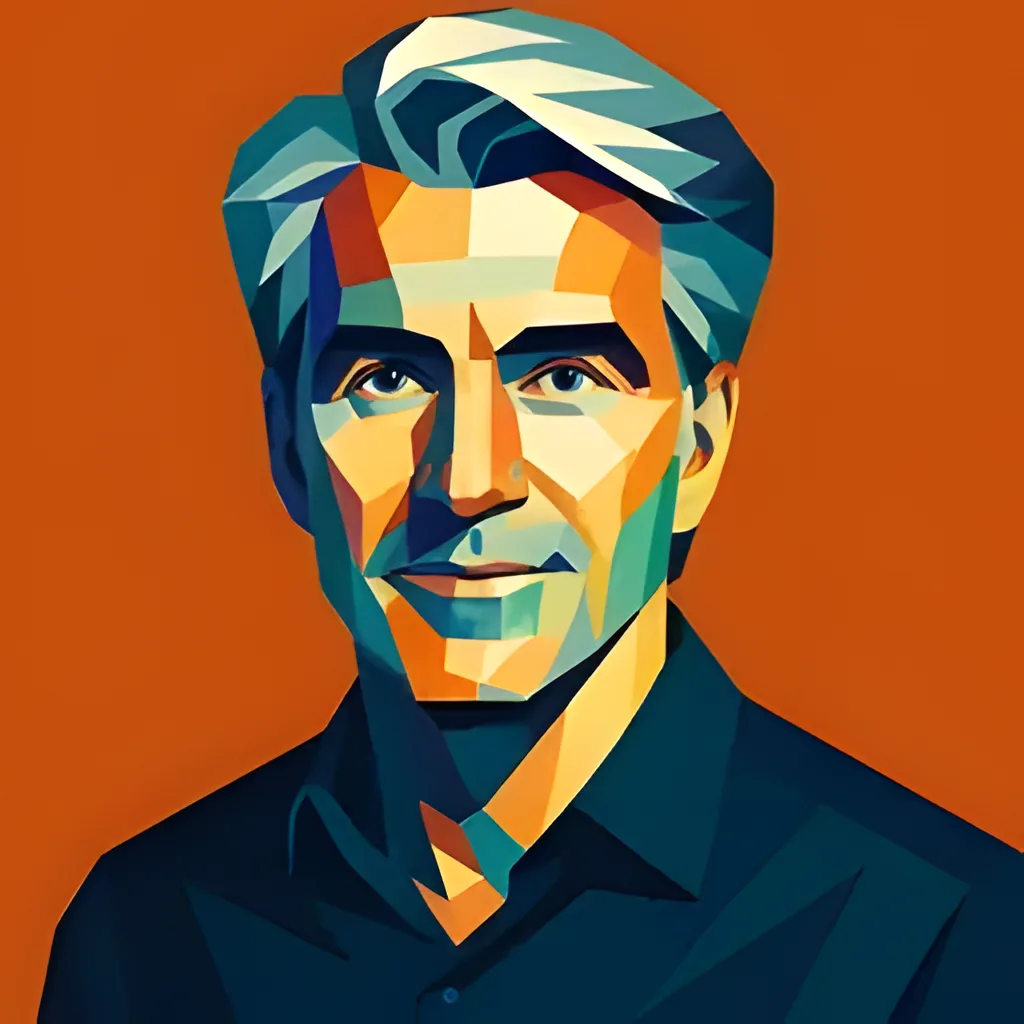
A life in brief
Craig Federighi: life and timeline.
September 2017: Craig Federighi points an iPhone X at his face on live television to demonstrate Face ID, and it asks for his passcode instead. He switches to a backup phone, makes a joke about his hair, and carries on. Apple's Senior Vice President of Software Engineering has run both iOS and macOS since 2012 — software on well over a billion devices — and has spent recent years answering for the company's late, contested arrival in artificial intelligence.
- 1969
Born in San Leandro
Born 27 May in San Leandro, California, a working-class city in the Bay Area, as the personal computer revolution begins around him. By ten he is teaching himself programming languages — not casual interest, but obsession.
- 1993
Berkeley
Takes a BS in Electrical Engineering and Computer Science in 1991 and a Master of Science in Computer Science in 1993. He nearly leaves technology altogether: his love of heavy metal and the progressive rock band Rush has him seriously considering music full time.
- 1994
NeXT
Joins the company Steve Jobs founded after being forced out of Apple, and leads development of the Enterprise Objects Framework — a tool that made it dramatically easier to build sophisticated applications over databases.
- 1996
Apple buys NeXT
The $429 million acquisition brings Jobs back to Apple and Craig with him. His EOF work becomes part of WebObjects, still present in Apple's development tools today.
- 1999
Leaving for Ariba
Departs Apple for a three-year-old web business software startup at the height of the dot-com boom. He rises to Chief Technology Officer, meets his future wife, and spends a decade learning to build software at enterprise scale.
- 2009
Back to Apple
Returns to lead the next phase of macOS after Snow Leopard. His first public appearance is at WWDC that year, introducing it to developers — technical but accessible, with hints of the humour to come.
- 2011
VP of Mac Software Engineering
Succeeds Bertrand Serlet in March.
- 2012
Both operating systems
Promoted to Senior Vice President in August, reporting directly to Tim Cook. Two months later Scott Forstall is forced out after the Maps debacle, and iOS is added to his remit — leaving him responsible for the software on hundreds of millions of devices.
- 2017
The Face ID demo
On stage at the iPhone X launch the phone asks for a passcode. The technology worked: staff had handled the device, and after five failed recognitions it locked itself by design. He switches phones, jokes about his hair, and continues.
- 2017
Blocking the trackers
Announces Safari changes that block cross-site tracking, taking a public stance against the surveillance-based advertising model that funds much of the internet.
- 2022
Caught out by ChatGPT
Apple Intelligence was not even an idea when ChatGPT launches in late 2022. Reports say he had been reluctant to make large investments in AI without a clear end goal. The company scrambles to catch up.
- 2025
The reckoning
Shareholders file a securities fraud lawsuit claiming Apple misled investors about the readiness of AI upgrades to Siri. Promised features slip to 2026, in a stock decline that wiped out roughly $900 billion in market value.
Major achievements
Craig Federighi: major achievements.
- 01
Running both operating systems
Since 2012 he has overseen iOS, iPadOS, macOS and Apple's common operating system frameworks — software used by over a billion people every day.
- 02
The iOS 7 redesign
He oversaw a complete change of design language, away from skeuomorphism toward the flat, minimalist aesthetic that still defines Apple's look — and the unified language now shared across iOS, iPadOS and macOS.
- 03
Face ID
He was instrumental in the facial recognition system that replaced Touch ID on newer iPhones, including the security behaviour that locks the device after five failed attempts — as several million people watched it do, on stage.
- 04
Taking a side on privacy
In 2017 he announced the Safari changes blocking cross-site tracking, and he has been a vocal defender of App Tracking Transparency, which requires apps to ask permission before tracking users. The stance has shaped industry-wide argument about user data.
- 05
Setting the format
Apple's primary software presenter since 2012, he built a keynote style — technical depth, self-deprecating jokes about his hair, elaborate fictions about the crack product marketing team driving naked across California in a Volkswagen bus — that set the standard for how tech companies talk to developers.
Turning points
Craig Federighi: defining moments.
- 1994–1996
Working for Jobs at NeXT
He joined the company Steve Jobs built after Apple pushed him out, and led the Enterprise Objects Framework. Wil Shipley of the Omni Group, prepared not to like the new guy, described him as seven feet tall and gameshow-host handsome — and was won over by his knack for getting brilliant, independent engineers to work as a team. Apple bought NeXT for $429 million and he came with it.
- 1999–2009
Ten years away
He left Apple for Ariba during the dot-com boom and became its CTO, learning to build systems at massive scale and complexity. Apple called him back in 2009 to lead macOS after Snow Leopard — the decision that made the rest of his career.
- 2012
Inheriting iOS
Two months after his promotion to Senior Vice President, Scott Forstall was forced out over the Maps debacle and internal conflicts, and iOS landed on his desk. He now owned both the software that ran the iPhone and the software that made Apple a computer company.
- 2017
The demo that didn't fail
Face ID asked for a passcode on live television, watched by millions. It was behaving exactly as designed. He switched to a backup phone, made a joke at his own expense, and finished — and the moment became one of the most discussed in keynote history.
- 2022–2025
The AI reckoning
Siri updates slipped to 2026, shareholders sued, and roughly $900 billion in market value evaporated. Critics pointed to bugs in major releases and features rushed to market. He answered with a reversal of Apple's whole approach — telling Siri's engineers to do whatever it takes, even if that meant using other companies' open-source models rather than Apple's own.
do whatever it takes to build the best AI features
Craig Federighi, instructing Siri's machine-learning engineers
What you’ll take away
Lessons from Craig Federighi’s life.
- 01
Composure is part of the craft
When Face ID asked for a passcode in front of millions, nothing needed fixing — the system had worked. Only the composure was on trial, and that is what people remember about the moment.
- 02
Consensus scales better than force
Colleagues have credited him since NeXT with getting smart, fiercely independent engineers to function as a team. Running two operating systems for a billion devices is a coordination problem before it is a coding problem.
- 03
Caution has an expiry date
Declining to invest heavily in AI without a clear end goal was defensible right up until ChatGPT shipped and Apple had nothing. The willingness to reverse himself came late — but it came.
Did you know
Facts about Craig Federighi.
- 01
Did you know that Apple's SVP of Software Engineering Craig Federighi considered leaving the tech world while at UC Berkeley to pursue music full-time with a focus on heavy metal and the progressive rock band Rush?
- 02
Did you know that after Steve Jobs was forced out of Apple, Craig Federighi worked directly under him at NeXT, leading the development of the revolutionary Enterprise Objects Framework?
- 03
Did you know that Craig Federighi is one of Apple's largest individual shareholders among executives, owning more than 1.6 million shares of Apple stock as of 2025?
If you liked Craig Federighi…
Browse all →
FAQ
Frequently asked questions about Craig Federighi.
Where did Craig Federighi go to college?
The University of California, Berkeley, where he earned a bachelor's degree in electrical engineering and computer science and a master's in computer science.
When did Craig Federighi join Apple?
Twice. He first arrived in 1996, when Apple bought NeXT, where he had worked under Steve Jobs since 1994. He left in 1999 for the enterprise software company Ariba, then returned in 2009 and took charge of Mac software in 2011 and of both iOS and macOS in 2012.
What happened during the Face ID demo in 2017?
The iPhone X asked for a passcode instead of unlocking. The technology had not failed: Apple employees had handled the phone before the event, and after five failed recognition attempts the system locked itself and required a passcode, exactly as designed. Federighi switched to a backup phone, joked about his hair, and carried on.
What does Craig Federighi do at Apple?
As Senior Vice President of Software Engineering he oversees the teams responsible for iOS, iPadOS, macOS and Apple's common operating system frameworks — software used by over a billion people. Since 2012 he has also been Apple's primary software presenter.
Why is he called 'Hair Force One'?
For his hair, which is a running joke he tells at his own expense on stage. It belongs to a presentation style that mixes technical depth with self-deprecation and elaborate fictions about Apple's 'crack product marketing team'.
What went wrong with Apple's AI?
Apple Intelligence was not yet an idea when ChatGPT launched in late 2022, and reports say Federighi had been reluctant to make large investments in AI without a clear end goal. Promised Siri upgrades were delayed to 2026, and in 2025 shareholders filed a securities fraud lawsuit alleging Apple had misled investors — tied to a stock decline that wiped out roughly $900 billion in market value.
Did he almost not work in technology?
At Berkeley he seriously considered leaving the tech world to pursue music full time — he loves heavy metal and the progressive rock band Rush. He stayed, finished a master's in computer science in 1993, and joined NeXT the year after.
Published by Lyfestori, from Duck Pond Ventures Oy. About us and how to report a correction.
15 min · one sitting