Buddha
The Prince Who Found Enlightenment and Changed the World
Born Siddhartha Gautama near Lumbini, in today's Nepal, traditionally in 563 BC, the Buddha gave up a prince's life at twenty-nine, reached enlightenment under the Bodhi tree at Bodh Gaya, and spent some forty-five years teaching the path that became Buddhism.
- 15 min listen
- Founder of Buddhism
- The Middle Way
- Enlightenment
Buddha’s full 15 min audio biography, The Prince Who Found Enlightenment and Changed the World, is available on Lyfestori for iOS. Listen to a free preview below.
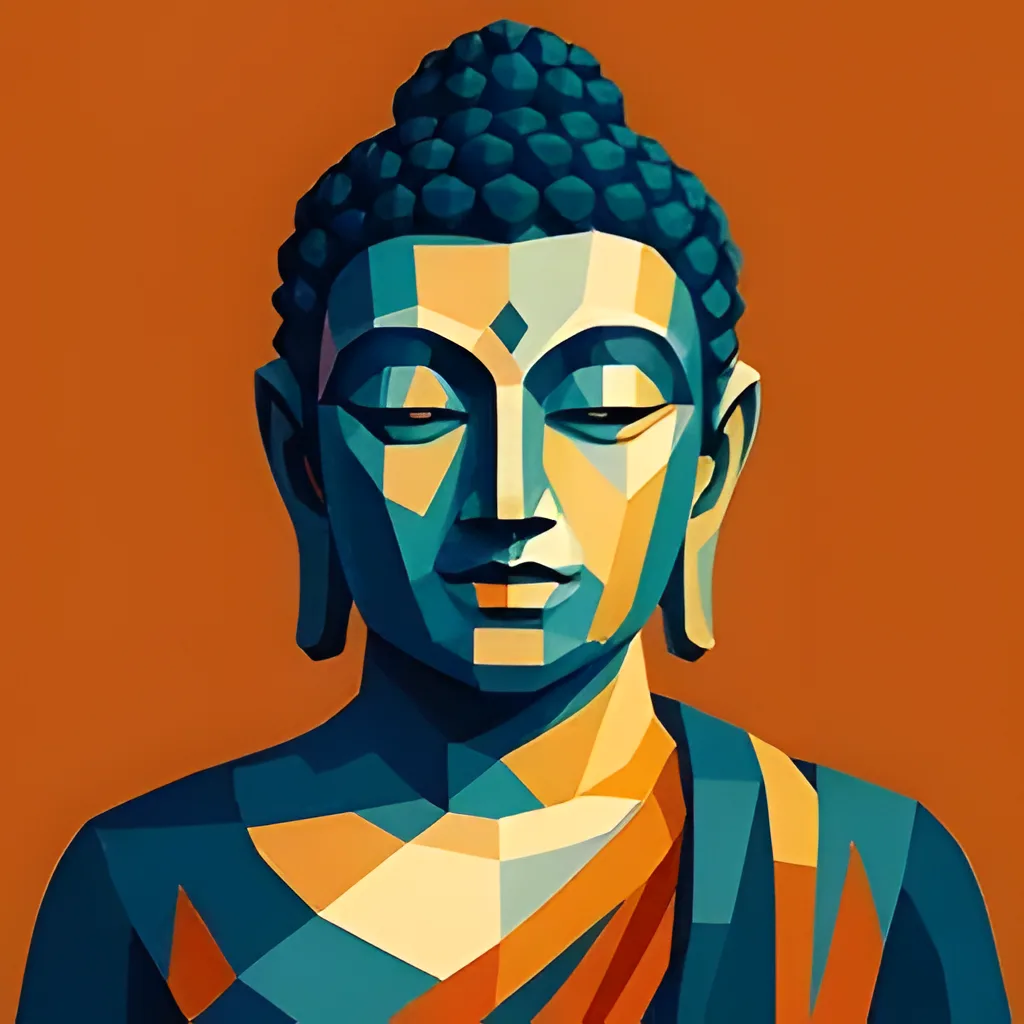
A life in brief
Buddha: life and timeline.
Siddhartha Gautama's father kept the old, the sick and the dying out of his palaces, so his son would choose power over the spiritual path a sage had predicted. It worked until Siddhartha was twenty-nine and went outside the gates. He saw an old man, a sick man, a corpse, and a wandering ascetic who owned nothing and seemed at peace. He left in the middle of the night, after one last look at his wife and son, and spent six years looking for the end of suffering.
- 563
Born near Lumbini (traditional date)
Born into the ruling family of the Shakya clan in the 5th century BCE — traditional sources say 563 BCE — near present-day Lumbini in southern Nepal. His mother, Queen Maya, died seven days after the birth, and her sister Mahapajapati raised him. A sage foretold two possible destinies: universal monarch, or fully awakened teacher.
- 483
Death at Kusinara (traditional date)
He died at Kusinara — modern Kushinagar in Uttar Pradesh — at about eighty, after forty-five years of teaching. Traditional sources give 483 BCE; many modern scholars place his death around the early 4th century BCE. His final teaching held to impermanence, as he had for half a century.
Major achievements
Buddha: major achievements.
- 01
The Four Noble Truths
Given in his first sermon, at the Deer Park at Sarnath, to five ascetics who had practised with him: suffering exists, suffering has a cause, suffering can end, and there is a path that leads to its end. The foundation of Buddhist philosophy.
- 02
The Eightfold Path
A practical guide for living: right understanding, right intention, right speech, right action, right livelihood, right effort, right mindfulness, right concentration.
- 03
The Middle Way
Having tried both palace luxury and self-denial severe enough to leave him dangerously weak, he concluded neither leads to awakening — and set out a balanced path avoiding both self-indulgence and self-torture.
- 04
Mindfulness
His systematic teaching of mindfulness (sati) and related meditative practices, set inside an ethical and philosophical path. They remain central to Buddhist traditions, and modern mindfulness-based programmes descend from them.
- 05
The Sangha
A community of monks and nuns drawn from every social background — kings and peasants, merchants and scholars. Some years into his ministry he established an order of nuns alongside the monks, albeit with additional rules for women.
- 06
Nirvana redefined
He described enlightenment not as union with a divine being but as the complete understanding of reality and the permanent end of mental suffering — a condition rather than a place, and one attainable in this lifetime.
Turning points
Buddha: defining moments.
- Approaching thirty
The Four Sights
His attendants had been instructed to allow only the young, healthy and happy near him; the palace was a world where suffering appeared not to exist. Then he went out. An old man bent over a stick. A sick man covered in sores. A funeral procession. And a wandering ascetic who owned nothing and looked entirely at peace. He could never enjoy the palace again.
- Age 29
The Great Renunciation
He went into his wife and son's room in the middle of the night for one last look, then left the palace forever. He cut off his hair, exchanged his royal garments for simple ochre-dyed robes, and walked out as a wandering seeker with nothing.
- Six years of searching
Neither extreme works
He mastered advanced meditation under two renowned teachers and found it gave only temporary relief. He joined ascetics who held that enlightenment came through extreme self-denial, and fasted until he was dangerously thin and weak — and no closer. The failure was the discovery: neither luxury nor hardship produces wisdom. He began eating again and sat down beneath a fig tree by the Neranjara River.
- Age 35
The Bodhi Tree
He vowed not to move until he had found the answer to human suffering, and sat — later tradition says for seven weeks. He saw how suffering arises from attachment, craving and ignorance, and found the path to its complete end. On the morning of his thirty-fifth birthday, as the morning star appeared, he became the Buddha: the Awakened One.
- The next forty-five years
Teaching, and inviting doubt
He hesitated at first, believing what he had found was too subtle to grasp, until Brahmā Sahampati entreated him to teach. Then he walked northern India for forty-five years, adapting his message with stories, parables and analogies — and telling people, in discourses like the Kalama Sutta, not to believe a thing merely because of tradition, or authority, or because he had said it.
All conditioned things are subject to decay; strive on with diligence.
The Buddha — his reported final words, at Kusinara
What you’ll take away
Lessons from Buddha’s life.
- 01
Comfort is not the absence of the problem
The palace worked by keeping the sick and the old out of sight. It never made him exempt — it only delayed the knowledge. One trip through the gates and the whole arrangement collapsed.
- 02
Both extremes failed
He tried unlimited pleasure for twenty-nine years and near-starvation for six. Neither produced wisdom. The Middle Way was not a compromise he found appealing; it was what remained after he had personally exhausted the alternatives.
- 03
Test it yourself
He told followers not to accept a teaching on tradition, on authority, or because he was the one saying it — but to test it against their own experience. A founder inviting his students to check his work.
Did you know
Facts about Buddha.
- 01
Did you know that before becoming the Buddha, Siddhartha Gautama lived as a wealthy prince who was shielded from all suffering and had never seen an old, sick, or dead person until he was 29?
- 02
Did you know that the Buddha achieved enlightenment after meditating under the Bodhi tree in Bodh Gaya, India, for 49 consecutive days?
- 03
Did you know that the Buddha's final words to his followers before his death at age 80 were reportedly, 'All composite things are perishable. Strive for your own liberation with diligence'?
FAQ
Frequently asked questions about Buddha.
What was the Buddha's real name?
Siddhartha Gautama (in Pali, Siddhattha Gotama). “Buddha” is a title meaning “the awakened one”; he is also called Shakyamuni, “sage of the Shakya clan.”
Where was the Buddha born?
In the Lumbini grove, in what is now southern Nepal, close to the Indian border. Tradition dates his birth to 563 BC, though many historians now place his life roughly a century later.
How did the Buddha die?
Of an illness, at about eighty, at Kushinagar in northern India. According to the early texts he fell sick after a meal offered by Cunda, a metalworker, and died lying between two sal trees after telling his followers to strive on with diligence.
Who was the Buddha?
Siddhartha Gautama, a prince of the Shakya clan born near present-day Lumbini in southern Nepal in the 5th century BCE. He left his palace at twenty-nine to search for the cause of suffering and, after six years, attained enlightenment at thirty-five — becoming the Buddha, meaning the Awakened One or the Enlightened One. He taught for forty-five years and died at about eighty.
What are the Four Noble Truths?
The foundation of Buddhist philosophy, taught in his first sermon at the Deer Park at Sarnath: suffering exists; suffering has a cause; suffering can end; and there is a path that leads to the end of suffering. That path is the Eightfold Path.
What are the Four Sights?
The four things Siddhartha saw on his journeys outside the palace, having been sheltered from all of them: an old man bent with age, a sick person in pain, a funeral procession, and a wandering ascetic who owned nothing yet appeared at peace. The first three taught him that aging, illness and death await everyone; the fourth suggested meaning might be found through spiritual practice rather than wealth.
What is the Middle Way?
The balanced approach he arrived at after trying both extremes — the luxury of his father's palaces, and the extreme self-denial of the ascetics that left him dangerously thin and no wiser. It avoids both self-indulgence and self-torture.
When did the Buddha live?
The dating is disputed. He was born in the 5th century BCE — traditional sources say 563 BCE — and died at about eighty. Traditional sources give 483 BCE for his death, while many modern scholars place it around the early 4th century BCE.
Published by Lyfestori, from Duck Pond Ventures Oy. About us and how to report a correction.
15 min · one sitting