Ruth Bader Ginsburg
The Quiet Voice That Changed America
Born Joan Ruth Bader on 15 March 1933 in Brooklyn, New York, Ruth Bader Ginsburg built the constitutional case against sex discrimination as an ACLU litigator, then served twenty-seven years on the US Supreme Court, where her dissents made her a cultural icon before her death in 2020.
- 19 min listen
- Supreme Court justice
- Women's rights litigator
- Notorious RBG
Ruth Bader Ginsburg’s full 19 min audio biography, The Quiet Voice That Changed America, is available on Lyfestori for iOS. Listen to a free preview below.
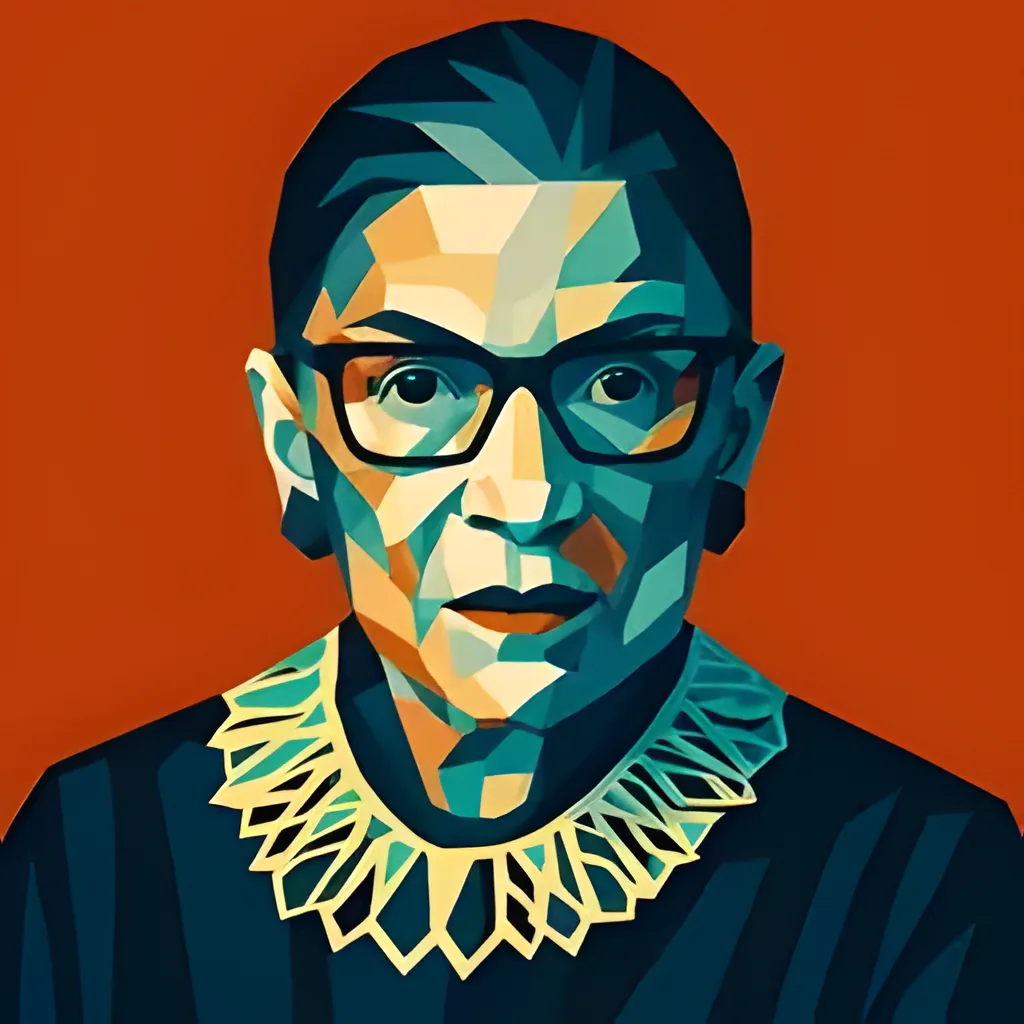
A life in brief
Ruth Bader Ginsburg: life and timeline.
She graduated from Columbia Law School tied for first in her class and still could not get a job at a New York law firm: a woman, a Jew and a mother was, she said, a bit much. So Ruth Bader Ginsburg taught, and in 1972 co-founded the ACLU's Women's Rights Project. She often chose male plaintiffs to show an all-male Supreme Court that sex stereotypes hurt everyone. She argued six cases before the Court and won five. In 1993 she joined it.
- 1933
Born in Brooklyn
Born Joan Ruth Bader on 15 March to Nathan, a Jewish immigrant from the Odessa region, and Celia. Because there are several Joans in her kindergarten class, her mother asks the school to call her Ruth.
- 1950
Her mother's death
Celia Bader dies of cancer in June, the day before Ruth's graduation from James Madison High School. Ruth misses the ceremony and leaves for Cornell on a scholarship that autumn.
- 1954
Cornell and Marty
She graduates from Cornell and on 23 June marries Martin Ginsburg, whom she met there on a blind date. Their daughter Jane is born in 1955 while Marty serves in the Army in Oklahoma.
- 1956
Harvard Law School
She is one of nine women in a class of around 500. The dean asks the women why they are occupying places that could have gone to men.
- 1959
Top of the class, no offers
After transferring to Columbia, she graduates tied for first. No New York firm will hire her, and Justice Felix Frankfurter declines her as a clerk. She clerks for federal judge Edmund Palmieri instead.
- 1972
The Women's Rights Project
Having taught at Rutgers since 1963, she co-founds the ACLU Women's Rights Project and becomes its leading litigator. That year she also becomes the first woman tenured at Columbia Law School.
- 1973
Frontiero v. Richardson
On 17 January she argues her first case before the Supreme Court, against military benefit rules that treated servicemen's and servicewomen's spouses differently. No justice interrupts her, and the Court rules 8–1 for Frontiero.
- 1980
Appeals court judge
President Jimmy Carter appoints her to the US Court of Appeals for the DC Circuit, where she serves for thirteen years.
- 1993
The Supreme Court
Nominated by President Bill Clinton, she is confirmed 96–3 and becomes the second woman on the Court and its first Jewish woman.
- 1996
United States v. Virginia
She writes the majority opinion requiring the Virginia Military Institute to admit women, holding that the state could not deny women full citizenship stature.
- 2013
Shelby County dissent
She dissents when the Court strikes down the Voting Rights Act's coverage formula. The same year a law student's Tumblr, Notorious R.B.G., makes her a pop-culture figure.
- 2020
Death and lying in state
She dies on 18 September at eighty-seven from complications of metastatic pancreatic cancer. She becomes the first woman to lie in state at the US Capitol.
Major achievements
Ruth Bader Ginsburg: major achievements.
- 01
Six cases, five wins
Between 1973 and 1979 she argued six sex-discrimination cases before the Supreme Court and won five, helping make sex-based laws subject to heightened constitutional scrutiny.
- 02
The step-by-step strategy
Borrowing from Thurgood Marshall's campaign against segregation, she built precedent one case at a time, often with male plaintiffs such as widowers denied benefits given to widows.
- 03
Opening VMI
Her 1996 majority opinion in United States v. Virginia ended male-only admission at a state military college. It ruled out a separate, lesser programme for women.
- 04
The Ledbetter dissent
In 2007 she read her dissent aloud in Ledbetter v. Goodyear and said the ball was now in Congress's court. The Lilly Ledbetter Fair Pay Act became the first bill President Obama signed, in 2009.
- 05
Lying in state
In September 2020 she became the first woman and the first Jewish person to lie in state at the US Capitol.
Turning points
Ruth Bader Ginsburg: defining moments.
- 1950
Be a lady, be independent
Her mother, who had been denied college so that her brother could go, spent four years dying of cancer while Ruth did her homework at her bedside. Celia died the day before Ruth's graduation. Her two pieces of advice — be a lady, and be independent — stayed with Ruth all her life.
- 1956–1958
Two law degrees' worth of work
When Marty was diagnosed with testicular cancer during his second year at Harvard, she attended his classes as well as her own, typed his papers and cared for their daughter. She still made the Harvard Law Review.
- 1959
Shut out
Graduating tied for first at Columbia did not get her a job. Columbia professor Gerald Gunther had to pressure a federal judge into taking her as a clerk. Rejection pushed her into teaching, and from there into litigation.
- 2006 onwards
The dissenter
After Sandra Day O'Connor retired and the Court moved right, Ginsburg increasingly wrote or joined major dissents. Her dissent collar and her sharp words turned a careful jurist into a national icon.
Throwing out preclearance when it has worked and is continuing to work to stop discriminatory changes is like throwing away your umbrella in a rainstorm because you are not getting wet.
Ruth Bader Ginsburg, dissent in Shelby County v. Holder, 2013
What you’ll take away
Lessons from Ruth Bader Ginsburg’s life.
- 01
Win the small cases first
Ginsburg did not ask the Court for everything at once. Each narrow win made the next argument easier.
- 02
Choose the case that changes minds
Male plaintiffs let an all-male bench see that sex stereotypes harmed people like them. Picking the right messenger was half the argument.
- 03
Write dissents for the future
Her Ledbetter dissent was addressed to Congress, and Congress answered within two years. A losing opinion can still set the agenda.
If you liked Ruth Bader Ginsburg…
Browse all → Activist18 min
Tarana Burke
The Activist Who Gave Voice to Survivors
 Antitrust Regulator19 min
Lina Khan
The Young Legal Mind Who Took On Big Tech
 Civil Rights Leader16 min
Martin Luther King Jr.
The Preacher Who Led America's Fight for Civil Rights
 Civil Rights Activist17 min
Amanda Nguyen
From Boats to Spaceships
FAQ
Frequently asked questions about Ruth Bader Ginsburg.
What was Ruth Bader Ginsburg's birth name?
Joan Ruth Bader. Her mother asked her kindergarten to use her middle name because there were several other Joans in the class. Her family nickname was Kiki.
Where did Ruth Bader Ginsburg go to law school?
Harvard Law School and then Columbia Law School. She transferred to Columbia to join her husband in New York and graduated tied for first in her class in 1959, having served on both schools' law reviews.
Who was Ruth Bader Ginsburg married to?
Martin D. Ginsburg, a leading tax lawyer she met at Cornell. They married on 23 June 1954 and stayed together until his death in June 2010.
Did Ruth Bader Ginsburg have children?
Yes, two: her daughter, Jane, born in 1955, and her son, James, born in 1965. She hid her pregnancy with James to protect her job at Rutgers.
Who appointed Ruth Bader Ginsburg to the Supreme Court?
President Bill Clinton, in 1993. The Senate confirmed her 96–3. Thirteen years earlier, President Jimmy Carter had appointed her to the US Court of Appeals for the DC Circuit.
How did Ruth Bader Ginsburg die?
From complications of metastatic pancreatic cancer, on 18 September 2020, at her home in Washington, DC. She was eighty-seven and had been treated for cancer several times since 1999.
Why is Ruth Bader Ginsburg buried at Arlington?
She was buried at Arlington National Cemetery beside her husband, Marty, who had served in the US Army. Supreme Court justices are also eligible for burial there.
Who replaced Ruth Bader Ginsburg on the Supreme Court?
Amy Coney Barrett. Nominated by President Donald Trump, she was confirmed on 26 October 2020, just over five weeks after Ginsburg's death and eight days before the presidential election.
Published by Lyfestori, from Duck Pond Ventures Oy. About us and how to report a correction.
19 min · one sitting