Martti Ahtisaari
The Refugee Boy Who Brought Peace to Three Continents
Born Martti Oiva Kalevi Ahtisaari on 23 June 1937 in Viipuri, Finland, Martti Ahtisaari was a wartime refugee who became Finland's tenth president and a mediator in Namibia, Kosovo and Aceh — work recognised with the Nobel Peace Prize in 2008.
- 19 min listen
- President of Finland
- Nobel Peace laureate
- UN mediator
Martti Ahtisaari’s full 19 min audio biography, The Refugee Boy Who Brought Peace to Three Continents, is available on Lyfestori for iOS. Listen to a free preview below.
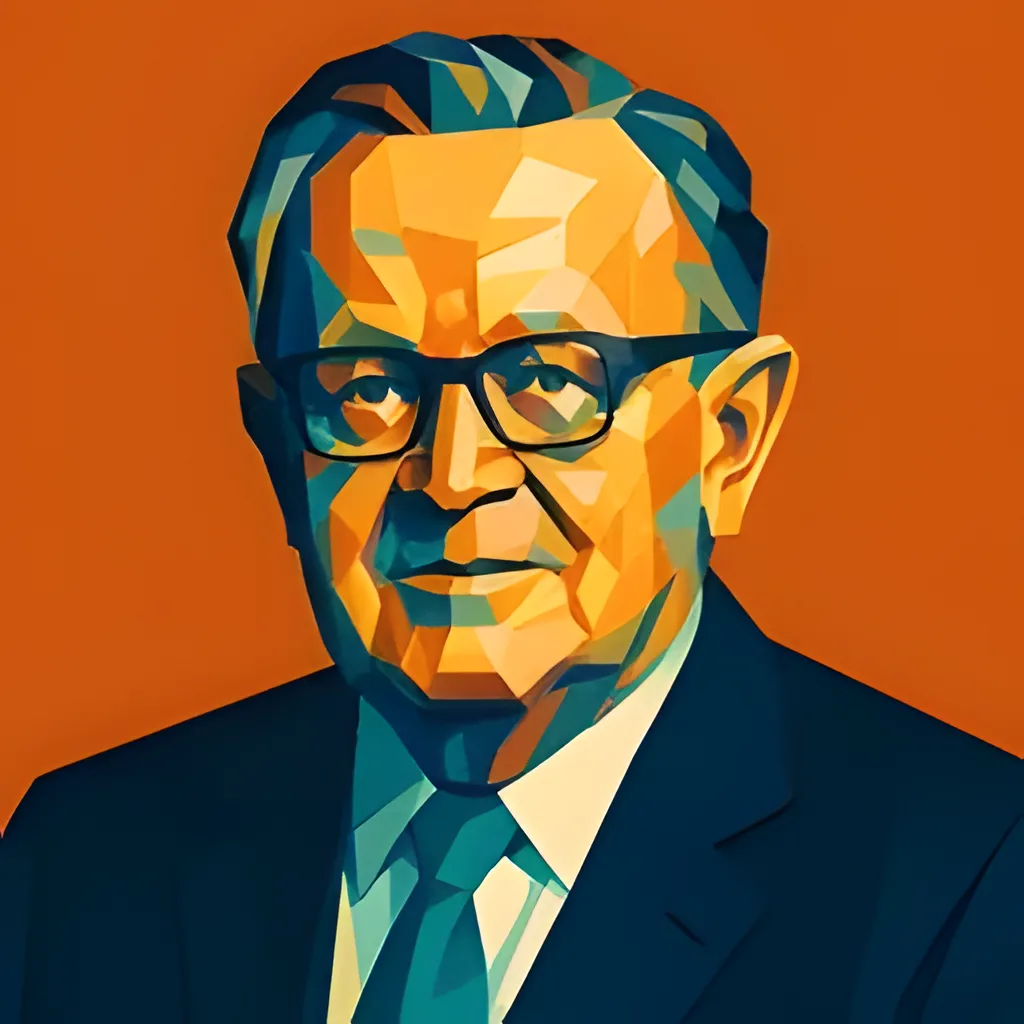
A life in brief
Martti Ahtisaari: life and timeline.
At two he was put on a train out of Viipuri as Soviet forces attacked Finland, and he never lived there again. Martti Ahtisaari trained as a primary school teacher in Oulu, worked for the YMCA in Karachi, and joined Finland's foreign ministry in 1965. He spent twelve years keeping the UN plan for Namibian independence alive, then became Finland's president. In 1999 he flew to Belgrade and told Slobodan Milošević the terms to end the Kosovo war could not be changed.
- 1937
Born in Viipuri
Born 23 June in Viipuri, in Finnish Karelia. His father, Oiva, of Norwegian descent, had changed the family name from Adolfsen to Ahtisaari in 1929.
- 1939
Evacuated
After the Soviet Union attacks Finland in the Winter War, the two-year-old is evacuated from Viipuri. Finland cedes the city in 1940; today it is Vyborg in Russia. He grows up in Kuopio and later Oulu.
- 1959
A primary school teacher
Qualifies as a teacher at the Oulu teacher-training college. The local YMCA, where he spent much of his youth, gives him an internationalist outlook.
- 1960
Karachi
Moves to Pakistan to work at a YMCA-linked training institution, staying until 1963. He later said the experience set him on an international path.
- 1965
Foreign ministry
After studying at the Helsinki School of Economics, joins Finland's Ministry for Foreign Affairs to work on development cooperation.
- 1973
Ambassador to Tanzania
At thirty-six becomes ambassador in Dar es Salaam, also accredited to Zambia, Somalia and later Mozambique, and meets southern Africa's liberation movements.
- 1977
UN Commissioner for Namibia
The United Nations appoints him Commissioner for Namibia, then occupied by South Africa. For twelve years he keeps the UN independence plan, Security Council Resolution 435, alive through Cold War deadlock.
- 1989
Leading UNTAG
Heads the UN Transition Assistance Group overseeing Namibia's move to independence. On 1 April SWAPO fighters cross from Angola and he authorises a limited release of South African forces; hundreds of fighters are killed, but the transition survives. Namibia becomes independent on 21 March 1990.
- 1994
President of Finland
Wins Finland's first direct presidential election as the Social Democratic candidate and takes office in March. Finland joins the European Union on 1 January 1995, and he hosts the 1997 Clinton–Yeltsin summit in Helsinki.
- 1999
Ending the Kosovo war
As EU envoy, he and Russia's Viktor Chernomyrdin present a ten-point peace plan to Slobodan Milošević in Belgrade. Milošević accepts it on 3 June and NATO halts its bombing a week later.
- 2005
Peace in Aceh
Having founded the Crisis Management Initiative after leaving office in 2000, he mediates five rounds of talks near Helsinki between Indonesia and the Free Aceh Movement. The Helsinki Memorandum of Understanding is signed on 15 August.
- 2008
Nobel Peace Prize
After drafting a UN plan for Kosovo's supervised independence, he receives the Nobel Peace Prize in Oslo on 10 December for efforts on several continents to resolve international conflicts. He dies in Helsinki on 16 October 2023, aged eighty-six.
Major achievements
Martti Ahtisaari: major achievements.
- 01
Namibian independence
From 1977 to 1990 he kept the UN process for Namibia ready, then led the 1989 UNTAG mission that oversaw a ceasefire, South Africa's withdrawal and free elections.
- 02
The Kosovo endgame
With Chernomyrdin and US Deputy Secretary of State Strobe Talbott, he helped forge a common Western–Russian position and delivered it to Milošević with no room to renegotiate, ending the 1999 war.
- 03
The Aceh peace
The 2005 Helsinki agreement ended nearly three decades of conflict in Aceh: the rebels dropped their demand for independence and Indonesia granted wide self-government, amnesty and international monitoring.
- 04
A blueprint for Kosovo
His 2007 plan for supervised independence, with strong protections for Serbs and other minorities, was blocked at the UN Security Council but shaped Kosovo's constitution after it declared independence in 2008.
- 05
Private peacemaking
The Crisis Management Initiative, founded in 2000 and now known as CMI – Martti Ahtisaari Peace Foundation, helped establish mediation outside formal state diplomacy as a field.
Turning points
Martti Ahtisaari: defining moments.
- 1939
The train out of Viipuri
He was one of hundreds of thousands of Karelians displaced in the war years. He opened his Nobel lecture with that childhood, and said it shaped how he understood conflict and loss.
- 1960–1963
Karachi
A young teacher from northern Finland working for the YMCA in Pakistan, he encountered a wider world that pulled him away from the classroom and towards development work and diplomacy.
- 1 April 1989
The hardest decision
With UNTAG not yet fully deployed and SWAPO fighters crossing the border, he had hours to choose between allowing South African forces to respond and watching the transition collapse. His decision cost lives and remained controversial, but Namibia reached independence within a year.
- 2000
A post-presidency of work
He chose not to seek a second term and founded the Crisis Management Initiative. Within five years it had delivered the Aceh peace agreement.
Peace is a question of will. All conflicts can be settled, and there are no excuses for allowing them to become eternal.
Nobel lecture, Oslo, 10 December 2008
What you’ll take away
Lessons from Martti Ahtisaari’s life.
- 01
Keep the file open
For years nothing moved on Namibia. Ahtisaari's contribution was to keep the UN plan ready so that when the politics finally shifted, the process could start immediately.
- 02
Nothing is agreed until everything is agreed
In Aceh he kept the talks confidential and refused to let either side bank concessions piecemeal, pushing both towards a complete settlement.
- 03
Bluntness can be a kindness
With Milošević he declined to renegotiate the text or even stay for dinner. Leaving no room to manoeuvre shortened a war.
If you liked Martti Ahtisaari…
Browse all → Anti-Apartheid Leader17 min
Nelson Mandela
The Freedom Fighter Who United a Nation
 President of Finland17 min
Alexander Stubb
Navigating Power and Politics
 Prime Minister of Finland15 min
Sanna Marin
The Young Leader Who Made History
 Supreme Court Justice19 min
Ruth Bader Ginsburg
The Quiet Voice That Changed America
FAQ
Frequently asked questions about Martti Ahtisaari.
Who was Martti Ahtisaari?
The tenth President of Finland and a Nobel Peace Prize-winning mediator. He served as president from 1994 to 2000 and helped bring peace or political settlements in Namibia, Kosovo and Aceh.
Why did Martti Ahtisaari win the Nobel Peace Prize?
For decades of conflict resolution on several continents. The 2008 prize recognised his work in Namibia, Kosovo, Aceh and elsewhere over more than three decades.
What did Martti Ahtisaari do in Namibia?
He led the United Nations effort to bring Namibia to independence. Appointed UN Commissioner for Namibia in 1977, he headed the UNTAG mission in 1989–1990 that oversaw South Africa's withdrawal and the elections that led to independence on 21 March 1990.
What was Martti Ahtisaari's role in Kosovo?
He helped end the 1999 war and later designed Kosovo's status plan. As EU envoy he and Russia's Viktor Chernomyrdin presented the peace terms Milošević accepted in June 1999; in 2007 his UN plan proposed supervised independence for Kosovo.
Which party did Martti Ahtisaari represent?
The Social Democratic Party of Finland. He was its candidate in the 1994 presidential election, the first in Finland decided by direct popular vote.
What is the Martti Ahtisaari Peace Foundation?
The organisation he founded in 2000 as the Crisis Management Initiative. Now called CMI – Martti Ahtisaari Peace Foundation, it is a Helsinki-based NGO that mediates and supports peace processes; it organised the 2005 Aceh talks.
How did Martti Ahtisaari die?
He died on 16 October 2023 in Helsinki, aged eighty-six. His family had announced in 2021 that he had advanced Alzheimer's disease and had withdrawn from public life; he was given a state funeral on 10 November 2023.
Published by Lyfestori, from Duck Pond Ventures Oy. About us and how to report a correction.
19 min · one sitting