Elizabeth Holmes
The Rise and Fall of Silicon Valley's Youngest Billionaire
Born Elizabeth Anne Holmes on 3 February 1984 in Washington, D.C., Elizabeth Holmes dropped out of Stanford at nineteen to found Theranos, promising hundreds of medical tests from a single drop of blood. The technology never worked, and in 2022 she was convicted of defrauding investors and sentenced to more than eleven years in prison.
- 22 min listen
- Theranos
- Convicted of fraud
- Silicon Valley
Elizabeth Holmes’s full 22 min audio biography, The Rise and Fall of Silicon Valley's Youngest Billionaire, is available on Lyfestori for iOS. Listen to a free preview below.
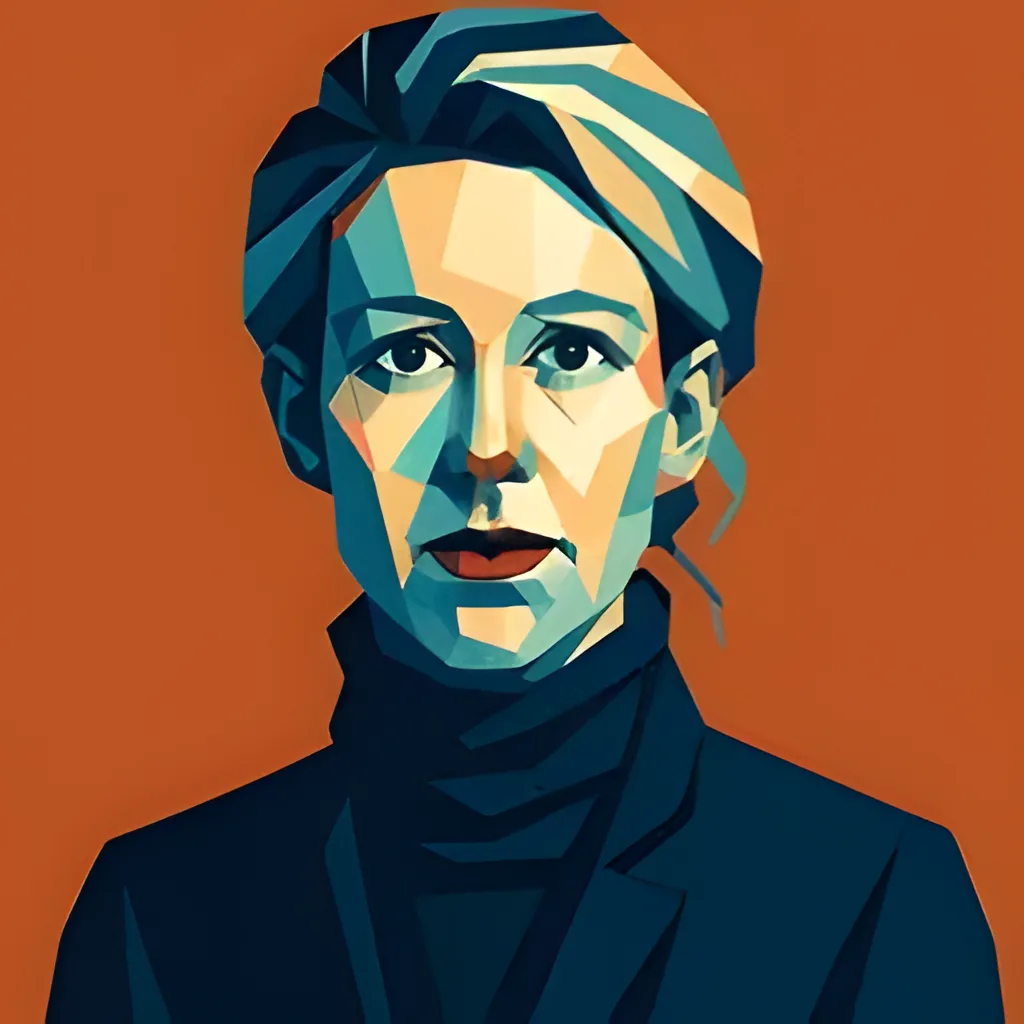
A life in brief
Elizabeth Holmes: life and timeline.
At nineteen she dropped out of Stanford and spent her college tuition savings on a company that promised to run hundreds of medical tests from a single drop of blood. Elizabeth Holmes wore Steve Jobs's black turtleneck, spoke in a startlingly low register, and filled her board with secretaries of state and generals — not one of them a doctor. By thirty she was worth four and a half billion dollars on paper. The machine never worked. In 2022 a jury convicted her of defrauding the investors who believed her.
- 1984
Born in Washington D.C.
Born 3 February. Her father worked for the State Department and USAID, her mother as a congressional committee staffer. She grew up on the family story of a great-great-grandfather who helped found Fleischmann's Yeast.
- 2002
Stanford
Arrives to study chemical engineering. As a freshman she works in Professor Channing Robertson's lab on detecting the SARS virus — her first exposure to medical diagnostics.
- 2004
Dropping out
Leaves Stanford in April after three semesters, aged nineteen. Her parents hand over roughly a hundred thousand dollars saved for tuition as seed money. She incorporates Real-Time Cures, soon renamed Theranos — therapy plus diagnosis.
- 2005
First money
Theranos has raised over six million dollars, mostly from wealthy individuals and family offices, and soon from mainstream venture firms including Draper Fisher Jurvetson. Robertson joins as an advisor, lending academic cover.
- 2013
Walgreens and the covers
A deal puts Theranos testing centres inside drugstores; Safeway spends over three hundred million dollars remodelling for wellness centres. She appears on the covers of Fortune, Forbes and Inc., and the New Yorker calls her the 'next Steve Jobs'.
- 2014
Billionaire at thirty
Forbes puts her net worth at 4.5 billion dollars — the world's youngest self-made female billionaire — on a nine billion dollar valuation. Almost no journalist asks how the technology works.
- 2015
The exposé
On 15 October the Wall Street Journal publishes John Carreyrou's investigation: the Edison ran only a fraction of the tests offered, and results were potentially inaccurate. Holmes goes on television to call the reporting false and misleading.
- 2016
Collapse
Regulators find deficiencies posing immediate risk to patients. Walgreens cancels in June and closes its Arizona centres; in July CMS revokes the main lab licence and bars her from operating a certified lab for two years. Forbes revises her net worth to zero.
- 2018
Charges
The SEC charges her with fraud in March; she settles without admitting wrongdoing. In June she and Ramesh 'Sunny' Balwani are indicted on federal wire fraud and conspiracy charges.
- 2021
Trial
Her criminal trial opens in August after delays from the pandemic and her pregnancy. It runs four months. Her defence argues she believed in the technology and was manipulated by Balwani, her partner in business and in private.
- 2022
Guilty
On 3 January a jury convicts her on four counts of defrauding investors, acquits her on the patient charges, and hangs on three more. In November she is sentenced to eleven years and three months.
- 2023
Prison
Begins her sentence in May at a minimum-security federal prison in Texas. That month the court orders her and Balwani to repay 452 million dollars to defrauded investors.
Major achievements
Elizabeth Holmes: major achievements.
- 01
A board beyond question
Henry Kissinger, George Shultz, James Mattis, Sam Nunn. She recruited statesmen and generals rather than doctors or scientists — and their names did the work that evidence should have.
- 02
The retail deals
Walgreens put Theranos inside its drugstores in 2013; Safeway spent over three hundred million dollars remodelling for wellness centres. If corporations this large were betting their reputations, the technology had to be real.
- 03
Youngest self-made female billionaire
Forbes valued her stake at 4.5 billion dollars in 2014, when she was thirty, off a nine billion dollar round. Two years later the same magazine revised the figure to zero.
- 04
Money from nothing
A nineteen-year-old with no business experience raised over six million by 2005, writing patents at night and pitching by day, then drew in established venture firms.
- 05
An unintended legacy
The scandal tightened everything it touched: more scrutiny of startups making bold technical claims, warier investors in medical devices, stronger FDA oversight of laboratory-developed tests, and journalists less willing to accept trade secrets as an answer.
Turning points
Elizabeth Holmes: defining moments.
- 2004
Leaving Stanford at nineteen
Gates and Jobs had dropped out, and she decided the academic path was too slow for her timeline. Her parents were sceptical, then gave her the tuition fund. She left with three semesters of chemical engineering, no business experience, and total conviction.
- 2013–2014
Becoming the story
The black turtleneck, the deep voice some former employees later said was artificially lowered, the refusal to smile. She built a persona so legible that reporters covered the founder instead of the device — and the persona became the evidence.
- 2015
A reporter gets a tip
John Carreyrou started calling former employees. Theranos answered with expensive law firms, and whistleblowers Tyler Shultz and Erika Cheung were threatened with lawsuits — Shultz opposed by his own grandfather on the board. The reporting ran anyway on 15 October.
- 2022
The verdict
Four counts of defrauding investors; acquitted on defrauding patients. Silicon Valley read it as a boundary being drawn: a charismatic founder with a board full of statesmen could still be held to account when the claims crossed into lies.
What you’ll take away
Lessons from Elizabeth Holmes’s life.
- 01
Secrecy is a claim, not a defence
She said technical details would let competitors copy her. Teams were siloed so no one person understood the whole system, and demonstrations showed the sleek box but never the test. The thing being protected was the absence of a product.
- 02
Prestige is not verification
Two former secretaries of state, a general and a senator vouched for a blood analyser none of them could evaluate. Credibility got borrowed from people whose expertise was in something else entirely.
- 03
Some fields have no shortcuts
Move fast and break things is survivable in software. In diagnostics the broken thing is a potassium reading a doctor is about to act on. Medicine tests before it ships, and that order is not bureaucracy.
Did you know
Facts about Elizabeth Holmes.
- 01
Did you know that Elizabeth Holmes dropped out of Stanford University at just nineteen years old to found her blood-testing company, Theranos, using her college tuition money as seed funding?
- 02
Did you know that Elizabeth Holmes modeled her public image after Steve Jobs, notably wearing black turtlenecks and speaking in an unusually deep voice?
- 03
Did you know that despite being valued at $9 billion and making Holmes the world's youngest self-made female billionaire, Theranos's core technology, "the Edison," frequently broke down and produced inaccurate results?
If you liked Elizabeth Holmes…
Browse all → AI Executive16 min
Sam Altman
Silicon Valley's AI Pioneer
 Venture Capitalist15 min
Peter Thiel
The Contrarian Billionaire Who Shaped Silicon Valley
 Economist17 min
Adam Smith
The Father of Modern Economics Who Shaped How We Think About Wealth and Society
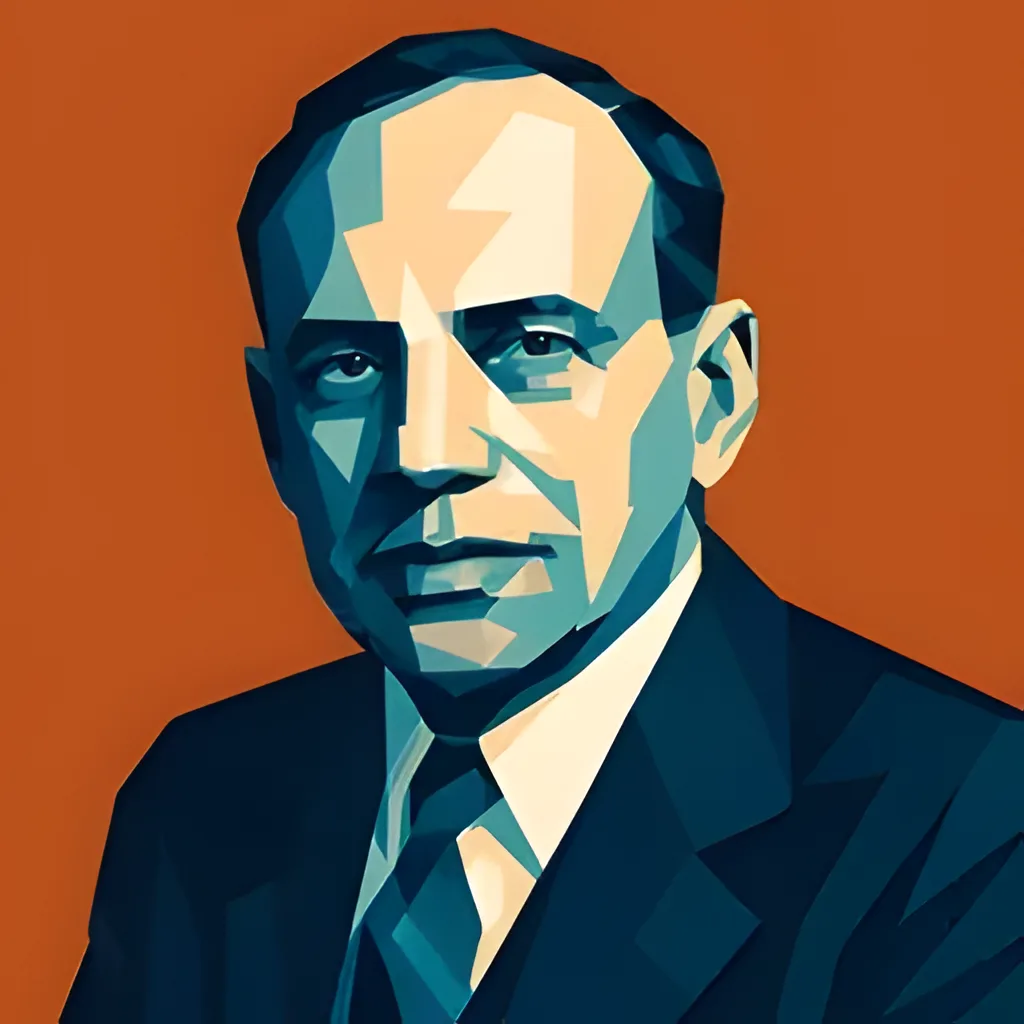 Value Investor19 min
Benjamin Graham
The Father of Value Investing
FAQ
Frequently asked questions about Elizabeth Holmes.
Where is Elizabeth Holmes from?
She was born on 3 February 1984 in Washington, D.C., and her family later moved to Houston, Texas, where she went to high school before enrolling at Stanford.
Where did Elizabeth Holmes go to college?
Stanford University, where she studied chemical engineering from 2002. She left during her sophomore year, at nineteen, to work full-time on the company that became Theranos, funding it at first with money her parents had saved for her education.
What was Theranos supposed to do?
Replace conventional blood draws. Its Edison machine — a desktop device named after Thomas Edison — was said to run over two hundred tests from a few drops taken by finger prick and collected in vials she called nanotainers, in hours rather than days and far more cheaply than a lab.
Did the technology ever work?
Not as promised. The Edisons broke down and gave inconsistent results, and failed quality control. To serve the retail deals, Theranos ran most tests on other companies' conventional machines, diluting the tiny finger-prick samples or quietly taking full blood draws instead.
What was Elizabeth Holmes convicted of?
On 3 January 2022 a jury found her guilty on four counts of fraud and conspiracy for defrauding investors. She was acquitted of the charges relating to patients, and the jury deadlocked on three further counts. She was sentenced in November 2022 to eleven years and three months.
Who exposed Theranos?
Wall Street Journal reporter John Carreyrou, whose investigation ran on 15 October 2015 after a tip earlier that year. It rested on insiders — notably Tyler Shultz, a lab employee and grandson of board member George Shultz, and Erika Cheung, who had seen quality control failures and unvalidated procedures.
Where is she now?
Serving her sentence at a minimum-security federal prison in Texas, which she entered in May 2023. That month a court ordered her and Sunny Balwani jointly to repay 452 million dollars to investors. Balwani was tried separately, convicted on all counts, and sentenced to nearly thirteen years.
Published by Lyfestori, from Duck Pond Ventures Oy. About us and how to report a correction.
22 min · one sitting