Michael Schumacher
The Racing Legend Who Dominated Formula One
Born on 3 January 1969 near Cologne, Germany, the son of a bricklayer who ran the local kart track, Michael Schumacher won seven Formula One world championships — five in a row with Ferrari — before a skiing accident in December 2013 left him with a severe brain injury.
- 16 min listen
- Seven world championships
- Formula One
- Ferrari
Michael Schumacher’s full 16 min audio biography, The Racing Legend Who Dominated Formula One, is available on Lyfestori for iOS. Listen to a free preview below.
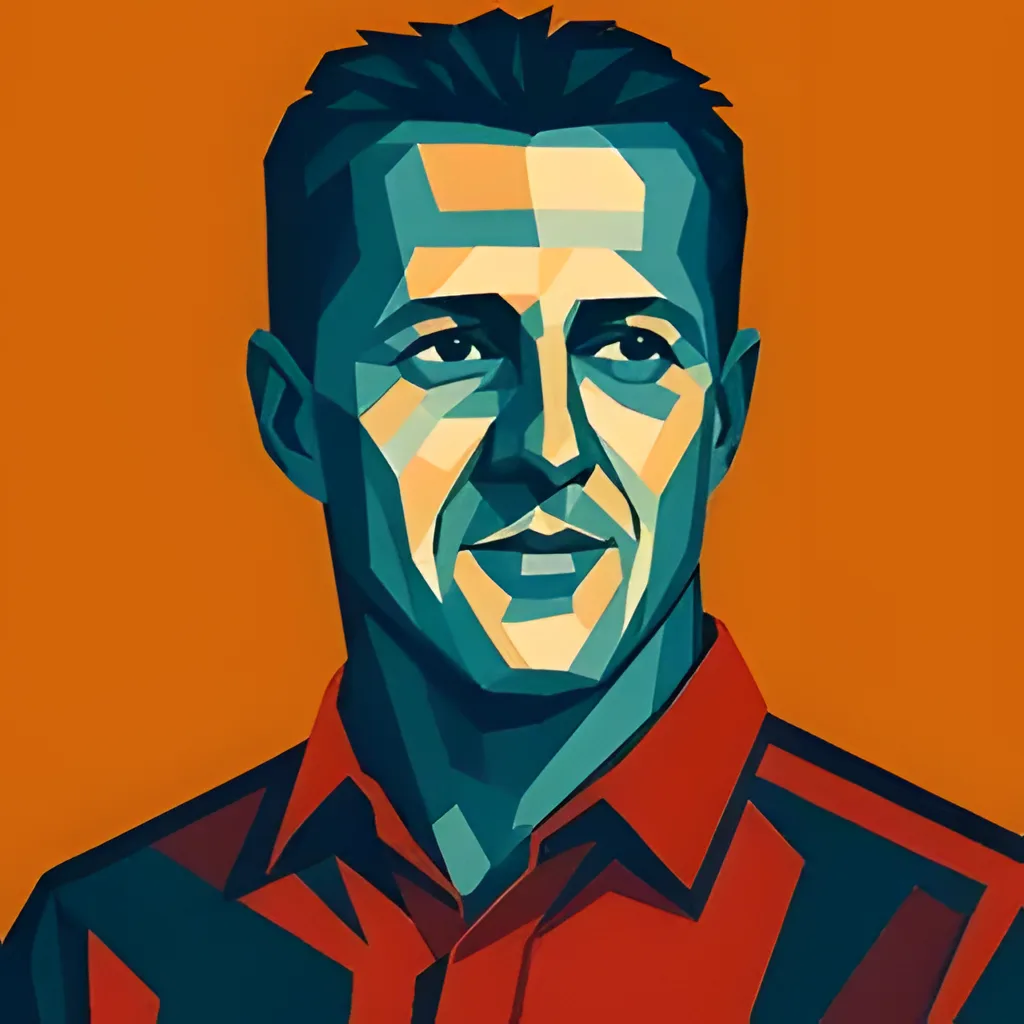
A life in brief
Michael Schumacher: life and timeline.
His father built him a go-kart from spare parts when he was four, and managed the local track. Michael Schumacher was winning karting races by six, and reached Formula One in 1991 only because Jordan's regular driver was in prison. He qualified seventh at Spa in a car he had never tested, ahead of his experienced teammate. He then left a winning team for a Ferrari that had not taken a drivers' title in seventeen years — and won five straight championships with it.
- 1969
Born in Hürth
Born 3 January near Cologne, to a bricklayer who also managed the local kart track and an office clerk. At four his father builds him a go-kart from spare parts; by six he is winning local competitions.
- 1984
German Junior Karting Champion
Wins the title, and again in 1985. His parents work multiple jobs to pay for equipment and travel. He spends hours studying kart setups, engines and racing lines.
- 1990
German Formula Three champion
After moving into single-seaters in 1988 — winning the Formula König title and finishing runner-up in both the German and European Formula Ford 1600 series — he takes the F3 championship and wins the Macau Grand Prix after a hard-fought duel with Mika Häkkinen.
- 1991
A debut by accident
Jordan needs a driver for the Belgian Grand Prix after Bertrand Gachot is imprisoned. Schumacher qualifies seventh at Spa in a car he has never tested, ahead of his more experienced teammate, then retires with a failed clutch. One race later he is at Benetton.
- 1992
First Grand Prix win
Wins at Spa — the track where he debuted — becoming the first German to win a Formula One race since Jochen Mass in 1975. He finishes third in the championship.
- 1994
First world title
Eight wins, and a championship decided by a single point at Adelaide after a collision with Damon Hill eliminated them both. The season is overshadowed by Ayrton Senna's death at the San Marino Grand Prix.
- 1995
Second title
Nine wins and a dominant, uncontroversial championship. At Spa he starts sixteenth and charges through the field in mixed conditions to win.
- 1996
Ferrari
Leaves a winning team for one that has not taken a drivers' title since 1979, with poor car design and internal politics. He works on car development, strategy, and the team's fitness and preparation methods.
- 2000
Ferrari's first title in 21 years
Nine victories and an emotional championship clinched at Suzuka — after disqualification from the 1997 championship for colliding with Jacques Villeneuve, and losing 1998 to Häkkinen.
- 2004
Seventh championship
Second at Spa is enough to clinch a record-extending seventh title, capping five consecutive championships and 48 wins from 85 starts since 2000. In 2002 alone he had won eleven of seventeen races.
- 2012
The comeback ends
He had retired from Ferrari in 2006 and returned with Mercedes in 2010 alongside Nico Rosberg. The car was not competitive, but his final podium came at Valencia in 2012. He retires with 91 wins, seven titles and 155 podiums.
- 2013
The skiing accident
On 29 December, skiing with his family in the French Alps, he strikes a rock and suffers severe brain trauma. His helmet, doctors said, saved his life. After months in a medically induced coma he moves to a rehabilitation facility in Switzerland.
Major achievements
Michael Schumacher: major achievements.
- 01
Seven world championships
Two with Benetton (1994, 1995) and five consecutive with Ferrari (2000–2004) — a period of dominance Formula One had never seen.
- 02
91 Grand Prix victories
Plus 155 podium finishes, across a career running from 1991 to 2012. The records stood as benchmarks for years.
- 03
Rebuilding Ferrari
He joined a team that had not won a drivers' title since 1979 and, working with Ross Brawn and Rory Byrne, helped turn it into a winning machine — contributing to car development, strategy, fitness and preparation, not just driving.
- 04
The 1995 Belgian Grand Prix
Started sixteenth and won in challenging mixed conditions — one of the drives most often cited as evidence of his skill in difficult weather.
- 05
Technical feedback as a weapon
He communicated with his engineers with extraordinary precision, memorised every corner of every track, and worked setups until the car matched what he needed. It made him invaluable beyond his lap times.
- 06
Charitable giving
Millions donated to education and disaster relief, including ten million dollars after the 2004 Indian Ocean tsunami — though he typically preferred to keep it private.
Turning points
Michael Schumacher: defining moments.
- 1991
Someone else's misfortune
Bertrand Gachot's imprisonment after an incident with a London taxi driver left Jordan needing a driver for Spa. Eddie Jordan took a chance on an unknown German on the strength of his Formula Three results. Schumacher qualified seventh in a car he had never driven, ahead of his experienced teammate. The clutch failed at the start — and it did not matter. One race later he was at Benetton.
- 1994
A title, and an argument that never ended
The championship was decided at Adelaide by a collision with Damon Hill that put both cars out and left Schumacher champion by one point. Whether it was deliberate is still argued. What is not is that he had won eight races that season.
- 1996
Leaving a winning team
A double world champion left Benetton for a Ferrari with a poor car, internal politics, and no drivers' title since 1979. Many questioned why. He then spent four frustrating years — disqualified from the 1997 championship after colliding with Villeneuve, beaten to the 1998 title by Häkkinen — before it worked.
- 2000–2004
Total dominance
Ferrari's first drivers' title in 21 years, then four more: 48 wins in 85 starts. In 2002 he won eleven of seventeen races, often by large margins — so completely that some fans and media complained the sport had stopped being a contest.
- 2013
The accident
Skiing with his family in the French Alps on 29 December, he hit a rock. The helmet saved his life; the impact caused severe brain trauma. Months in a medically induced coma, then a rehabilitation facility in Switzerland. His wife Corinna has kept his condition private ever since. The man who had seemed invincible on the racetrack met the thing preparation could not cover.
What you’ll take away
Lessons from Michael Schumacher’s life.
- 01
Be ready for the phone call
The Spa seat opened because another driver went to prison. He had never tested the car and qualified seventh — on the back of years spent studying setups, engines and racing lines that nobody was watching.
- 02
Fix the team, not just your lap time
At Ferrari he worked on car development, strategy, fitness and preparation methods. Five titles came from a driver who treated the whole organisation as the thing to optimise.
- 03
Choose the harder project
Leaving Benetton for a broken Ferrari made no sense on paper. It took four frustrating years, and produced the most dominant run in the sport's history.
Did you know
Facts about Michael Schumacher.
- 01
Did you know that Michael Schumacher won an unprecedented five consecutive Formula One World Championships from 2000 to 2004 while racing for Ferrari?
- 02
Did you know that Schumacher's brother, Ralf, was also a Formula One driver, making them the first siblings to win races in F1 history?
- 03
Did you know that in 1999, Schumacher broke his leg in a severe crash at the British Grand Prix, missing 98 days of the season, yet still returned to help Ferrari win the Constructors' title?
If you liked Michael Schumacher…
Browse all →
FAQ
Frequently asked questions about Michael Schumacher.
Is Michael Schumacher still alive?
Yes. Since his skiing accident in Méribel, France, in December 2013, he has been cared for privately by his family, who have released almost no details about his condition and he has not been seen in public.
Where did Michael Schumacher grow up?
In Kerpen, near Cologne, where his father Rolf managed the local kart track. Michael was driving a home-built kart at four and became German junior karting champion in 1984.
How many championships did Michael Schumacher win?
Seven — two with Benetton in 1994 and 1995, and five consecutive with Ferrari from 2000 to 2004. He also won 91 Grand Prix and finished on the podium 155 times across a career from 1991 to 2012.
How did Schumacher get into Formula One?
By accident. In August 1991 the Jordan team needed a replacement for the Belgian Grand Prix after Bertrand Gachot was imprisoned following an incident with a taxi driver in London. Eddie Jordan gambled on a relatively unknown German with strong Formula Three results. Schumacher qualified seventh in a car he had never tested.
Why was the 1994 championship controversial?
It was decided at the final race in Adelaide, where a collision with Damon Hill eliminated both drivers and left Schumacher champion by a single point. Some questioned whether the collision was intentional. He had won eight races that season.
What happened to Michael Schumacher?
On 29 December 2013, skiing with his family in the French Alps, he suffered a severe head injury after hitting a rock. He was wearing a helmet, which doctors said saved his life, but the impact caused significant brain trauma. After months in a medically induced coma he was moved to a rehabilitation facility in Switzerland. His family, led by his wife Corinna, has maintained strict privacy about his condition.
Why did Schumacher leave Benetton for Ferrari?
Ferrari had not won a drivers' championship since 1979 and was struggling with poor car design and internal politics. Schumacher saw an opportunity to build something special with the sport's most famous team. It took four years, and then produced five consecutive titles.
Published by Lyfestori, from Duck Pond Ventures Oy. About us and how to report a correction.
16 min · one sitting