Tony Hawk
The Skateboard Legend Who Transformed a Sport Into a Global Phenomenon
Born Anthony Frank Hawk on 12 May 1968 in San Diego, Tony Hawk turned pro at fourteen, ruled vert skating for over a decade, landed the first 900 in competition at the 1999 X Games, and took skateboarding mainstream with the Tony Hawk's Pro Skater video games.
- 15 min listen
- First to land the 900
- Vert skating
- The Skatepark Project
Tony Hawk’s full 15 min audio biography, The Skateboard Legend Who Transformed a Sport Into a Global Phenomenon, is available on Lyfestori for iOS. Listen to a free preview below.
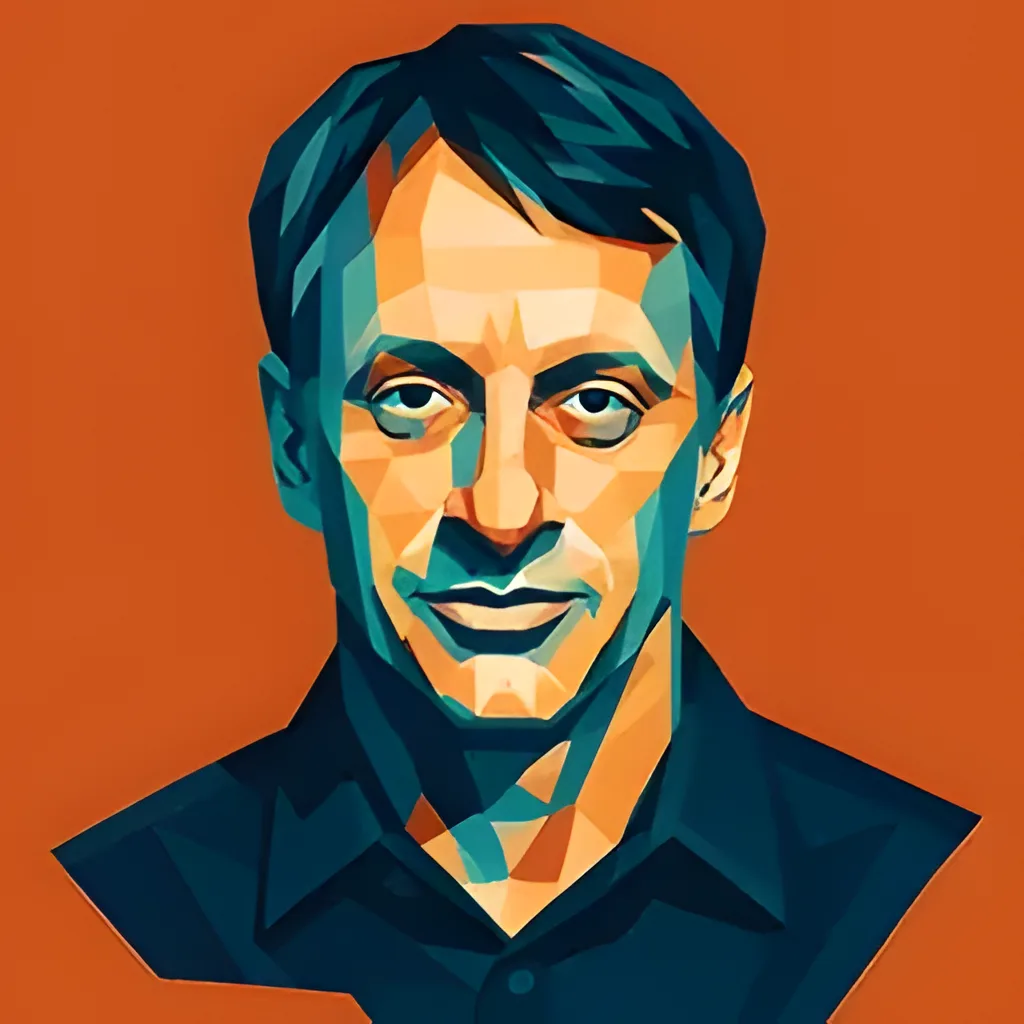
A life in brief
Tony Hawk: life and timeline.
His brother handed him a blue fiberglass Bahne skateboard when he was nine, mostly to burn off a hyperactive kid's energy. Tony Hawk turned pro at fourteen, won 73 professional contests, and held the world's top vert ranking for twelve straight years — then watched the sport collapse around him. In the early 1990s, the best-known skateboarder alive was living on about $5 a day for food and cashing royalty checks worth pennies. He started a skateboard company anyway.
- 1968
Born in San Diego
Born Anthony Frank Hawk on 12 May to Nancy and Frank Hawk, the youngest of four. His father, a retired Navy officer, would later co-found and run the National Skateboard Association.
- 1977
The blue Bahne
At nine, his older brother Steve gives him a blue fiberglass Bahne skateboard. His parents had been struggling to channel an intense, almost obsessive energy. He starts spending hours in the driveway.
- 1982
Pro at fourteen
He joins the Powell Peralta team and the Bones Brigade, alongside Steve Caballero, Mike McGill and Rodney Mullen. At the time, fewer than 100 skateparks survive in the entire United States.
- 1983
Top of the vert world
By 1983–84 he is recognised as one of the best vert skaters alive, appearing in influential videos like The Bones Brigade Video Show and Future Primitive.
- 1992
Birdhouse
With skateparks closing and sponsorships drying up, he co-founds Birdhouse Projects with Per Welinder — named for his nickname, the Birdman. Starting a skate brand at the sport's economic low point is a bet that the culture will come back.
- 1995
The X Games
ESPN launches the X Games and skateboarding returns to mainstream television. He becomes one of its biggest draws, collecting gold medals.
- 1999
The 900
At the X Games in San Francisco, with his competitive run already over, he keeps attempting two and a half rotations. After numerous failures he lands it — the first person ever to do so in competition.
- 1999
Pro Skater
Activision releases the first Tony Hawk's Pro Skater the same year. It is an immediate sensation, and introduces skateboarding to millions of kids who had never stood on a board.
- 2002
The foundation
He establishes the Tony Hawk Foundation to help underserved communities build public skateparks — the safe, legal places to skate he knows most kids don't have.
- 2020
The Skatepark Project
The foundation is renamed The Skatepark Project. It has now supported more than 700 public skatepark projects across the United States.
- 2021
Olympic skateboarding
Skateboarding makes its Olympic debut at the delayed Tokyo 2020 Games. The country that had under 100 skateparks when he turned pro now has well over 3,500.
Major achievements
Tony Hawk: major achievements.
- 01
The 900
Two and a half rotations in the air, a trick many considered impossible. He landed it at the 1999 X Games after repeated failures, the first person ever to do it in competition.
- 02
73 professional contests
He won 73 pro contests and held the world's top vert ranking for 12 consecutive years — one of the longest reigns in action-sports history.
- 03
Tony Hawk's Pro Skater
The franchise has sold more than 30 million copies and generated over a billion dollars, making skateboarding legible to a generation that had never touched a board.
- 04
The Skatepark Project
The nonprofit he founded in 2002 has supported more than 700 public skateparks in underserved communities across the US.
- 05
A trick vocabulary
Beyond the 900, he is credited with inventing or popularising dozens of vert tricks and variations, expanding what is possible on transition.
- 06
Skateboarding's respectability
He took an activity associated with rebellion and counterculture and made it something parents would drive their kids to — a shift that ends at the Olympics.
Turning points
Tony Hawk: defining moments.
- 1977
A hand-me-down board
Steve Hawk gave his nine-year-old brother a blue fiberglass Bahne. The obsessive intensity his parents couldn't place suddenly had somewhere to go, and the driveway hours started immediately.
- 1982
Turning pro into a dying market
At fourteen he joined Powell Peralta and the Bones Brigade. Within a few years he was the best vert skater in the world — and the sport underneath him was disappearing.
- 1991–1992
$5 a day
Skateparks closed, sponsors vanished, royalty checks came in pennies. The most famous skateboarder alive was budgeting about $5 a day for food. Instead of leaving, he co-founded Birdhouse and kept inventing tricks for an audience that had gone home.
- 1999
The year everything landed
The 900 at the X Games and the first Pro Skater game arrived in the same twelve months. One proved what the sport could be; the other put it in living rooms. Skateboarding stopped being niche.
What you’ll take away
Lessons from Tony Hawk’s life.
- 01
Build during the bust
He started Birdhouse when skateparks were closing and pros were quitting. Everyone else read the decline as an ending; he read it as the cheapest possible moment to build for the recovery.
- 02
Keep going after the run is over
His competitive run at the 1999 X Games had already finished when he landed the 900. There were no points left to win. He was attempting it because it was the thing he wanted to do.
- 03
Leave the ramp behind you
He turned fame into 700-plus public skateparks for kids without a legal place to skate — building the infrastructure he had to be driven across Southern California to find.
Did you know
Facts about Tony Hawk.
- 01
Did you know that Tony Hawk bought his first house while he was still a senior in high school using his earnings as a professional skateboarder?
- 02
Did you know that Hawk was the first person in history to land a '900'—a two-and-a-half revolution aerial spin—at the 1999 X Games?
- 03
Did you know that Tony Hawk often goes completely unrecognized in public, frequently sharing funny stories on social media about people telling him he 'looks a lot like Tony Hawk'?
FAQ
Frequently asked questions about Tony Hawk.
Why is Tony Hawk called the Birdman?
The nickname plays on his surname and on the way he flew high above the ramp — and on the many aerial tricks he invented. It became his brand: his skateboard company is called Birdhouse.
What is Tony Hawk's real name?
Anthony Frank Hawk. He was born on 12 May 1968 in San Diego, California, the youngest of four children; his father Frank later co-founded the National Skateboard Association.
What tricks did Tony Hawk invent?
Dozens of vert tricks, including the Madonna and the Stalefish. He is best known for the 900 — two and a half spins in the air — which he became the first skater to land in competition, at the 1999 X Games after eleven attempts.
What is the 900, and when did Tony Hawk land it?
A 900-degree spin — two and a half full rotations in the air. Many considered it impossible. He landed it at the 1999 X Games in San Francisco after numerous failed attempts, becoming the first person to do it in competition. His competitive run had already ended; he kept trying anyway.
How successful were the Tony Hawk video games?
The first Tony Hawk's Pro Skater was released by Activision in 1999 and became an immediate hit, helped by a punk and hip-hop soundtrack. The franchise has since sold more than 30 million copies and generated over a billion dollars in revenue.
Was Tony Hawk always wealthy from skating?
No. When skateboarding's popularity collapsed in the late 1980s and early 1990s, skateparks closed and sponsorships dried up. He has said that in the early '90s he was down to about $5 a day for food and received royalty checks worth only pennies.
What is The Skatepark Project?
The nonprofit he founded in 2002 as the Tony Hawk Foundation, renamed in 2020. It helps underserved communities build public skateparks and has supported more than 700 projects across the United States.
Does Tony Hawk still skate?
Yes. He competed well into his thirties, long past when most pros retire, and still skates and learns new tricks in his fifties — though he acknowledges his body can't take the punishment it once could.
Published by Lyfestori, from Duck Pond Ventures Oy. About us and how to report a correction.
15 min · one sitting