Chamath Palihapitiya
Betting on the Future
Born in Sri Lanka in 1976 and raised on welfare in Ottawa after his family claimed refugee status, Chamath Palihapitiya studied engineering at Waterloo, led user growth at Facebook, founded Social Capital, championed SPACs, and co-hosts the All-In podcast.
- 16 min listen
- Social Capital founder
- Facebook growth
- SPACs
Chamath Palihapitiya’s full 16 min audio biography, Betting on the Future, is available on Lyfestori for iOS. Listen to a free preview below.
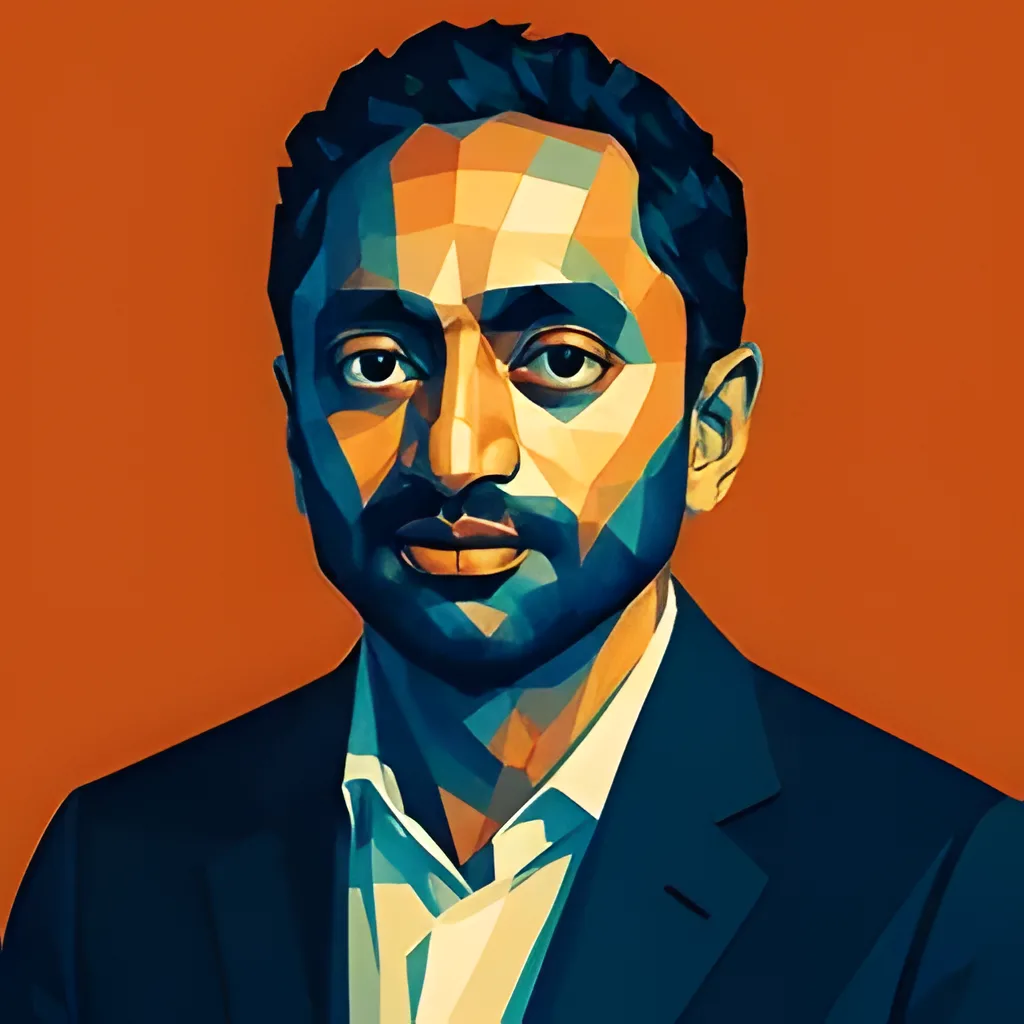
A life in brief
Chamath Palihapitiya: life and timeline.
Chamath Palihapitiya's family came to Ottawa on his father's diplomatic posting and stayed as refugees when it was revoked. His father took janitorial work, his mother cleaned houses, and the family lived on welfare. He traded stocks with his Burger King wages, took an engineering degree at Waterloo, and ran user growth at Facebook from 50 million users toward a billion. Then he called the feedback loops he had built a destroyer of society — and spent the next decade selling retail investors a shortcut into the companies he backed.
- 1976
Born in Sri Lanka
Born to a modest family; his father is a civil servant. When he is five the family moves to Ottawa on a diplomatic posting, and when the posting is revoked they claim refugee status rather than return to a country descending into civil war.
- 1999
Waterloo
Graduates from the University of Waterloo's electrical engineering program. As a teenager he had worked at Burger King and used the earnings to trade stocks.
- 2000
Leaving for America
After a spell as a derivatives trader at BMO Nesbitt Burns, he moves to the U.S. to join Winamp, soon acquired by AOL. There he is put in charge of AOL Instant Messenger, the dominant force in online communication.
- 2007
Facebook
Joins as Vice President of User Growth. Facebook has around 50 million users. The goal is a billion.
- 2011
Leaves Facebook
Departs with the platform rocketing toward a billion users, a multi-millionaire — and with a seed of doubt about what he has helped build.
- 2011
Founds Social Capital
Starts his own venture firm with a declared mission to advance humanity by solving the world's hardest problems. Early backers of Slack, Box and SurveyMonkey.
- 2018
Going all in on himself
Frustrated with the traditional VC model, he stops taking outside money and turns Social Capital into a technology holding company managing chiefly his own fortune. Several partners depart.
- 2019
The SPAC spree begins
Launches a series of blank-check companies tickered IPOA through IPOF and merges with Virgin Galactic, letting anyone invest in space tourism. The stock soars.
- 2020
The boom
With rates at zero and retail investors flush with stimulus, he takes Opendoor public, merges with Clover Health and helps SoFi go public. He is everywhere — TV, Twitter, the new All-In Podcast — and is hailed as 'The SPAC King'.
- 2021
Cashing out of Virgin Galactic
In March he discloses selling roughly 6.2 million shares — about 40% of his position — for some $213 million, saying he needed liquidity for new ventures. Critics call it cashing out while retail investors stay exposed.
- 2022
'Below my line'
In January, asked on the All-In Podcast about the abuses against China's Uyghur minority, he says nobody cares. The backlash is immediate; the Warriors distance themselves and he apologises. Meanwhile rates rise and the SPAC stocks collapse.
Major achievements
Chamath Palihapitiya: major achievements.
- 01
Facebook's growth engine
Joined at around 50 million users and led the team that pioneered 'growth hacking' — testing button colours, email wording and friend suggestions, building 'People You May Know', and translating the site into dozens of languages.
- 02
Social Capital's early bets
The firm he founded in 2011 was an early backer of Slack, Box and SurveyMonkey, while he argued publicly that venture capital was too busy funding incremental software to fund anything that mattered.
- 03
Making SPACs a phenomenon
From 2019 he became the face and chief evangelist of the blank-check boom, taking Virgin Galactic, Opendoor, Clover Health and SoFi public and arguing that the traditional IPO was an insider's game.
- 04
A voice with reach
Through Twitter, CNBC and the All-In Podcast with Jason Calacanis, David Sacks and David Friedberg, he built an audience that still follows his views on AI, geopolitics and monetary policy.
Turning points
Chamath Palihapitiya: defining moments.
- Childhood
From diplomat's household to welfare
When his father's posting was revoked, the family chose refugee status over a country sliding into civil war. His father took janitorial work and his mother became a housekeeper. He was a brown kid in a white city and a poor kid in a middle-class school, and has spoken about the chip on his shoulder it left him — a need not simply to be rich, but never again to be at the mercy of outside forces.
- 2007–2011
Building the machine
At Facebook he treated user growth as a metrics problem. Everything was tested; only the number mattered; it worked spectacularly. He left rich enough to stop being an employee and start being a principal.
- After Facebook
The builder turns critic
In a talk at Stanford's Graduate School of Business he said the dopamine-driven feedback loops he had helped create were destroying how society works, and spoke of his tremendous guilt. The man who perfected engagement now warned against it — a duality that came to define his public persona.
- 2019–2021
The SPAC King
He found a vehicle that matched both his ambition and his talent for attention, and sold it as democratisation: a way for ordinary investors to get in on the ground floor. At zero rates, with stimulus cash everywhere, the market obliged.
- 2021–2022
The reckoning
Rates rose and the stocks fell. Virgin Galactic slid as the cost of its path to profitability became clear; Clover Health drew a short-seller report and a Justice Department inquiry. Retail investors took heavy losses while sponsors, who buy in at a fraction of the public price, could still profit. His $213 million share sale and his Uyghur remarks made the criticism personal.
The short-term, dopamine-driven feedback loops that we have created are destroying how society works.
Chamath Palihapitiya, at Stanford's Graduate School of Business
What you’ll take away
Lessons from Chamath Palihapitiya’s life.
- 01
The metric you optimise is the thing you build
At Facebook only the user number mattered, and every button and email was tested against it. The machine that resulted worked exactly as designed — which is why, years later, he described what he had built as destroying how society works.
- 02
Ask who pays when the bet fails
SPAC sponsors buy shares for a tiny fraction of the public's price, so a deal can go badly for shareholders and still pay the sponsor enormously. He sold the structure as levelling the playing field; the structure never did.
- 03
An outsider's chip cuts both ways
Welfare in Ottawa gave him the drive to storm Silicon Valley and the refusal to play by anyone's rules — the same instinct that built Social Capital and that led him to close it to outside money and go all in on himself.
Did you know
Facts about Chamath Palihapitiya.
- 01
Did you know that billionaire Chamath Palihapitiya's family applied for refugee status in Canada to escape a civil war in Sri Lanka, where his father took on janitorial work and his family lived on welfare?
- 02
Did you know that before building Facebook's user base as VP of User Growth, a teenage Chamath used his earnings from working at a local Burger King to trade stocks?
- 03
Did you know that Chamath Palihapitiya launched a series of Special Purpose Acquisition Companies (SPACs) with ticker symbols ranging from "IPOA" to "IPOF" and was hailed as "The SPAC King"?
If you liked Chamath Palihapitiya…
Browse all →

FAQ
Frequently asked questions about Chamath Palihapitiya.
Where was Chamath Palihapitiya born?
In Sri Lanka, in 1976. When he was five his family moved to Ottawa, Canada, on his father's diplomatic posting, and stayed as refugees when the posting was revoked. He grew up there on welfare and later moved to the United States.
Where did Chamath Palihapitiya go to college?
The University of Waterloo in Ontario, where he earned a degree in electrical engineering in 1999 before moving into finance and then Silicon Valley.
What did Chamath Palihapitiya do at Facebook?
He joined in 2007 as Vice President of User Growth, when the company had around 50 million users, and led the team that pioneered 'growth hacking': relentless data-driven testing, the 'People You May Know' feature, and translation into dozens of languages. He left in 2011 with the platform heading toward a billion users.
What is a SPAC, and why did he champion them?
A special purpose acquisition company is a shell that goes public purely to find a private company to merge with and take public, bypassing the long and expensive IPO process. He argued IPOs were an insider's game in which banks and their preferred clients bought cheap before the public could, and that SPACs let ordinary retail investors in on the ground floor.
Why is he controversial?
Critics say he promoted a bubble he profited from. SPAC sponsors buy in far below the public price, so a deal that hurts retail investors can still enrich the sponsor. In March 2021 he sold about 40% of his Virgin Galactic position for roughly $213 million. In January 2022 he said the abuses against China's Uyghurs were 'below my line', and later apologised for coming across as lacking empathy.
Did he grow up wealthy?
No. His family moved from Sri Lanka to Ottawa on his father's diplomatic posting, then applied for refugee status when the posting was revoked. His father worked as a janitor, his mother as a housekeeper, and the family lived on welfare.
Published by Lyfestori, from Duck Pond Ventures Oy. About us and how to report a correction.
16 min · one sitting